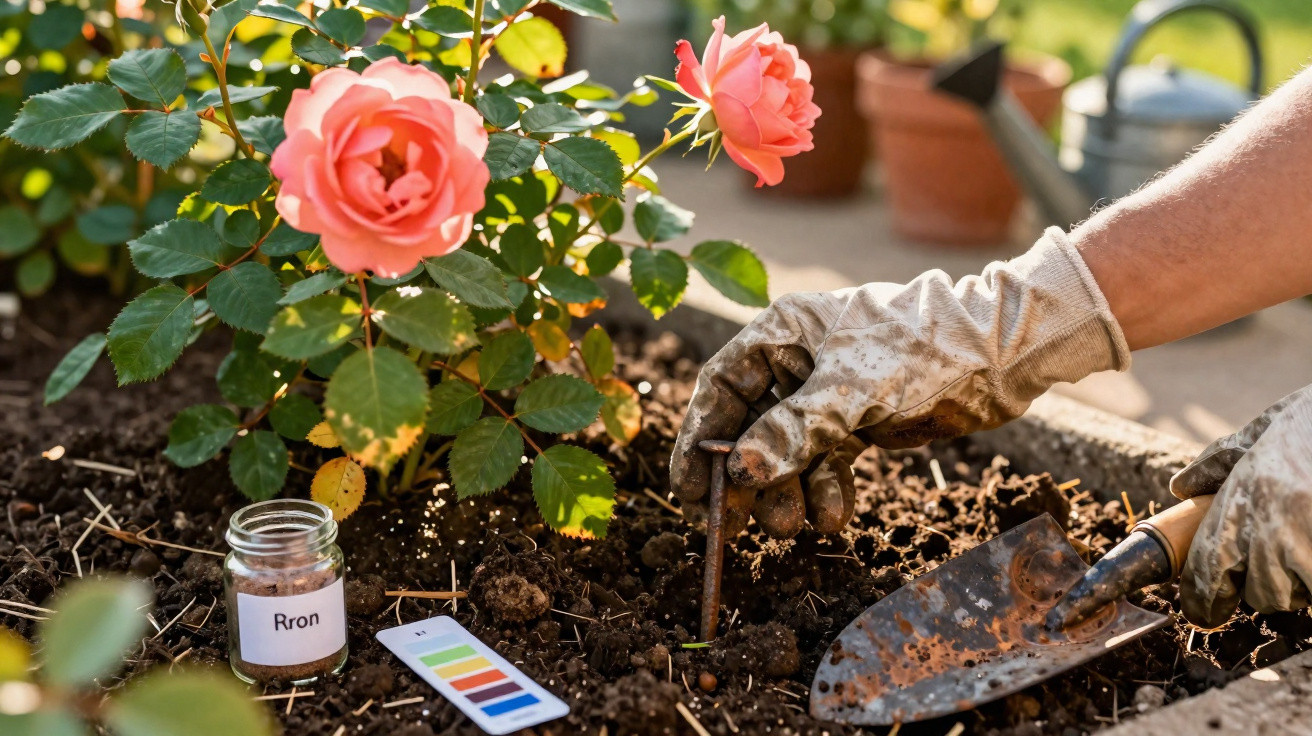
An elderly man lowered himself so carefully that his joints seemed almost audible. He swept aside the mulch beneath his rose bush, looked about as though he had a confidence to share, then tucked a small, dark object into the soil: a rusty nail. He smoothed the earth over it with the tenderness of putting a child to bed.
From the garden gate, I looked on, partly amused and partly captivated. I had never come across this in any gardening guide: no pH kit, soil assessment or expensive fertiliser, only a long-held practice carried out with calm assurance.
It took me years to discover that he was far from alone.
Why gardeners trusted a rusty nail more than a bag of fertiliser
If you spent time with an older generation of gardeners, you may have witnessed it yourself: a shed box filled with crooked nails and screws, or a coffee tin holding assorted metal pieces kept “for the roses”.
They rarely made a fuss about it. Once a year, they would go to their rose bushes, push a nail into the earth near the stem, and carry on, rather like feeding a pet.
For them, it was not superstition but a modest, useful routine that had proved its worth over decades in the garden.
A retired mechanic from Yorkshire once told me that every spring he buried a handful of rusty nuts and bolts around his mother’s rose border. She used no branded rose fertiliser and no specialist compost, yet the neighbours insisted that her roses were the richest, deepest red they had ever seen.
Accounts like this appear throughout the UK, the US and even in small Eastern European villages.
Grandparents handed the method down to their children. “Give the roses iron,” they would say, placing a grimy nail in a small hand as if it were a relic. There was no online discussion, only word of mouth and the evidence shining from the petals.
The folklore rests on a straightforward principle. Like people, roses require iron. It supports chlorophyll production, the green pigment that keeps foliage healthy and vigorous. If soil lacks accessible iron, leaves can become a weary yellow while their veins remain green, and growth may slow.
In effect, a rusty nail offers iron to the soil gradually. As the metal corrodes, small quantities of iron oxide are released, which roots may sometimes take up, particularly in poor, sandy or overly limed soil.
The process is neither quick nor flawless. However, for gardeners without a garden centre close by, it was inexpensive, readily available and almost magical when a struggling rose began to revive.
How the rusty nail trick works - and how to use it today
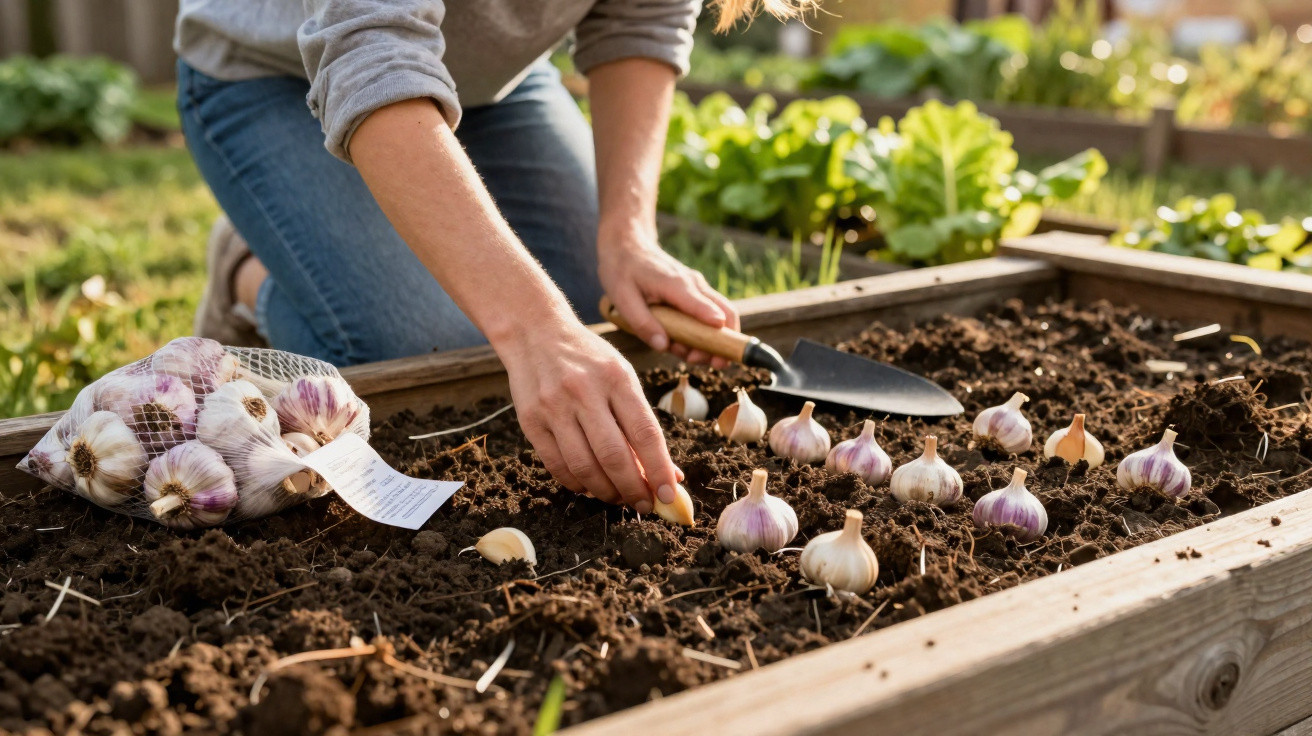
Trying it could hardly be simpler. Choose one or two old iron nails - genuine iron or plain steel rather than shiny, coated or galvanised nails - and press them into the soil roughly 10–15 cm from the rose’s base.
Insert them 5–8 cm deep, placing them within the root zone instead of leaving them on the surface to rust in the air. Cover the area again, then water it as you normally would.
That is all it takes: no monthly routine and no app notification, just a quiet moment with the plant, at most once a year.
The question that tends to worry people is how many to use. They picture a handful of nails turning the soil into a toxic scrapyard. In practice, it is less dramatic. Most experienced gardeners used a couple of nails for an ordinary rose bush, leaving them in place to break down over several years.
Today, the more frequent error is the reverse: assuming that a nail will solve every issue. Yellow leaves? Nail. Drooping buds? Nail. Blackspot? Nail.
Iron is useful only when the rose genuinely lacks iron. If drainage is poor, the plant has been overwatered, or its roots were damaged during transplanting, no piece of metal will work miracles. That is fine: not every difficulty has a hidden shortcut.
Mention this practice and you will generally hear two responses. Science-minded gardeners point out that iron from nails is released too slowly to make much difference. Others insist that their grandmother’s roses “woke up” after receiving one.
“Sometimes the garden doesn’t care whether the fix is perfect on paper. It cares that you paid attention long enough to notice it was struggling.”
Here is a practical way to accommodate both views:
- Treat the rusty nail as a mild supplement rather than an all-purpose remedy.
- Combine it with proper care, including good soil, mulching and watering at the base.
- Monitor the leaves over several weeks rather than days, as changes involving iron are gradual.
- Leave the nails in the shed if your soil is already fertile.
- If there is no improvement, consider a proper soil test and a targeted feed.
What this old rusty nail trick still reveals about roses - and us
There is something unexpectedly moving about seeing someone bury a nail beside a plant. It is decidedly low-tech, almost defiantly so, in a world where a single swipe can buy ten different “rose boosters”.
Kneeling in the soil with one ordinary nail means accepting that gardening is slow, unpredictable and deeply practical. It means being prepared to try small measures without any promise of success.
We have all seen a plant looking unhappy and felt a flicker of guilt, as though we had broken an unspoken pact with a living thing.
Older gardeners did not always speak of “micronutrient deficiency”. Instead, they recognised patterns. They understood that roses in certain soils, particularly chalky or heavily limed ground, turned yellow unless they “got some iron”. The nail therefore became shorthand: a substitute for what we might now address with a chelated iron feed or soil amendment.
In one sense, the nail represents more than iron. It is attention made solid: you spot the yellowing, search your pockets or shed, choose something, kneel down and do something.
Let’s be honest: nobody really does this every day. Even that single gesture of care creates a different atmosphere in the garden.
Modern gardening advice often steers us towards perfection: the correct variety, feed, pH and pruning angle. Older gardeners were more inclined towards “good enough”. They buried nails, added old tea leaves, passed cuttings across fences and exchanged advice at the allotment.
Perhaps that is why the tale of the rusty nail remains so easy to share. It is not solely about nutrient chemistry; it also gives us permission to try something small and almost homemade in a world of glossy packaging.
You may choose a specialist iron tonic instead. You may test your soil and conclude that neither option is needed. Even so, the small ritual - bending down, pressing something into the earth and hoping - tends to stay with you.
| Key point | Detail | Benefit for the reader |
|---|---|---|
| Origin of the rusty nail | A tip handed down by older gardeners to “give iron” to roses | Understand where this practice came from and why it has endured |
| Role of iron for roses | Iron supports chlorophyll production and helps prevent yellowing leaves | Recognise when a rose lacks iron and how this affects its appearance |
| Modern use and limitations | A rusty nail works slowly and is a supplement, not a miracle treatment | Avoid disappointment by combining tradition with modern rose-care methods |






Comments
No comments yet. Be the first to comment!
Leave a Comment