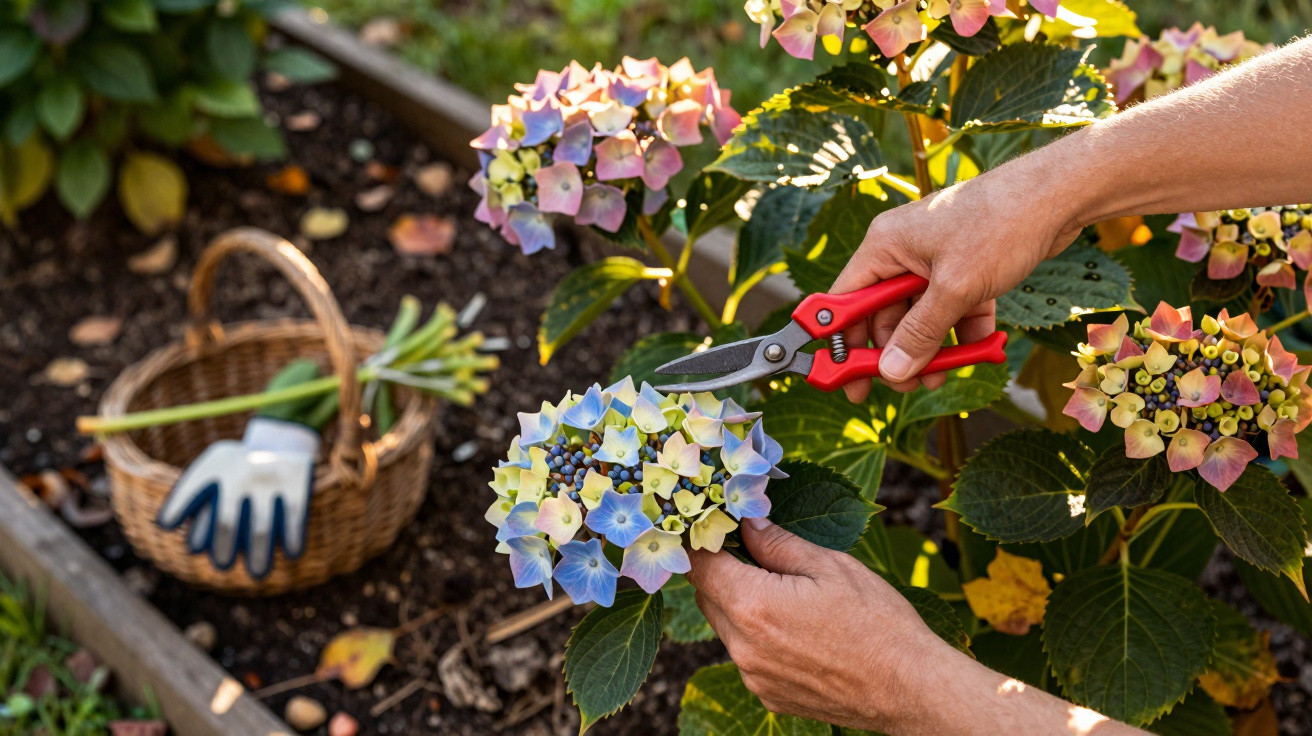
That point prompts a quietly important question in countless gardens: how much should hydrangeas be cut back now, and precisely where should you place the secateurs? The answer will influence next summer’s flowering display much more than the weather or the compost you choose.
Hydrangeas are not one type of shrub
Before you make a cut, establish which hydrangea you have. They can appear alike at a glance, yet their flowering habits differ considerably.
- Hydrangea macrophylla (mophead and lacecap): large rounded or flat flower heads, typically blue, pink or purple, which flower on the previous year’s wood.
- Hydrangea paniculata: conical flower panicles, commonly white or lime before turning pink, flowering on stems made in the current year.
- Hydrangea arborescens: airy, globe-shaped heads such as ‘Annabelle’, which also flower on current-season growth.
That one distinction-old wood or new wood-determines whether you merely neaten the ends or prune much further into the shrub.
“Cutting a macrophylla too low in autumn often erases next year’s flower buds in a single afternoon.”
Why autumn pruning is so appealing
Towards the end of the season, hydrangeas may look rather weary. Their heads droop, foliage develops spots, and they occupy considerably more room than they did in May. It is easy to want to cut them right back, particularly in compact urban gardens where space is at a premium.
Yet autumn is an inconvenient in-between period. Although the shrub is slowing down, its stems already hold buds for the following year. A severe trim may create a tidy outline, but it can mean fewer blooms and reduced natural shelter for vulnerable buds in winter gales.
Light autumn pruning for hydrangeas: tidying rather than transforming
For nearly every hydrangea, a light autumn trim is safer than a complete reshape. Treat it as routine maintenance, not a major overhaul.
Step-by-step: how much to prune in autumn
- Remove dead or diseased material: take out brown, brittle or clearly infected stems, cutting back to sound wood.
- Shorten only the flower heads: remove faded blooms with a small length of stem, cutting immediately above a robust pair of buds.
- Open the centre slightly: if stems cross badly or rub together, remove one to improve air circulation.
This approach keeps the shrub presentable, lowers the risk of disease and prevents it being weakened before temperatures properly drop.
“Autumn pruning should leave the basic structure intact while clearing problems that would linger into spring.”
Flower head or stem: where to use the secateurs
The key question usually comes down to one choice: should you cut directly beneath the old flower head, or continue further down the stem?
Macrophylla: cut close beneath the flower head
Mophead and lacecap hydrangeas bear their flower buds on growth made the previous year. The buds for next summer develop along the upper parts of this year’s stems.
- Remove just the faded head and a short piece of stem.
- Position the cut immediately above a pair of full, healthy buds.
- In autumn, do not cut more than 10–15 cm below the spent flower.
Pruning substantially lower removes those formed buds, so the plant produces foliage rather than flowers. Structural pruning is still possible, but postpone it until late winter or early spring, when winter damage is easier to assess.
Paniculata and arborescens: deeper pruning is possible, but be careful
Panicle and smooth hydrangeas follow a different pattern. As both bloom on fresh spring growth, their older stems serve mainly as a supporting framework.
- Light autumn tidy: shorten stems immediately below the flower heads, as you would with macrophylla.
- Harder pruning: wait until late winter and then reduce stems to two or three strong buds from the base.
Pruning at this point allows you to manage the shrub’s size and encourage sturdier, thicker stems capable of holding large blooms without drooping.
“In autumn, almost every hydrangea benefits more from restraint than from bravery with the pruning saw.”
Autumn timing: the short useful window
Hydrangeas do not respond well to shock, whether from pruning or the weather. Choose a dry, mild spell once the final flowers have faded, but before hard frosts occur regularly.
| Region | Typical autumn pruning window | Key concern |
|---|---|---|
| Cool, northern areas | Late September to mid-October | Avoid early hard frosts after pruning |
| Mild coastal climates | October to early November | Prolonged damp raising disease pressure |
| Warmer southern gardens | October to mid-November | Encouraging late soft growth that frosts can burn |
Wherever you garden, prune while the ground retains a little warmth and growth has almost ceased, but the buds are still firm and uninjured.
Common errors that sacrifice next year’s flowers
Hydrangeas tolerate plenty, but some mistakes become obvious in July, when you expect abundant colour and find mostly leaves instead.
- Cutting back to bare stumps in autumn: a familiar macrophylla mistake that removes the next season’s flowers.
- Using blunt or dirty tools: ragged cuts and sap left on blades encourage disease; clean secateurs with alcohol and sharpen them before starting.
- Leaving young plants unprotected: recent cuts, bare soil and no mulch increase frost damage on shrubs in their first and second years.
- Removing all old flower heads in cold areas: in exceptionally chilly gardens, gardeners sometimes retain the highest heads, which provide small protective caps for the buds beneath.
“Think of each cut as a decision about where next year’s flowers will start-or stop.”
Protecting hydrangeas after pruning for winter
Once pruning is complete, the job is only partly finished. Hydrangeas benefit when their base remains protected and stable throughout winter.
- Apply a 5–8 cm layer of leaf mould, compost or bark over the root area.
- Leave mulch a few centimetres clear of the stems to prevent rot.
- In particularly cold gardens, surround young plants with a loose collar of straw or bracken.
This straightforward layer evens out soil temperatures, helps moisture remain consistent and limits the repeated freezing and thawing that can heave roots and harm buds.
How pruning height affects flower size and growth habit
Choosing between pruning at head level and cutting deeper into stems affects more than next year’s number of blooms. It also alters the shrub’s overall form.
Hydrangea paniculata and arborescens that receive a hard late-winter prune generally produce fewer, larger flower heads on stronger stems. A gentler method, involving only limited shortening, commonly results in more heads that are smaller, lighter and less prone to flopping after rain.
Macrophylla, on the other hand, does not cope well with continual hard pruning. Heavy cuts encourage vigorous leafy growth but comparatively few flowers. Regular, careful tip pruning around the heads helps retain a rounded shape filled with colour.
Planning ahead: staggering flowering through pruning
Gardeners growing several hydrangeas can use their pruning approach to arrange the summer show almost like a schedule. Leaving one macrophylla largely alone while taking out more old stems from another can delay flowering on the more heavily pruned shrub by a couple of weeks. In the same way, paniculata shrubs pruned more firmly in late winter may bloom a little later, while producing larger cones.
This makes hydrangeas particularly valuable in small gardens, where one border needs to perform from June until September. Combining species and adjusting pruning intensity-while keeping autumn pruning gentle-can extend the season without purchasing additional plants.













Comments
No comments yet. Be the first to comment!
Leave a Comment