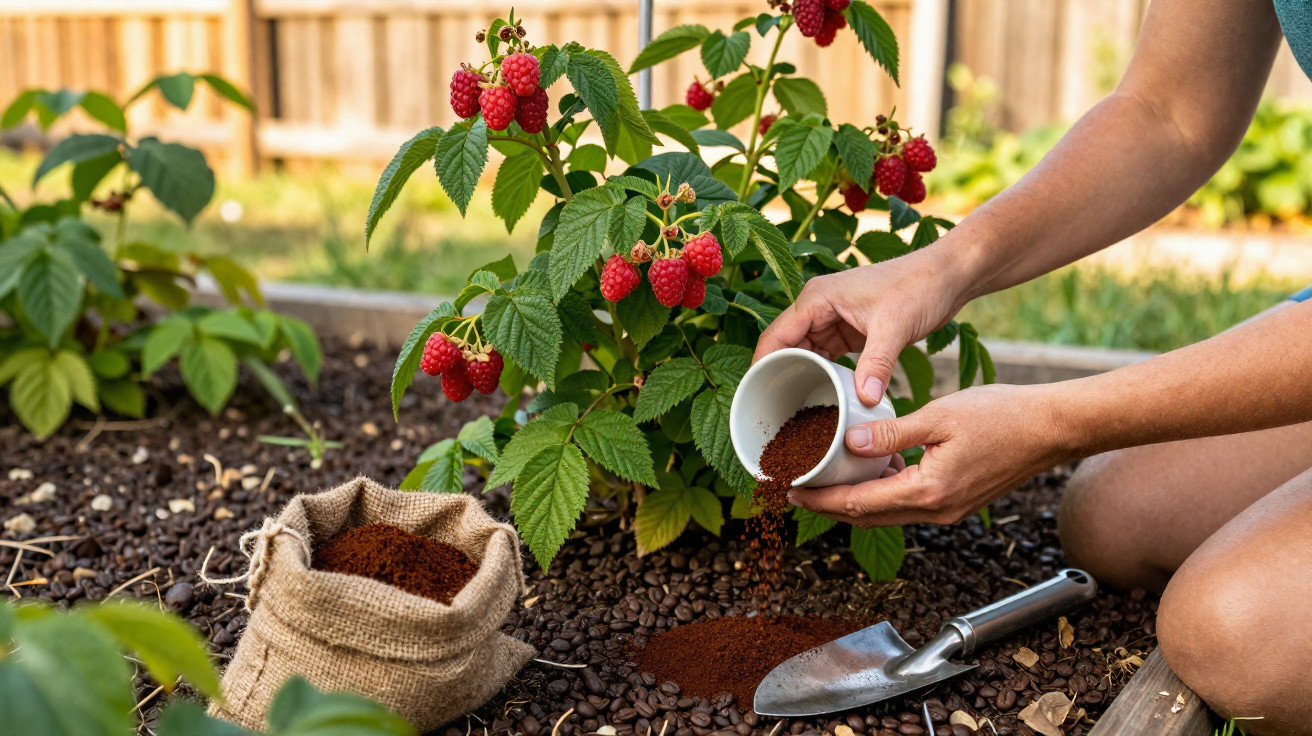
Many amateur gardeners plant raspberry canes with high hopes, only to be disappointed when just a few meagre fruits ripen. A straightforward method that has long become a professional gardener’s tip can substantially increase the harvest: it uses an ordinary coffee cup and a leftover that would otherwise end up in the bin.
Why raspberries so often disappoint
Raspberries are considered easy to grow, yet in reality they are rather sensitive. Simply planting them anywhere in the ground rarely results in a generous crop.
- They prefer slightly acidic, humus-rich soil.
- They need steady moisture, but not waterlogging.
- They benefit from good aeration and loose soil.
- They react strongly to nutrient shortages, particularly a lack of nitrogen.
If these conditions are not right, the cane remains weak, produces fewer new shoots and forms fewer flowers – which ultimately means fewer fruits.
“Anyone who improves the soil around a raspberry cane in a targeted way can often almost double their harvest within a single season.”
The coffee-cup trick: how it works
The so-called coffee-cup trick centres on a household ingredient that most people already use in the kitchen every day: dried coffee grounds. The “cup” is simply a practical measuring tool.
Rather than buying costly specialist fertiliser, experienced gardeners use one cupful of coffee grounds as a natural nutrient boost for their raspberry canes. This approach is easy, costs nothing extra and is well suited to the plants’ nutritional needs.
Why raspberry canes benefit from coffee grounds
Coffee grounds contain several substances that are particularly valuable for raspberries:
- Nitrogen – promotes strong, dense foliage and vigorous shoots.
- Potassium – strengthens plants and helps them cope better with drought stress.
- Trace elements – improve soil quality over the longer term.
Coffee grounds also make the soil slightly more acidic, which is beneficial because raspberries thrive especially well in mildly acidic ground.
“Coffee grounds work like a gentle slow-release fertiliser: they improve the soil and feed the plant over a period of weeks.”
How to use the coffee-cup trick step by step
It is important not only to use coffee grounds, but to apply them correctly. Tipping damp grounds straight from the filter onto the soil is not advisable, as they can go mouldy and form a sealed layer on the surface.
Preparing coffee grounds properly
- Remove the coffee grounds from the filter or machine.
- Spread them in a thin layer on a plate, baking tray or kitchen paper.
- Leave them to dry thoroughly in the air for one or two days.
- Transfer them to a jar or container and store them somewhere dry.
Coffee grounds are only truly suitable for the garden once they have dried in this way.
Applying it to raspberry canes
This is how many gardeners use the coffee-cup trick in spring and early summer:
- Measure out one cup of dried coffee grounds for each mature raspberry cane.
- Gently loosen the soil around the cane, taking care not to damage the roots.
- Scatter the grounds in a radius of around 20–30 centimetres around the base.
- Work them lightly into the top layer of soil rather than leaving them on the surface.
- Water thoroughly at the end so that the nutrients can dissolve.
For young plants, half a cup is usually enough. This amount can be repeated at intervals of several weeks while the cane is growing vigorously.
More than fertiliser: other effects of coffee grounds
Coffee grounds do more than feed the plant itself; they also alter the soil environment.
Mild protection from pests
Many amateur gardeners report that certain pests, including slugs, avoid coffee grounds. Their slightly coarse texture and the compounds they contain may be unappealing or disruptive to some rodents and insects.
There is no guarantee that every slug will stay away, but in many beds the pressure from feeding damage is noticeably reduced.
Improved structure and water retention
As an organic material, coffee grounds help loosen heavy soils and improve sandy beds. This enables the soil to retain water more effectively without becoming waterlogged. Raspberries benefit in particular, as they like consistently moist conditions but do not want to sit in wet soil.
“With every handful of coffee grounds, not only does the plant grow, but so does the quality of the soil around the cane.”
Combining coffee grounds with mulch and compost
Anyone who already mulches can easily incorporate the coffee-cup trick into their usual care routine.
Using coffee grounds in mulch
One particularly effective option is to mix dried coffee grounds into the mulch material instead of scattering them directly onto the soil, for example with:
- chipped bark, provided it is not too coarse;
- leafy garden waste;
- straw or lawn clippings that have already dried slightly.
Spread this mixture a few centimetres deep around the raspberries. It keeps moisture in the soil, suppresses weeds and gradually releases nutrients.
A nutrient boost in compost
If you have a compost heap, coffee grounds can also be added there. The finished compost can later be returned to the raspberry bed. This creates a closed nutrient cycle that supports dependable yields over the long term.
Common mistakes when using coffee grounds
Useful as the coffee-cup trick can be, applying it incorrectly may do more harm than good.
| Mistake | Result | Better approach |
|---|---|---|
| Wet coffee grounds placed directly on the soil | Mould growth and crusts on the soil surface | Always dry them thoroughly beforehand |
| Using far too much | Soil becomes overly acidic and growth stalls | Stick to one cup per cane and monitor the effect |
| Using only coffee grounds and nothing else | Nutrient imbalance | Combine with compost and mulch |
When to use the coffee-cup trick
The best time for the first “coffee portion” is in spring, when raspberry canes begin to put on new growth. At this stage, they need plenty of energy to produce fresh shoots.
Depending on the weather, a second application can be useful shortly before flowering or as it begins. Later in summer, fertiliser should be used only sparingly; otherwise, the plant may produce lush green growth while fruit development falls behind.
Who benefits most from the trick
The coffee-cup trick is not only suitable for large gardens. It can also be used by people with just a balcony or small terrace. Raspberries grow very well in containers, provided the pot is large enough and offers good drainage.
Nutrients are used up quickly in pots in particular. A cup of dried coffee grounds, carefully worked into the growing medium, can often act like a small restart for the plant.
Practical additions for even more raspberries
If you are already giving your raspberries a boost, a few additional measures work well alongside the coffee-cup trick:
- Remove old, spent canes close to ground level in late winter so young shoots receive more light and air.
- Water regularly, especially during dry spells, without overdoing it.
- Choose an airy site that is not too shady.
- Work in a thin layer of mature compost in late autumn.
This creates a practical care package of pruning, water, organic fertiliser and slightly acidic soil – an ideal combination for raspberries.
Risks, limits and sensible alternatives
Although coffee grounds are a versatile helper, they cannot replace careful site selection. If raspberry canes are permanently standing in water or exposed to strong wind, even the best fertiliser cannot work miracles.
Some gardeners are also sensitive to caffeine residues and prefer to wear gloves when handling large quantities of coffee grounds. Where pets like to dig in the bed, it is sensible to use them sparingly so they do not ingest larger amounts.
Anyone who does not drink coffee can choose similar organic fertilisers instead, such as well-rotted manure, horn shavings or specialist natural berry fertilisers. The principle remains the same: improve the soil in a targeted way rather than merely feeding the plant from above.
Ultimately, it is this combination that makes the difference: a suitable location, loose and slightly acidic soil, regular care – and a simple cup of coffee grounds quietly helping to turn a few raspberries into bowlfuls of fruit the following year.









Comments
No comments yet. Be the first to comment!
Leave a Comment