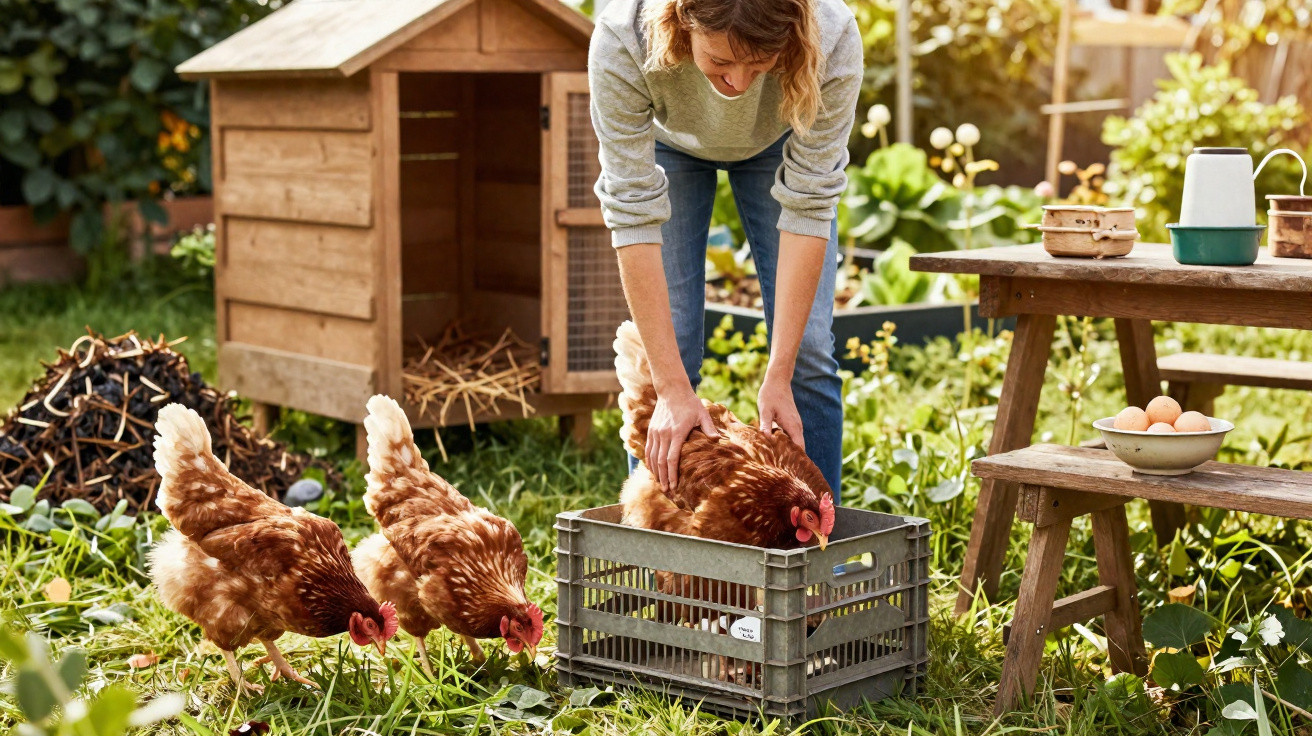
A farm in the Oise department is currently offering around 3,000 retired laying hens one final opportunity. Rather than ending up at an abattoir, the birds are intended to move into private gardens. Families, animal lovers and keen gardeners can take in the hens, give them a more welfare-friendly life and, in return, enjoy fresh eggs.
What the laying-hen rescue operation is really about
Every year, industrial farms remove millions of laying hens from production. After a little more than a year of intensive laying, their output falls, the birds are considered “economically unattractive” and are usually sent to an abattoir. The initiative in Oise intervenes at precisely this point.
Around 3,000 laying hens from a commercial farm are to begin a second life with private keepers instead of going to an abattoir.
The farm in Mory-Moncrux, a small community in Hauts-de-France, is working with animal welfare campaigners and committed farmers to make this happen. Anyone interested can collect one or more hens directly from the site. Many of the birds have spent one year laying, while some have completed two. They no longer produce an egg every day, but generally still lay regularly – making them well suited to families that do not need eggs in large quantities.
A small fee is charged for each hen. It is not intended as a source of profit, but helps cover transport, feed and organisational costs. This enables the organisers to arrange further rescue operations of this kind.
Why laying hens are “culled” so quickly
On modern egg farms, almost all that matters is the number of eggs produced each day. As soon as that figure drops, flocks are replaced. This often happens after only 12 to 18 months of productive laying. From a health perspective, many of these hens could still live for years.
This is the central dilemma: continuing to feed them is scarcely worthwhile for the farm, yet the birds remain entirely appealing to private keepers. In a garden, with more space and less stress, their egg production often continues at a satisfactory level.
“Used up” in the industrial shed, suddenly valued again in the garden – this is how many keepers see the second career of their hens.
The initiative in northern France demonstrates how a link between farming and animal lovers can work. The farm can rehome its birds without sending them straight for slaughter. At the same time, private individuals save an animal and regain a measure of self-sufficiency.
What prospective chicken keepers should consider before adoption
Taking on laying hens may sound idyllic, but it is a genuine day-to-day commitment. Anyone adopting hens from a farm accepts a responsibility that may last several years. A few matters should be settled in advance.
Essential equipment for contented chickens
- Outdoor space: A securely fenced garden or a spacious run protects the birds and helps avoid disputes with neighbours.
- A sturdy coop at night: The chicken house needs perches, nesting boxes and protection from foxes, martens and rats.
- Feed and water: Layer feed, occasional grain, fresh greens and a constant supply of clean water are the basics.
- Regular cleaning: Droppings and damp bedding must be removed to prevent disease and parasites from spreading.
Those who meet these needs will soon find that chickens are not complicated animals. Many keepers say that their hens follow them around, eat from their hands and allow themselves to be handled. Children often form a close bond with “their” birds.
How many chickens make sense
Chickens are flock animals. A single hen rarely thrives, particularly in unfamiliar surroundings. Experts therefore advise adopting at least two or three birds. Small groups can be integrated easily into an ordinary garden and do not overwhelm most keepers.
A broad guide for beginners:
| Number of hens | Suitable household | Expected egg supply |
|---|---|---|
| 2–3 | Small household, urban garden | Several eggs per week |
| 4–6 | Family with a larger plot | Regular eggs for household use |
| 7–10 | Smallholding, large garden, plenty of space | Often more eggs than one household uses |
The benefits former laying hens bring to a garden
The most obvious advantage is fresh eggs from birds that people know personally. Many keepers say that watching the character of an individual hen makes them reconsider their eating habits.
Anyone who has watched a rescued hen take a dust bath for the first time quickly understands why initiatives like this attract support.
As well as laying eggs, chickens do practical work in the garden:
- They peck at weed seeds, helping to reduce unwanted growth.
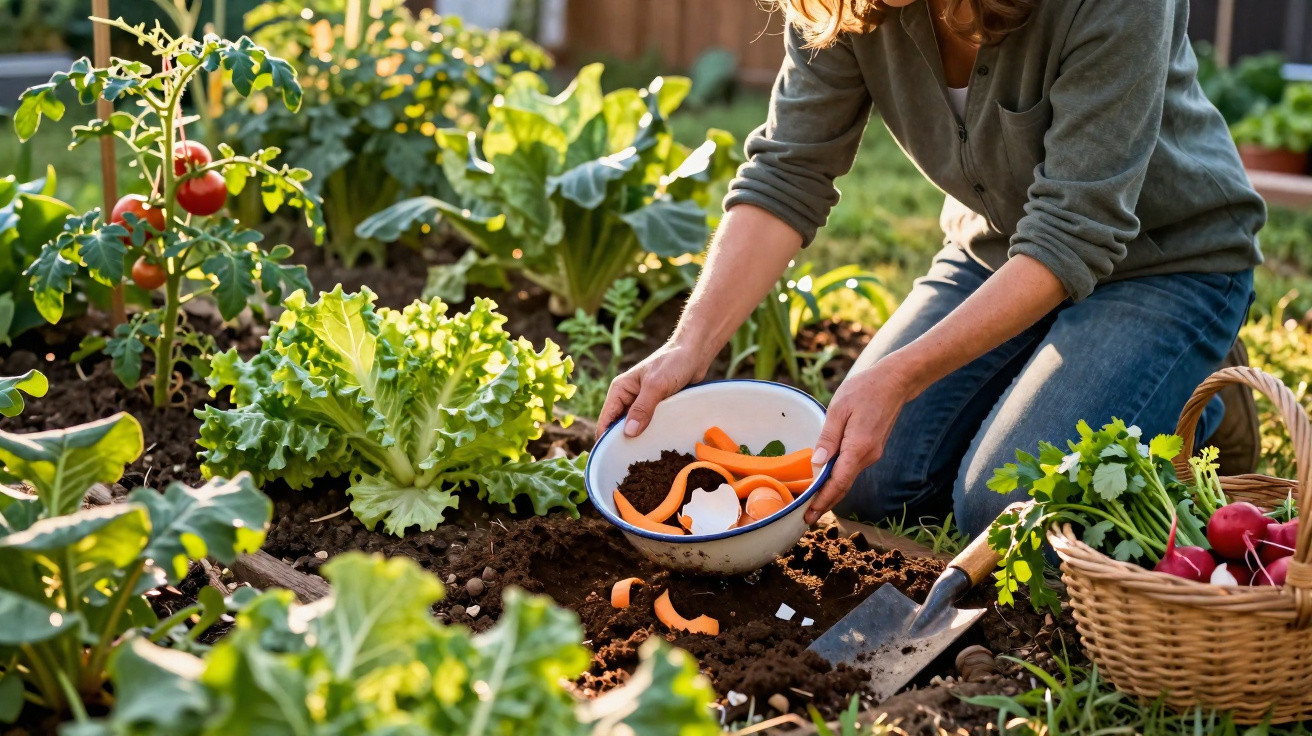
- They eat kitchen scraps that might otherwise end up in the bin.
- They scratch and loosen the soil while searching for food.
- Their droppings provide valuable fertiliser for beds and fruit trees.
The birds are particularly suitable for families with children as a way of teaching responsibility. Feeding them, changing their water and cleaning out the coop are straightforward but regular jobs that can be shared.
Challenges worth considering in advance
Despite the many positive aspects, future keepers should not overlook certain issues. Former laying hens are generally no longer young chicks. Some arrive from the farm with missing feathers, worn combs or minor health limitations.
Potential difficulties include:
- Veterinary costs: Chickens may also need medical treatment from time to time. Not every veterinary practice has strong expertise in poultry.
- Noise: Hens are quieter than cockerels, but their clucking after laying an egg can still be clearly heard. Neighbours should be informed in densely built-up areas.
- Holidays: As with a dog or cat, somebody must feed the hens when the family is away.
- Predators: Foxes and martens exploit every weak point in a fence. Carelessness can quickly end in tragedy.
Anyone who assesses these factors realistically can ensure that rescuing the hens is not merely a short-lived PR exercise, but gives them a genuinely better long-term life.
What initiatives like this mean for farm animal welfare
Laying-hen rescue operations are now appearing in several countries. They do not solve the underlying problem of intensive livestock farming, but they make a visible statement. People who have adopted a hen from a commercial farm often begin asking entirely new questions: Where do my eggs come from? How do the animals whose meat I eat live? How fair are supermarket prices really?
For agriculture, this also provides an outlet: farms willing to work with initiatives can show that alternatives to direct transport to an abattoir exist. This not only improves their image, but also reduces the number of animals that disappear from the system without any opportunity at all.
A small-scale cycle is created: a retired hen ends up in a garden, its keeper develops a closer connection to the issue of animal husbandry, and children grow up with greater respect for farm animals. At the same time, awareness spreads of what chickens actually need – more room, more stimulation, and more air and light than an industrial shed can usually provide.
Anyone now wondering whether chickens fit into their own life should take an afternoon before saying an impulsive “yes”: measure the available space, speak to neighbours, research nearby vets and calculate the costs. If the conditions are right, a rescued laying hen can become a remarkably loyal part of everyday life – and anonymous farm animals can suddenly become named individuals with distinct personalities.



Comments
No comments yet. Be the first to comment!
Leave a Comment