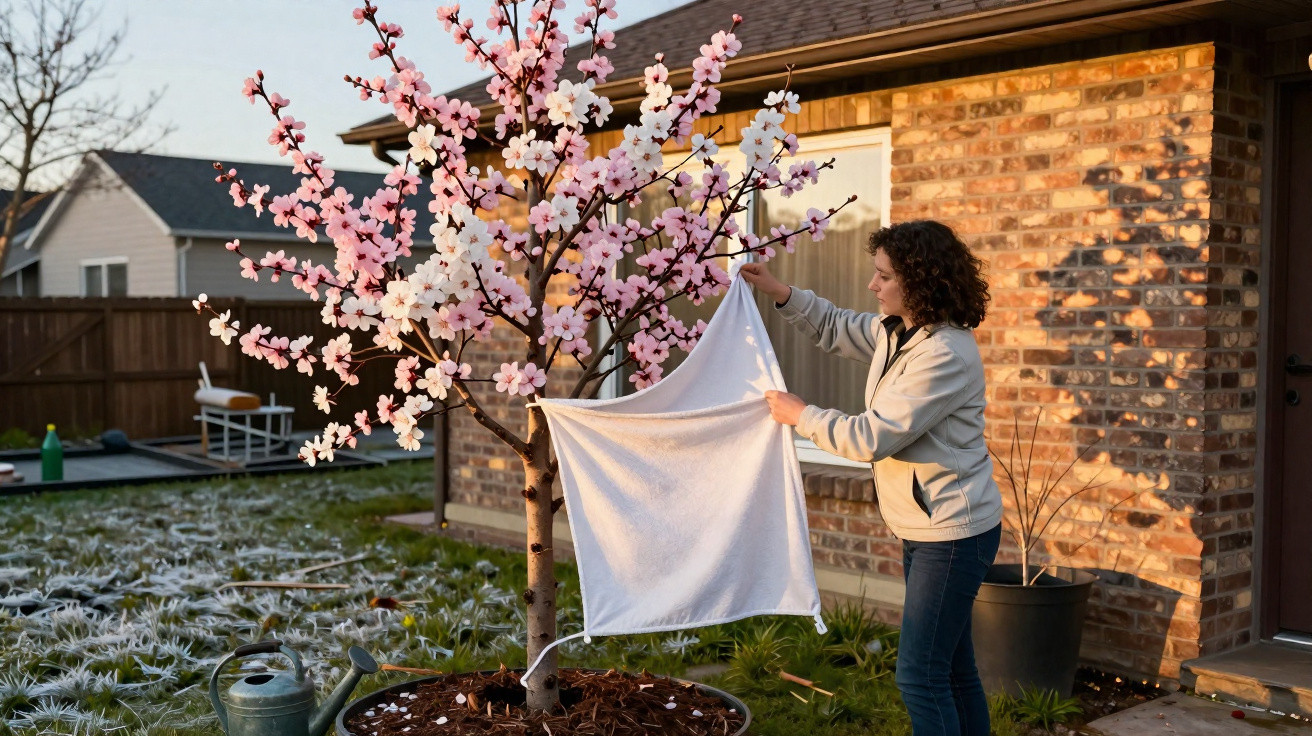
Many amateur gardeners know the disheartening sight: one day, bees are buzzing among apple and cherry blossom; by the following morning, brown, soggy flowers are hanging from the tree. A late spring frost strikes fruit trees at their most vulnerable stage. A few well-timed measures can reduce the damage considerably – provided action is taken early enough.
Why fruit trees are so vulnerable to frost in spring
In the depths of winter, fruit trees appear remarkably hardy. Sub-zero temperatures cause dormant buds little trouble because the plants are adapted to cold conditions. However, once temperatures begin to rise, the situation changes.
Sap starts to flow, buds swell, open and develop into blossom. At this stage of growth, the tissues become increasingly susceptible to cold. Even slight differences in temperature matter:
- Swollen buds can tolerate only around –2 to –4 °C.
- Open flowers may be damaged from approximately –1.5 to –3 °C.
- Newly formed tiny fruits become sensitive at roughly –0.5 to –2 °C.
As a result, one cold night between February and mid-May can be enough to destroy whole sections of blossom. The early morning hours between four and six are particularly critical, as this is when temperatures reach their lowest point.
Just a few degrees below zero may be enough to wipe out an entire fruit harvest – even after a mild winter.
Climate effect: mild winters, risky springs
In many areas, milder winters are causing fruit trees to start their spring growth much earlier. Buds break well before the danger of frost has truly passed. The traditional mid-May period known as the “Ice Saints” remains risky, even when daytime weather is warm enough for a T-shirt.
Early-flowering species are especially at risk, including:
- Apricots
- Peaches
- Almonds
- Sweet and sour cherries
There is also a physical factor that is often overlooked: cold air is heavier and settles lower down. In hollows or low-lying corners of a garden, this cold air can collect, making conditions two to three degrees colder than just a few metres higher up.
Simple protection for a forecast frost night
Anyone who keeps a close eye on the weather forecast gains valuable hours. If a light frost is expected overnight, amateur gardeners should take action in the late afternoon.
Fleece rather than panic: the home-garden classic
The simplest and most effective option for private gardens is horticultural fleece, often sold as “winter fleece”. It acts as a thin insulating layer around the canopy.
- Suitable for: young trees, trained fruit trees and container-grown fruit.
- How to use it: drape the fleece loosely over a simple frame made from poles or bamboo.
- Important: wherever possible, the material should not touch the flowers directly.
Supporting the cover on a light frame stops frozen fleece from sticking to the blossom and causing additional damage. Put the fleece over the tree only in the late afternoon or evening, then remove it in the morning so that light and warmth can reach the canopy.
A simple fleece cover overnight can raise the temperature in the tree canopy by up to a few degrees – and that is often enough.
Using walls: make the most of the microclimate
Planting fruit trees beside a house wall or substantial masonry gives them a natural buffer of warmth. South- or south-east-facing positions are ideal, particularly next to:
- Stone walls
- Brick walls
- Dark-painted façades
These surfaces absorb heat during the day and release it gradually overnight. Temperatures immediately in front of them can be two to three degrees higher – often the difference between healthy blossom and total loss.
Mulch, water and container-growing tricks
The soil around the trunk also has an influence. A wide mulch ring made from straw, leaves or woodchips helps to keep soil temperatures stable and protects graft unions.
Useful measures in detail include:
- A generous mulch ring: keeps both temperature and soil moisture more consistent.
- A brief watering in the late afternoon: damp soil retains slightly more heat than completely dry ground.
- Protecting the graft union: a small “collar” of fleece or hessian around the base of the trunk helps young trees.
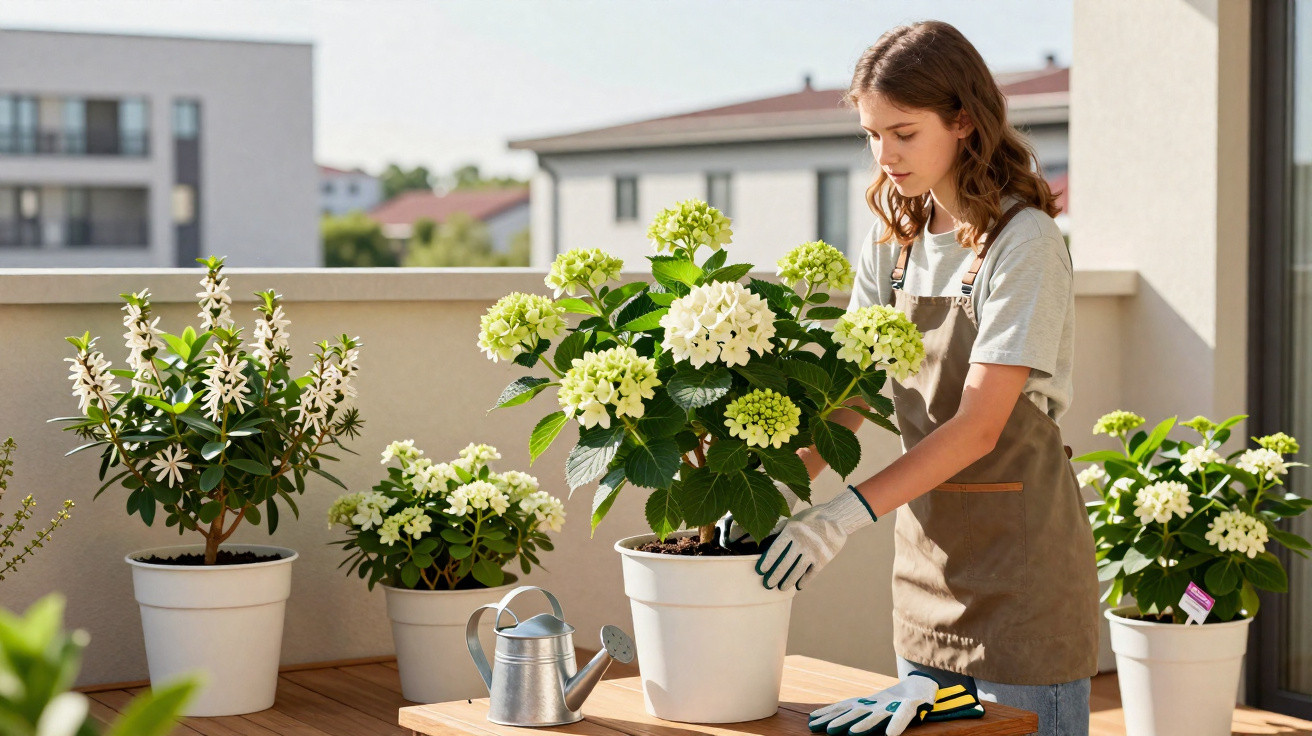
For container-grown fruit, further steps are useful:
- Move containers close against a sheltered wall.
- Wrap the pot sides with hessian, bubble wrap or a coconut-fibre mat.
- Cover the growing medium with mulch.
- Add an extra fleece covering around the canopy.
Professional techniques such as frost candles, gas or oil burners, and large fans are mainly used in commercial fruit growing. They are costly, labour-intensive and generally excessive for a home garden.
Planning ahead: site, pruning and variety choice
For lasting results, it is better to position fruit trees strategically from the outset. The right location works like insurance against late frost.
The right place in the garden
The basic rule is simple: never plant in the lowest part of the garden. A gentle slope, or at least a position where cold air can drain away, is preferable.
- Avoid planting in dips where mist gathers.
- Choose upper slopes or gently sloping ground where possible.
- Plant trained fruit against warm walls, especially more sensitive species.
Standard trees offer another advantage: their canopies sit well above the coldest layer of air near the ground. This improves the likelihood that the blossom will remain unharmed.
Pruning and varieties: deliberately delaying flowering time
Anyone gardening in an area with recurring late frosts should adapt both variety selection and care routines accordingly.
| Measure | Effect |
|---|---|
| Late-flowering varieties | shift the sensitive period later |
| Regional cultivars | are often better adapted to local weather extremes |
| Slightly later pruning | can delay bud break very slightly |
It is worth speaking to an experienced local tree nursery. They will know varieties that do not burst into growth at the first warm day in March, but respond rather more “cautiously”.
How to recognise frost damage to blossom
Following a cold night, damage often becomes visible only after several hours. Common signs include:
- Flowers turn brownish or black.
- Petals become translucent and soggy.
- Inside the flower, the ovary is dark and dry.
A quick test can help: cut open a suspicious flower. If the centre is greenish and juicy, there is still hope. If it is brown, the developing fruit has died.
Even if some of the flowers freeze, good-bearing varieties often retain enough to produce a respectable harvest.
What else gardeners should bear in mind
Many people underestimate how rapidly temperatures can fall. It may still be five degrees above zero in the evening, only for the thermometer to drop below zero by morning. A simple garden weather station with a minimum-maximum function, or an app with frost alerts, provides greater confidence.
If there are several sheltered spots in the garden, it is also possible to spread out fruit growing: place one apricot against the house wall, a second in a slightly elevated position, and a third variety in a container that can be moved into the garage or beneath a carport if necessary. This lowers the risk of being left with nothing at all.
Late frosts cannot be prevented, but they do not have to mean the end for apples, cherries and apricots. Those who combine a suitable site, the right variety selection and short-term protection intelligently have a much better chance of getting blossom through the critical nights – and of seeing all that effort rewarded with full baskets in summer.




Comments
No comments yet. Be the first to comment!
Leave a Comment