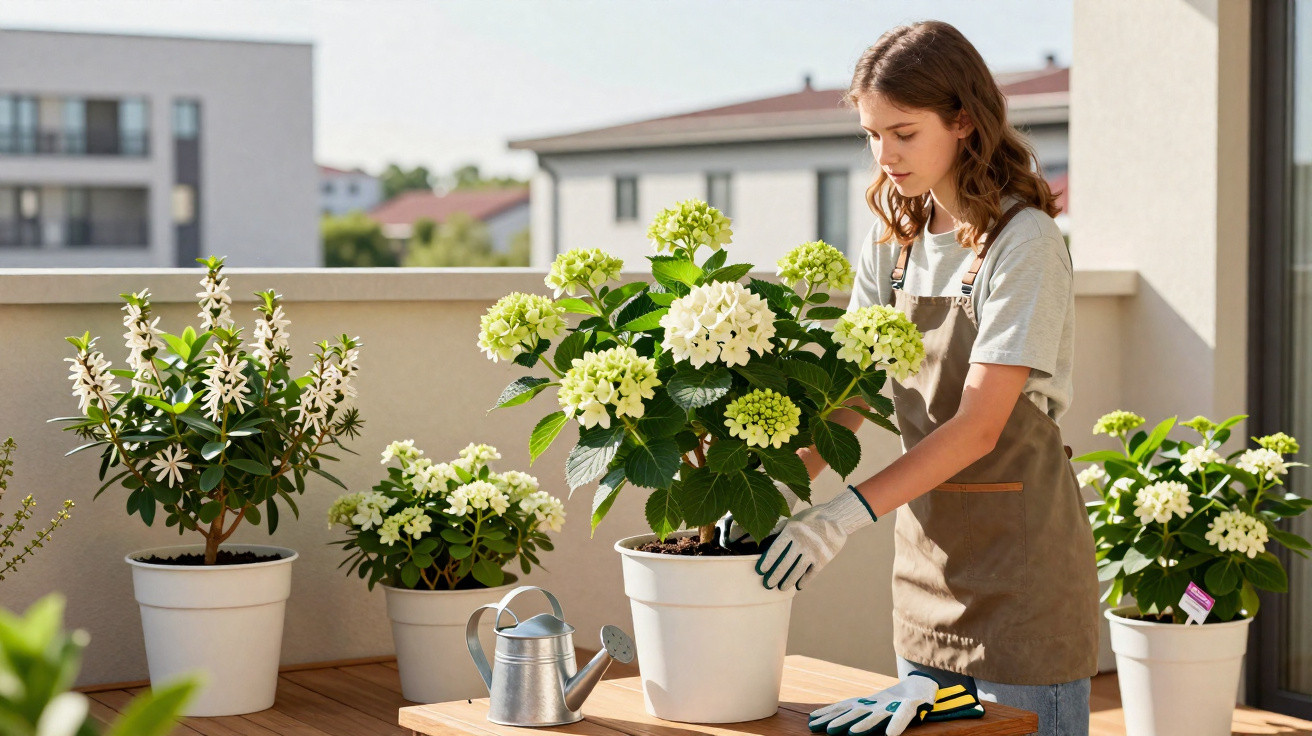
Many compact shrubs and long-flowering hydrangeas carry the Proven Winners® name, a plant brand that is quietly changing what ordinary gardeners expect from their borders.
Who are Proven Winners and why are gardeners talking about them?
Rather than being one nursery, Proven Winners® is an international network of breeders and growers specialising in high-performing ornamental plants. It unites experts across Europe and North America, who spend years making crosses, assessing and rejecting thousands of seedlings before a single variety is sold in the recognisable white pot.
This lengthy process is built around a straightforward aim: reliable, vigorous plants with practical qualities for both small domestic gardens and larger landscaped settings. Shrubs are chosen for sturdy branching, extended flowering, neat compact growth and vivid, clear colours that distinguish them from older cultivars.
Behind every Proven Winners® plant lies a multi‑year testing process designed to remove weak performers before they ever reach the garden centre.
The present shrub range contains more than 90 named varieties. Many provide interest from spring until late autumn through lasting foliage colour, repeat blooms or attractive seedheads. Most are selected to cope with cold winters, meeting increasing demand for dependable garden structure in weather patterns that alternate between heatwaves and late frosts.
What makes a Proven Winners plant different?
Every shrub must satisfy a number of defined standards before it can bear the label. Rather than merely rebadging familiar cultivars, the brand subjects new introductions to a rigorous trial programme before granting them the name.
Core criteria for selection
- Plants need to be simple for inexperienced gardeners to grow and maintain.
- Every variety must offer a distinctive or innovative feature, including unusual colour changes, stronger branching or greater winter hardiness.
- Plants must be broadly obtainable, supported by coordinated production capable of supplying garden centres throughout Europe and North America.
Just a small proportion of new seedlings makes it through the trial stage. Shrub testing takes place in sites ranging from Finland and the Netherlands to Michigan in the United States and Switzerland. Together, these locations expose plants to sharply contrasting conditions, from prolonged dark winters and wet springs to hot summers and changeable autumn weather.
Varieties that collapse after one harsh winter or sulk in heavy rain rarely progress beyond the trial field, which filters out many short-lived novelties.
That broad geographical testing is increasingly relevant as gardeners encounter less predictable weather: late frost damaging new shoots, intense rainfall falling on compacted ground, and sudden urban heat spikes. Breeding with these pressures in mind provides a quiet form of reassurance for buyers who want to plant once and enjoy the outcome.
Hydrangeas, buddleias and more: examples of recent innovation
Several of the most familiar Proven Winners® introductions belong to well-known genera, including hydrangea, buddleja, spiraea and hypericum. Their distinction lies in their seasonal performance and their suitability for more limited outdoor spaces.
Hydrangeas designed for modern gardens
Hydrangeas have evolved from traditional border-filling plants into key design features for balconies, patios and townhouse gardens. A number of Proven Winners® cultivars respond to this change:
- Hydrangea paniculata Lime Light Prime® – opens the season with bright lime-green panicles, gradually developing pink and red shades in autumn. It remains compact, and its firm stems support substantial flowers upright, including after heavy rain.
- Hydrangea ‘F&F Frozen Smoothie’ – bred for cooler areas, with emphasis on vigorous regrowth from the base and dependable blooms on new wood.
- Hydrangea arborescens Pink Annabelle® – a pink interpretation of the classic smooth hydrangea, developed for larger, more colourful flower heads and stronger stems.
These cultivars commonly produce flowers on new wood, allowing them to perform even following pruning or winter damage. This is particularly useful in colder areas, where frost can destroy buds carried on older stems.
Shrubs for pollinators and long seasons
Other introductions focus on providing nectar and colour late in the year, responding to concerns about supporting pollinators and maintaining garden appeal after July:
- Buddleja ‘Miss Violet’ – a compact butterfly bush with rich violet flowers that draw bees and butterflies, bred for a lengthy flowering period without aggressive self-seeding.
- Calycantus ‘Aphrodite’ – recognised for distinctive spicy-fragranced blooms and glossy leaves that retain structural value when the plant is out of flower.
- Spiraea media Double Play® Blue Kazoo – prized for foliage that changes from blue-green into purple and red hues, ensuring colour remains when its flowers have faded.
- Caryopteris x clandonensis Beyond Midnight® – a compact bluebeard with deep foliage and rich blue blooms, reaching its best in late summer when borders can often appear weary.
- Hypericum kalmianum Sunny Boulevard – a slim, upright hypericum bearing abundant yellow flowers, widely used for low hedging and containers.
Together, these shrubs reflect a wider preference for plants that earn their place through prolonged flowering, compact growth and clear benefits for wildlife.
Lime Light Prime: the hydrangea in the spotlight
Within the current collection, Hydrangea paniculata Lime Light Prime® regularly attracts particular interest from retailers and garden writers alike. It advances the long-popular ‘Limelight’ idea with a neater habit and more dramatic colour progression.
Lime Light Prime® moves from crisp lime to warm pink and red, offering a slow-motion colour shift that carries a planting scheme from high summer into the first frosts.
Its robust upright stems address a familiar problem with large-flowered hydrangeas: blooms drooping after rainfall. This dependable structure is especially valuable in small urban gardens, where there is little space to conceal plants that have been damaged.
A further important quality is its capacity to produce large flower heads in colder districts. As it flowers on new growth, gardeners can cut it back in late winter and still expect an impressive display a few months afterwards. This makes Lime Light Prime® suitable for containers on exposed balconies as well as for beds in northern gardens.
At a glance: Lime Light Prime®
| Botanical group | Hydrangea paniculata |
| Key feature | Lime-green flowers shifting to pink and red in autumn |
| Growth habit | Compact, with strong upright branches |
| Flowering | Early to late season, on new wood |
| Best use | Small gardens, mixed borders, large containers |
How gardeners can use these shrubs in real spaces
Their compact forms and low-maintenance requirements suit the outdoor spaces found in many US and European cities, including smaller plots, roof terraces and shared courtyards. Proven Winners® shrubs can give these settings structure without taking them over.
One useful method is to use shrubs in containers almost as though they were perennials. Two Lime Light Prime® hydrangeas in sizeable pots can form an anchor for a roof terrace, with trailing annuals or low grasses planted beneath them. Buddleja ‘Miss Violet’ fits neatly into a narrow bed beside a seating area, offering colour and pollinator activity from midsummer onwards.
For gardeners short on time, the brand’s focus on straightforward care cuts down regular jobs. Numerous varieties require little more than a gentle yearly prune, spring mulching and occasional watering during very dry periods. When plants retain their own shape and flower on new wood, heavy staking, deadheading and complex feeding routines are less often needed.
The white pot and the business behind the brand
At garden centres, Proven Winners® uses prominent visual branding, especially the white pot with its bold lettering. This packaging has a functional purpose: it indicates that the plant has completed the same testing process, regardless of its genus.
For retailers, it provides a clearer narrative to share with shoppers, while consumers have less uncertainty at the display bench. Rather than selecting from dozens of comparable hydrangeas, they can reduce the choice to a smaller selection with shared performance standards before choosing according to colour and size.
The white pot acts as shorthand for a long chain of breeding, selection and trialling that most gardeners will never see but quietly benefit from.
There is a business dimension too. Shared branding enables several nurseries to cultivate the same licensed varieties, creating the scale required for distribution across Europe while retaining quality controls. For gardeners, this can mean fewer difficulties when seeking out a plant noticed in the media or in public gardens.
Beyond branding: what this trend means for home gardening
The growing presence of heavily branded plant collections, including Proven Winners®, points to changing expectations. Gardeners increasingly seek dependable plants, long-lasting displays and reduced inputs, reflecting trends in other consumer categories.
For anyone designing a border or updating a small courtyard, the change prompts useful considerations. Instead of buying entirely on impulse, many gardeners now compare attributes such as drought tolerance, compact size and value for pollinators. Collections based on trials offer more transparent information on these qualities, although marketing still has a strong role.
Newer gardeners may also benefit from an easier introduction to planting. Beginning with shrubs bred for resilience lowers the likelihood of early disappointments that might deter people from trying again. As confidence develops, some gardeners progress to heritage cultivars, seed saving or specialist species, using branded plants as a dependable framework.
More seasoned gardeners may regard these introductions as practical tools rather than prizes. A compact, colourful-leaved spiraea can occupy the front of a border while rarer plants are threaded around it. A durable hypericum hedge can settle a difficult wind-exposed boundary, leaving more time and room for experimental work elsewhere.









Comments
No comments yet. Be the first to comment!
Leave a Comment