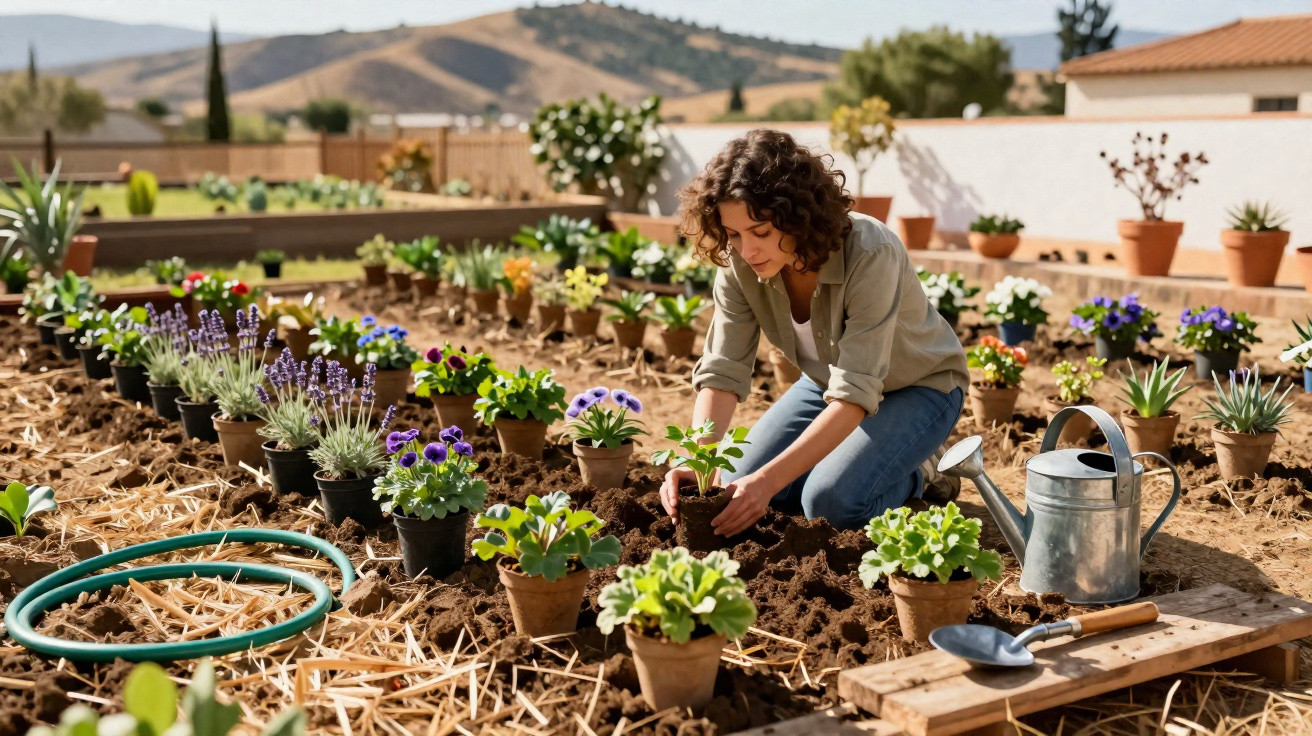
Across large parts of Europe and North America, summers are becoming hotter, hosepipe restrictions are introduced sooner and lawns can be brown by June. Gardeners who make impulsive planting choices in late May often pay the price through constant trips with watering cans. Yet changing the planting schedule slightly – and choosing five particularly drought-tolerant perennials – can transform a water-hungry border into a flower-rich, low-maintenance dry garden.
Why 31 March can determine your summer water use
The end of March is not simply an arbitrary point in the gardening calendar. It falls in the ideal window between winter dormancy and vigorous spring growth. Sap is beginning to move, while the ground remains cool and damp after winter rainfall.
When perennials go into the ground before 31 March, their roots can establish themselves in this naturally moist soil. The delicate feeder roots, known as radicelles, have time to extend steadily before the first proper heatwaves arrive.
Plant in cool, moist soil and the sky does most of the watering for you; plant into heat and you’ll be chained to the hose.
As daytime temperatures approach 25°C (77°F) and higher, a recently planted perennial must deal with two stresses at once. It needs to recover from transplanting while also coping with heat. Frequent watering is then the only way to keep it alive, often every few days in freely draining ground.
Water authorities and environmental organisations consistently make the same point: garden water saving begins with good timing. Planting in early spring, rather than making rushed purchases in May, is among the easiest changes a household can adopt.
Five “camel” perennials that cope with drought
Certain plants are naturally equipped to survive extended dry periods. Their defences include fleshy leaves, silvery foliage, deep root systems and reduced moisture loss. Once they are established, these five perennials can generally survive on rainfall alone across much of the UK and in many parts of the US.
- Perovskia (Russian sage) – This plant combines airy lilac-blue flower spikes with finely divided silver leaves and needs remarkably little water. It performs best in full sun and poor, stony ground.
- Sedum ‘Autumn Joy’ (Hylotelephium) – Its succulent foliage holds water, and its broad, flat flowerheads add late-season colour while providing food for bees and butterflies after many other flowers have faded.
- Gaura lindheimeri (whirling butterflies) – Its deep taproot searches for water well beneath the soil surface, enabling it to carry delicate white or pink blooms that move in the breeze for months.
- Echinops ritro (globe thistle) – Producing steel-blue balls on robust stems, it is highly suited to dry soil, including chalky conditions, once its roots have established.
- Lavandula angustifolia (English lavender) – Fragrant, popular with pollinators and genuinely suited to sunshine, this plant dislikes waterlogged ground more than it dislikes drought.
Each of the five needs full sun and sharply drained soil. Allow the surface to become hot and dry, but ensure roots can grow into loose subsoil, where they may access the small amount of moisture still available in August.
Hardy geraniums: the overlooked reserve option
Perennial geraniums, also known as cranesbills, may be less showy than Russian sage or lavender, but they are dependable plants for a low-water border. Most cultivars handle some shade, a range of soils and winter cold without difficulty.
They fill open spaces around larger specimens, create groundcover that suppresses weeds and can often withstand brief dry periods once established. They need very little attention: at winter’s end, simply remove the dead foliage by hand. Fresh growth will already be waiting beneath it.
The March planting method that reduces summer watering
Selecting suitable plants is only part of the process. The way they are planted in March has a major effect on whether those perennials can cope independently by July.
A single careful planting in March can spare you dozens of emergency waterings during a heatwave.
Step-by-step planting for drought resilience
- Soak the rootball – Before planting, submerge every pot in a bucket of water for about 15 minutes, until no more bubbles rise. This fully wets the compost and prevents roots from being left in a dry plug of soil.
- Make a broad planting hole – Dig a hole at least three times wider than the pot. Loosen its base and sides so roots can grow out freely instead of circling inside a compacted area.
- Amend heavy clay – Where soil is sticky, incorporate approximately 20% coarse sand or gravel. This aids drainage and lowers the chance of winter rot, particularly for lavender.
- Water firmly at planting time – Give every plant a substantial settling drink of around 10 litres of water, even when rain is forecast. This thorough watering settles soil against the roots and eliminates air pockets.
- Release the roots – Use your fingers to gently loosen the rootball, preventing the roots from continuing in the tight spiral created by the pot.
- Apply a mineral mulch – Spread a 7 cm layer of gravel, crushed stone or volcanic material, such as pumice or pozzolana, around the plant base. It reduces evaporation, keeps the plant collar dry and helps deter slugs.
In a sunny, dry border, this mineral mulch is more effective than bark chippings. Timber-based mulches may retain winter moisture around stems and decompose rapidly, whereas gravel remains in place and bounces light back towards the plants.
How much water can planting early really save?
The impact of planting in March rather than in mid-May can be considerable on the water meter. A single gaura provides a useful example.
A gaura planted at about 15 May, when the soil and air temperatures are rising, may need water every two days during a hot July simply to stay alive. Across a normal summer, this can use roughly 200 litres more water than the same plant planted in March and allowed to form deep roots.
Shift the planting date by a few weeks, and a thirsty border can become a rainfall-only border in its very first summer.
Apply that difference to a dozen plants or more, and the saving could reach hundreds or even thousands of litres in one garden. This reduction is significant when councils or counties bring in hosepipe bans or tiered water restrictions.
Is April too late for a no-watering garden?
If March has passed, there is still an opportunity to plant successfully. April planting can work, although expectations must be revised. Soil is generally drier and warmer by then, leaving roots with less freely available moisture while they establish.
Drought-tolerant perennials planted in April will normally need “rescue watering” during their first summer. In practice, this means monitoring them during heatwaves and giving them a deep soaking once their foliage begins to droop, rather than watering lightly every day to a timetable.
Good drainage and mineral mulch matter even more when planting in April. They allow rainfall to penetrate instead of flowing away from hard, sun-baked ground. Full sun is still essential for these five “camel” plants: in partial shade, they become stretched and weak, and are more prone to disease.
Designing a dry border that still feels lush
A dry garden looks purposeful rather than bare when it has clear structure. The following straightforward arrangement is both effective and easy to look after.
| Position in border | Suggested plant | Main role |
|---|---|---|
| Back | Echinops, Perovskia | Height, structure, strong silhouettes |
| Middle | Gaura, Sedum ‘Autumn Joy’ | Long flowering season, movement, colour |
| Front | Lavender, hardy geraniums | Fragrance, groundcover, softened edges |
These plants soon appear at home in poor, sandy ground. In heavier soil, combining that 20% coarse sand or gravel addition with a raised, gently mounded bed can turn a marginal location into a dependable dry border.
Year-round upkeep remains minimal: tidy the border in late winter, occasionally trim faded flower stems and replenish the gravel every few years. Instead of continual watering, most of the effort becomes brief, seasonal work.
Key terms gardeners often ask about
The shift towards low-water gardening introduces a few technical terms that may seem daunting. Two in particular are useful to understand:
- Evapotranspiration – This is the combined water loss from the soil and plant leaves. Plants with grey, fine or waxy foliage, including perovskia and lavender, naturally lose less water through their leaves.
- Taproot – A powerful central root that grows directly downwards, enabling plants such as gaura to access deeper moisture than shallow-rooted bedding plants can reach.
Knowing these concepts is helpful when combining plants. For example, pairing deeply rooted perennials with more shallow-rooted groundcovers lets them draw on separate layers of soil moisture, which reduces competition during dry weather.
What a hosepipe-free summer could look like
Picture two neighbouring gardens on a hot afternoon in July. In one, temporary bedding plants are wilting in the heat and the owner hurries home to keep them alive. In the other, groups of globe thistle, Russian sage and sedums remain upright, while butterflies gather on lavender that has not had hose water for weeks.
The second gardener still has genuine jobs to do: pruning, dividing perennials from time to time and checking for pests. The key change is the mental burden. The border has been designed for the reality of increasingly hot, dry summers instead of resisting it. One decision – planting the right perennials before 31 March and establishing them carefully – alters the character of the entire season.








Comments
No comments yet. Be the first to comment!
Leave a Comment