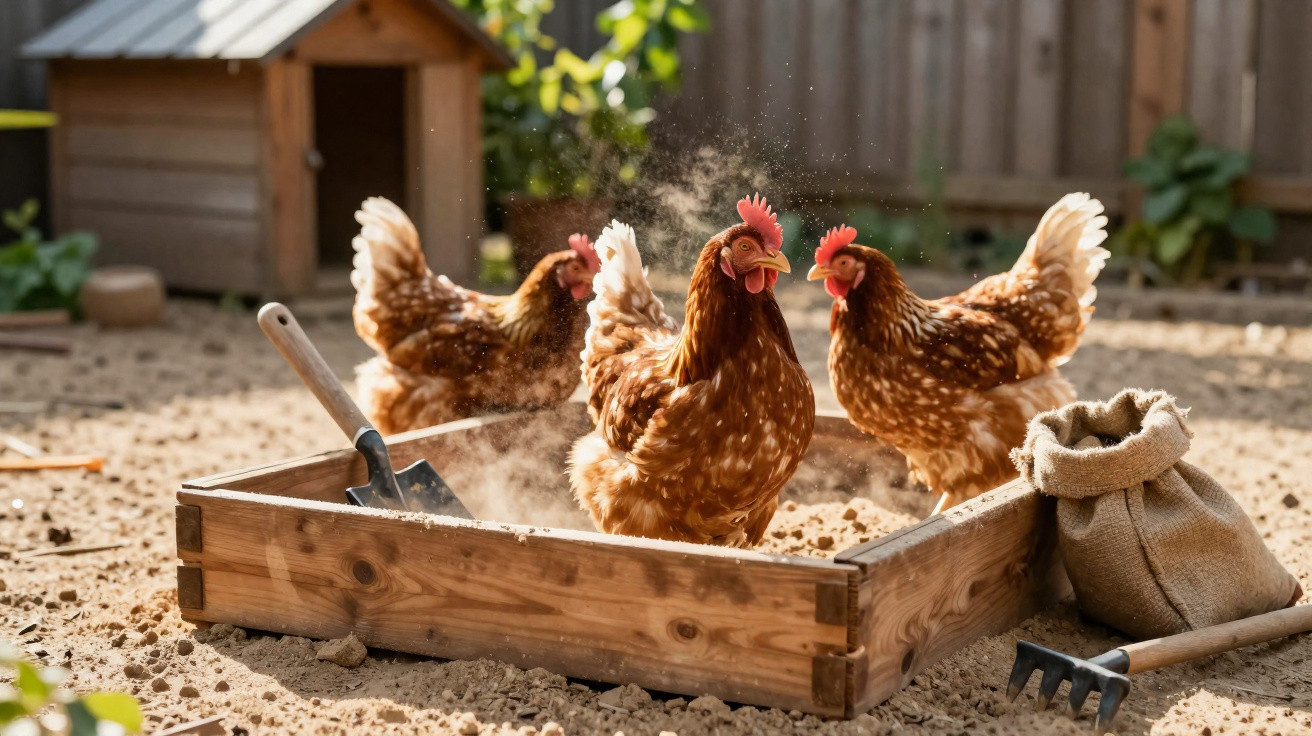
Many small-scale chicken keepers reach for costly shop-bought products, spraying, scattering powders and disinfecting. There may be a brief improvement, but the cycle soon starts again. Yet a remarkably simple solution, made from everyday materials, is already proving effective in many chicken runs: a purpose-built dust bath that the birds use independently to rid themselves of a large proportion of parasites.
Why chickens suddenly lay fewer eggs and scratch themselves sore
Reddened skin, raised feathers, frantic preening, and fragile or missing eggs are all familiar signs of an infestation of red poultry mites or other external parasites. These tiny blood-suckers shelter in cracks, gaps and the timber of the coop during the day, becoming active only after dark.
The consequences are clearly noticeable:
- Chickens sleep poorly and are tired throughout the day.
- The birds lose weight and look bedraggled.
- Egg production drops sharply; eggs may be absent or of poor quality.
- Open areas of skin attract further germs.
Many keepers try to control this issue using chemical products. There is a wide range available in shops, and the prices can be high too. At the same time, parasites can gradually become accustomed to particular active ingredients, or remain hidden in corners that spraying does not reach.
“A deliberately prepared dust bath makes use of chickens’ natural grooming instinct – and quite literally takes the air away from parasites.”
Dust bath rather than a water bath: how chickens truly clean themselves
Anyone who watches chickens for any length of time will notice a distinctive habit. In dry spots, they scratch out hollows, settle into them, beat their wings and let fine soil shower through their feathers. It may look playful, but it is highly effective personal care.
Fine particles work their way down to the skin, dislodging dirt, parasite larvae and eggs while absorbing excess skin oil. The dry conditions become hostile to mites and lice: they suffocate or drop away from the host.
By contrast, a water bath offers chickens very little benefit. Damp feathers lose their insulating properties, chill the body and create a moist environment in which bacteria and mites thrive even more readily. For this reason, many experienced keepers deliberately avoid water baths altogether and rely entirely on dry bathing areas.
How to set up an effective dust bath in the chicken run
A useful dust bath does not require specialist equipment. What matters far more is an appropriate size, a well-chosen location and a fine, dry filling mixture.
Suitable containers for a chicken dust bath
Good options include:
- a sturdy wooden box with high sides,
- an old mortar mixing tray that has been thoroughly cleaned,
- a retired feed tray or planter,
- a shallow concrete or galvanised tub.
The rim needs to be high enough to stop the dust immediately being flung out when the birds shake themselves vigorously. A depth of around 15 centimetres works well. For a small flock of four to five chickens, a container measuring approximately 50 by 50 centimetres is sufficient, though a larger one is preferable so several birds can bathe at once.
The filling mix: dry from the first grain to the last
The contents determine how effectively the bath works against parasites. A proven basic recipe for each large dust bath is:
- 10 litres of dry, fine sand
- 5 litres of sieved wood ash
- 5 litres of very fine, stone-free garden soil
Each ingredient has a distinct role:
- Fine sand acts as a gentle exfoliant. As the chickens roll, its grains filter deep into the plumage, loosen attached larvae, fleas and mites, and carry them outwards.
- Sieved wood ash from a stove or fireplace - use it only once completely cold - reaches the tiniest spaces and blocks the respiratory system of red poultry mites. Ash also absorbs skin oil.
- Fine soil brings the components together into a slightly mouldable material in which chickens can lie and scratch comfortably.
“Important: the entire mixture must remain consistently dry. Even slight dampness reduces its effect and can cause clumps to form.”
Choosing the right spot in the chicken run
A dust bath belongs in a dry position protected from rain. An ideal site is:
- beneath a permanent roof or coop overhang,
- under a densely covered shelter,
- or in a corner where you add a roof cover.
If rain gets in, the mixture quickly turns into a sticky mass that no longer works and that the birds will avoid. The location should also be easy to reach, allowing you to act quickly when the contents need replacing.
Clear space around the container makes it easier for chickens to approach and hop in. Group bathing is positively desirable: several birds will often settle in together, helping to dislodge additional parasites from one another.
Keeping the dust bath effective over time
Maintenance is minimal if you establish a small routine. A quick inspection once a week is enough:
- Break up any clumps with a small rake or hand hoe.
- Remove fresh droppings and loose feathers.
- Check by hand that the mix remains dry and loose.
As soon as the contents feel heavy or slightly damp, or look noticeably grey and dull, it is worth replacing the whole mixture. The old mix can go onto the compost heap, provided no strong chemicals have been added.
“Many keepers report that, only a few weeks after installing such a dust bath, scratching fits lessen, bare patches grow back and egg production starts to improve again.”
What a good dust bath cannot replace - and what it can
An effective dust bath is not a free pass to neglect the coop. Anyone wanting long-term relief from red poultry mites should combine several measures:
- Inspect wooden surfaces regularly and minimise cracks.
- Construct perches so that as few gaps as possible are created.
- Change bedding more often and keep it dry.
- Check new arrivals before introducing them to the existing flock.
The dust bath removes a substantial share of parasites from the birds’ bodies, while a clean coop environment restricts their ability to multiply. In severe cases involving large mite colonies, additional treatment may still be needed temporarily. However, the frequency of such action often falls considerably when birds can use a well-maintained dust bath every day.
Practical tips and common day-to-day mistakes
Beginners in particular sometimes underestimate how intensively chickens will use a new dust bath. After only a few days, the container may look noticeably emptier because large amounts of material are carried out in the birds’ feathers. Keeping a small reserve of dry sand and sieved ash on hand saves unnecessary trips and frustration.
A common mistake is using materials that are too coarse. Gravel, coarse builders’ sand or soil containing lots of stones may lead birds to test the container briefly before ignoring it. The finer and looser the mixture, the more willingly they will lie in it and work dust deep into their plumage.
Anyone using a wood-burning stove should burn only natural, untreated wood if its ash is later intended for the dust bath. Painted or pressure-treated timber has no place in this context. The ash must be completely cold before it is added to the mixture.
Why the effort is genuinely worthwhile for small-scale chicken keepers
A properly functioning dust bath provides several benefits at once: less stress for the birds, a lower parasite burden, more consistent egg production and noticeably calmer social behaviour within the flock. Chickens that can groom themselves at their own pace appear more settled and show far less feather pecking.
It also reduces the need for chemical preparations. This is easier on both the budget and personal health, as there is less spray mist and fewer residues in the coop. This consideration is becoming increasingly important for families with children who regularly help in the chicken run.
Anyone just starting to keep chickens should plan for a dust bath as a permanent part of the set-up from the outset. Many problems experienced keepers complain about do not arise at all when birds have access to a suitable dry bath from their first day. When in doubt, an improvised but dry container filled with sand and fine soil is better than no opportunity to roll and dust-bathe at all.









Comments
No comments yet. Be the first to comment!
Leave a Comment