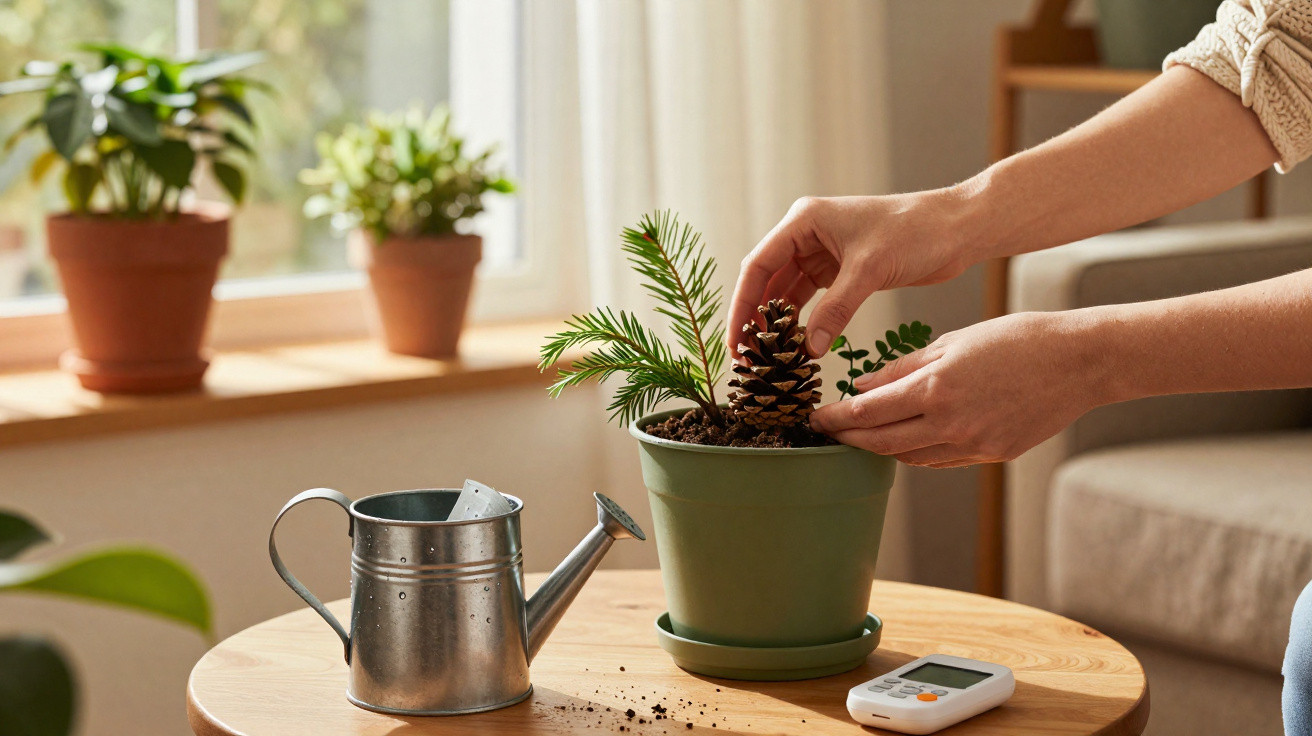
A simple find from the woods is currently getting plant enthusiasts talking: a pine cone is said to reveal within seconds whether a houseplant needs water.
Many watering cans come out sooner than plants would like. Sometimes plants are watered too heavily, sometimes far too infrequently – resulting in yellow leaves, mould in the pot or shoots that suddenly droop. A clever idea is now doing the rounds: an ordinary cone collected in the woods is meant to indicate water requirements. It may sound like hocus-pocus, but it is based on a genuine natural phenomenon.
Why getting the watering amount right for houseplants is so tricky
Watering is among the most common sources of mistakes with houseplants. The difficulty is that the surface of the compost often does not reveal what is really happening inside the pot. Many people therefore reach for the watering can more often “just to be safe” – and may harm the plant more than they realise.
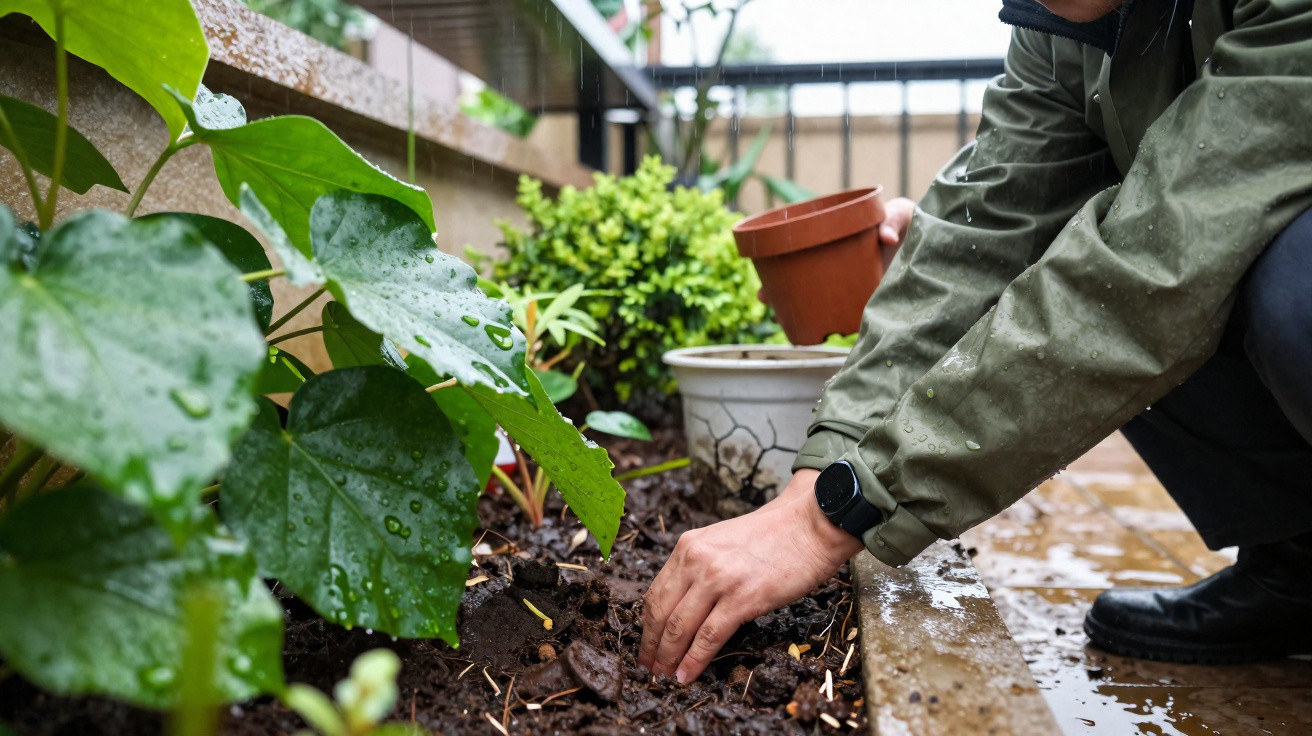
Too much water causes waterlogging. Roots then receive barely any oxygen, start to rot and become vulnerable to fungi. Small fungus gnats can suddenly appear in the living room because they thrive in damp compost. At the other extreme, plants dry out when they receive too little water, their leaves droop or they shed them altogether.
The greatest danger to houseplants is usually not drought, but well-intentioned overwatering.
Water requirements can fluctuate considerably, particularly in summer, in dry centrally heated air or in very warm rooms. Fixed watering schedules such as “once a week” are often unsuitable. A tool that helps assess the condition of the growing medium more accurately can prevent a great deal of trouble.
What the pine cone trick claims to do
The idea sounds wonderfully straightforward: in autumn or during a woodland walk, collect a dry, open pine cone. It reacts to moisture – its scales close in high humidity and open again when the air is dry.
The concept is to place the cone near the plant or press it lightly into the pot. Changes in its scales are supposed to indicate whether the plant needs water.
In practice, it usually works like this:
- Collect a dry, clean pine cone.
- At home, remove any dirt and insect remains.
- Place it around two centimetres deep in the pot, away from the stem.
- After a few minutes, watch whether the scales tend to open or close.
If the scales spread widely, this is meant to signal dry conditions. If they remain closely pressed together, the surroundings are considered more humid – and the plant supposedly does not need water. At least, that is the promise made in various gardening blogs and social-media videos.
What a pine cone actually measures
This is the crucial point: a pine cone responds to air humidity, not to moisture deep down in the pot. Its scales are made of tissue that contracts when damp and expands when dry. In nature, this mechanism controls seed dispersal – the scales open in dry weather so the wind can carry away the seeds.
The cone tells you how humid the air around the pot is, not how wet the growing medium is around the roots.
If strong sunlight shines onto the windowsill, the cone may be wide open even though the compost beneath it is still thoroughly moist. Conversely, in a cool room with poor ventilation, the cone is more likely to stay closed even if the plant is already thirsty.
Even so, the method has its appeal: it makes humidity visible and encourages beginners to observe their plants more closely. However, it is not suitable as the only indicator of when to water.
How to use the pine cone trick sensibly
Anyone who is curious can certainly try the pine cone trick – ideally as a playful addition to established checks.
Step-by-step guide for home use
- Collect only dry, widely open cones, preferably from the woodland floor.
- Give the cone a quick shake and remove needles, soil and small insects.
- Push the cone lightly into the pot or simply place it on the compost surface.
- Watch the behaviour of the scales for a few minutes.
- At the same time, feel two to three centimetres into the growing medium with a finger.
Combining both signals gives you a better sense of the plant’s microclimate: your finger shows whether the roots still have water, while the cone indicates whether the air is currently more dry or humid.
This can be especially useful with plants that cope well with dry air, such as Sansevierias (snake plants), Aspidistra or many types of cactus. They tolerate the air and the top layer of the growing medium drying out from time to time.
More reliable alternative methods
Anyone wanting to keep houseplants healthy over the long term should not rely solely on visual gimmicks. Several methods give a much more accurate indication of whether watering is needed.
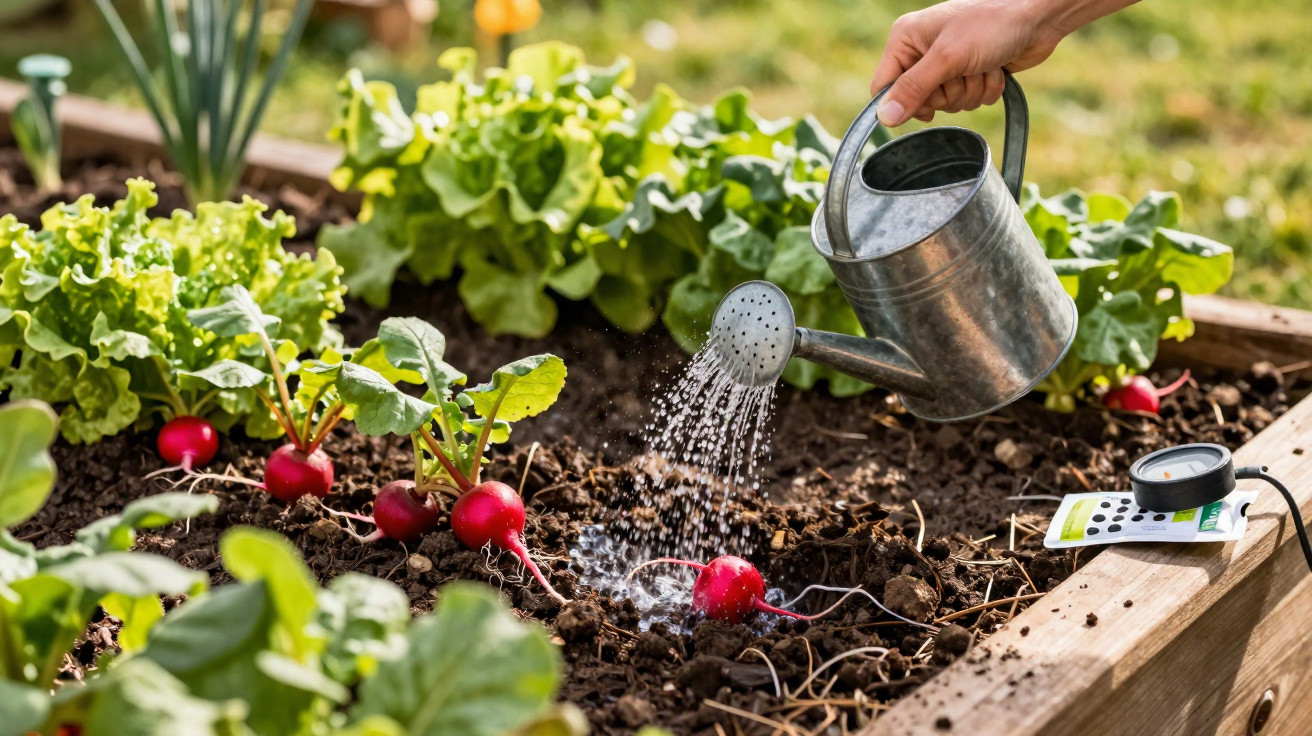
- Soil moisture meters: Small probes inserted into the growing medium, using a scale to show how much water is present around the roots.
- Checking the pot’s weight: Lift it before and after watering. Over time, it becomes easy to notice the difference between a dry pot and a wet one.
- The finger test: The classic method: push a finger a few centimetres into the compost. If it feels dry throughout, the plant can be watered. If the soil is cool and slightly damp, wait a little longer.
- Slow watering or automatic systems: Drip systems, clay cones or timer-controlled systems release measured amounts of water and prevent repeated flooding.
Different plant types benefit from different approaches. Succulents such as Echeverias or Haworthias prefer to dry out almost completely before receiving more water. Tropical plants including Monstera and Calathea, by contrast, like their compost to remain evenly and slightly moist. Citrus plants on a windowsill favour more pronounced shifts between wet and dry conditions.
Common mistakes when using a pine cone
A number of misunderstandings surround the pine cone trick. Knowing about them prevents disappointment – and saves plants unnecessary stress.
| Mistake | Consequence |
|---|---|
| Treating the cone as an exact “soil sensor” | Watering at the wrong time because it only indicates air humidity |
| Pushing the cone into soaking-wet compost | The cone develops mould and attracts fungi and insects |
| Positioning it in direct sunshine or above a radiator | A distorted reading, as heat opens the scales sharply |
| Not comparing it with a finger test or a look at the plant | Leaves turn yellow, fall off and the plant weakens |
Those who see the cone as a decorative clue are closer to reality. It provides a rough impression of air humidity – a kind of basic natural hygrometer, nothing more.
Why plants react differently to air and soil moisture
Houseplants inhabit two worlds at once. Their roots sit in the growing medium, while their leaves and stems are exposed to the indoor air. Each affects their water balance in a different way.
Dry air makes leaves lose water more quickly through evaporation. If the pot is also sitting in very wet compost, the plant continues drawing up water but risks root rot. In the opposite situation – high air humidity but bone-dry compost – a plant can sometimes look healthy for longer, even though its roots can barely find any water.
This is exactly where the pine cone comes in: it highlights how dry or humid the air around the pot is. Regular observation helps explain why some plants suddenly develop brown leaf tips in winter central-heating air, or look better in a humid bathroom.
Everyday examples with houseplants
A few everyday situations show how the cone can be incorporated sensibly:
- Windowsill above a radiator: The cone is wide open but the compost is still slightly moist – do not water immediately; instead, place a bowl of water nearby to raise the humidity a little.
- Shady corner in the hallway: The cone is usually closed while the surface compost is dry – first check lower down for remaining moisture before adding water.
- Bathroom with many plants: The cone remains fairly closed even though little watering takes place – high humidity from showering provides relief here, so the watering interval can be extended.
Anyone who records these observations or simply keeps them in mind will quickly develop a feel for which part of the home suits each type of plant – and how watering intervals can be adjusted.
The pine cone does not become a miracle solution, but it can be an interesting learning tool: it makes something visible that would otherwise remain unseen. Anyone who also continues to use the finger test, checks the leaves and, where appropriate, uses a moisture meter will reduce watering mistakes considerably – and protect houseplants from their most frequent problem: well-meaning but damaging over-care with the watering can.

Comments
No comments yet. Be the first to comment!
Leave a Comment