Many Japanese maples look tired after winter – yet one quick job in March can determine whether they struggle or put on vigorous new growth.
In countless gardens, there is a Japanese maple that simply “doesn’t really thrive”: brown leaf edges, dried shoot tips and hardly any fresh growth despite watering and encouragement. Often, the issue has nothing to do with the variety or position, but with something missing from the ground – quite literally.
Why Japanese maples need ground protection in March
Japanese maples (Acer palmatum) originate from open, cool woodland. In their native habitat, they grow beneath larger trees that cover the soil with leaves and organic matter throughout the year. Many central European gardens lack precisely this woodland-like environment.
Their roots are extremely shallow, sitting only a few centimetres below the surface. In spring, they are exposed to the full force of the weather: late-night frosts, cold winds, followed by sudden strong sunshine and drying heat.
An unprotected root zone means constant stress for a Japanese maple – resulting in brown leaf margins, little growth and an overall weakened tree.
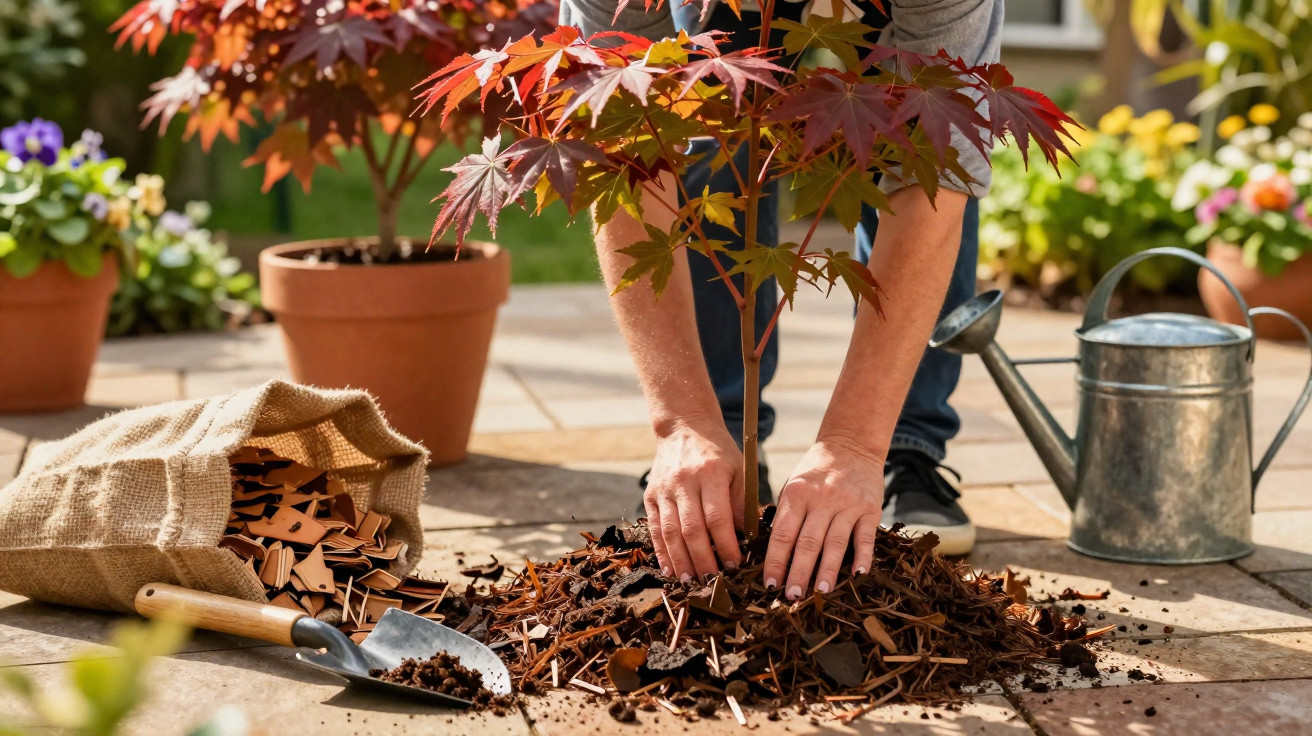
To prevent this, apply a protective layer of organic material around the trunk in March. This straightforward measure recreates the natural woodland floor, where roots remain consistently cool, slightly moist and well aerated.
Signs of an unprotected maple
Typical warning signs that the tree is struggling in its location include:
- leaf edges drying out and turning brown despite regular watering;
- young shoot tips dying back or remaining very short;
- sparse-looking foliage and an overall “thin” appearance;
- soil around the trunk that is hard and cracked, or conversely, constantly waterlogged.
Many gardeners respond by adding more water or fertiliser – usually with good intentions, but without addressing the cause. The key intervention is at the base of the tree in March.
Mulching in March: how to create a protective layer step by step
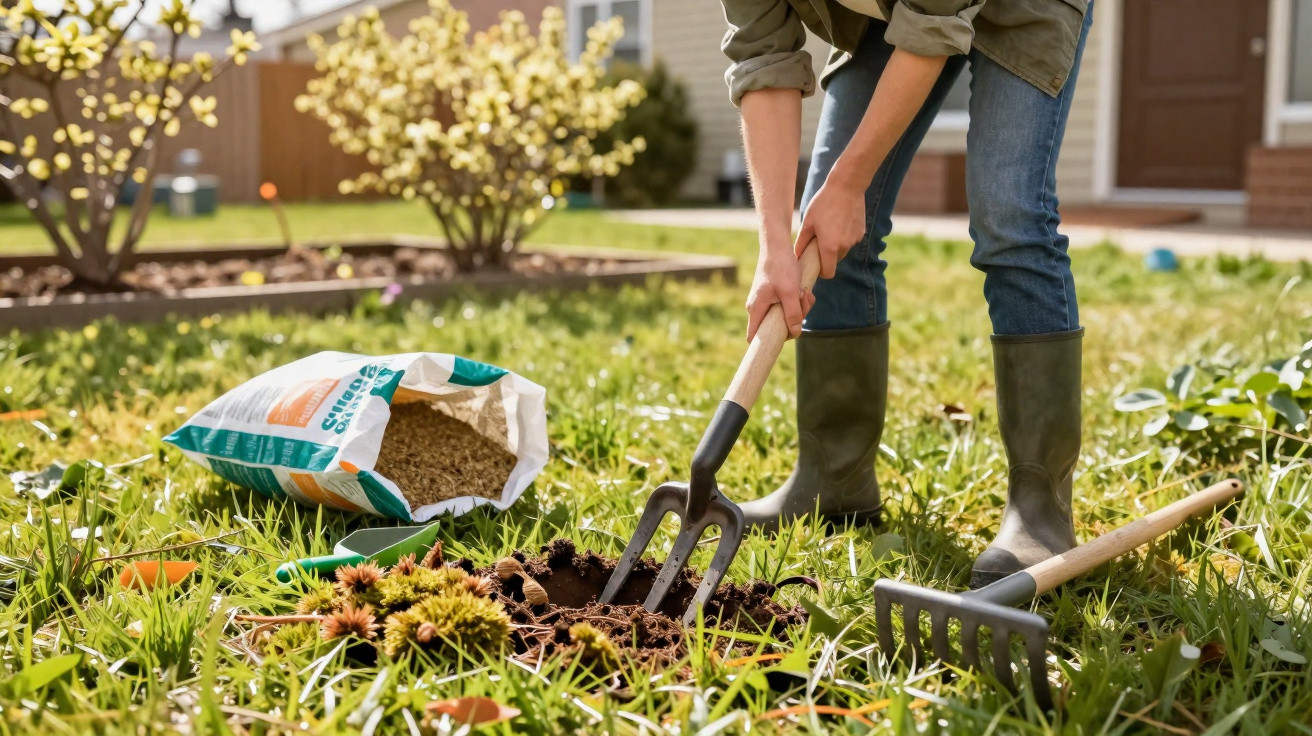
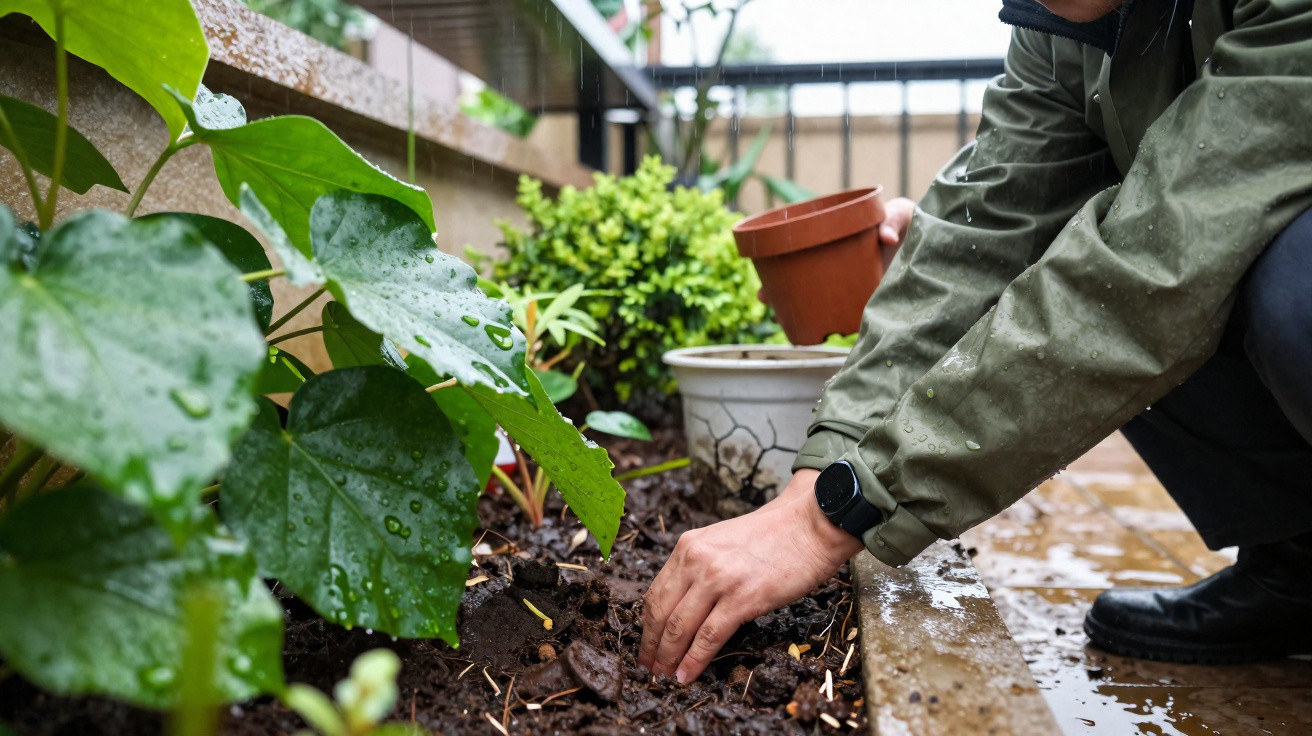
Preparing the soil
As soon as the soil is no longer frozen in March, begin the preparation:
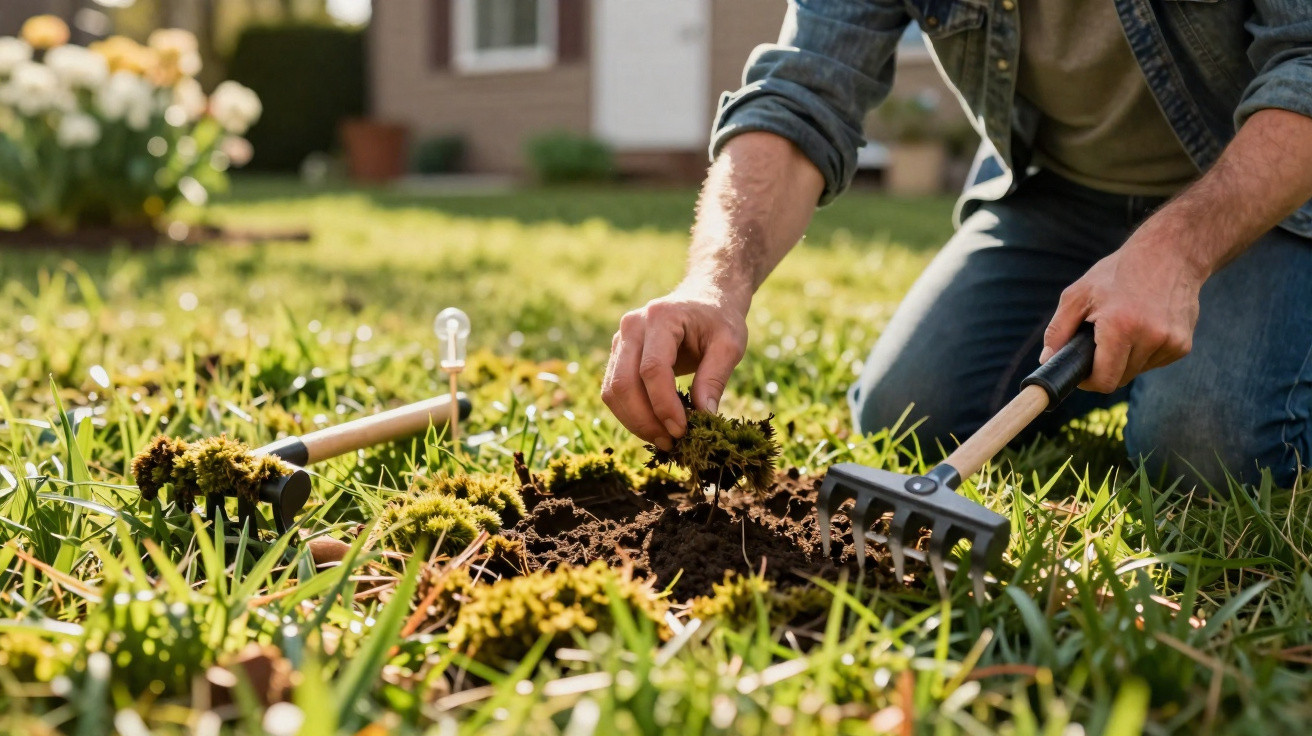
- Carefully remove weeds by hand around the tree.
- Gently loosen the top layer of soil with a hand fork or your fingers, no deeper than 2–3 cm.
- Check the root area closely and avoid damaging any visible fine roots.
Use the canopy as your guide for the area to treat: everything beneath the spreading canopy forms the roots’ “working area”.
The right material for Japanese maples
Japanese maples prefer slightly acidic, humus-rich soil, similar to that of a deciduous woodland. Particularly suitable materials include:
- composted pine bark;
- well-rotted, dry leaf mould from your own garden;
- woodchip from untreated, fine branches (woody material rather than grass-heavy material);
- mature garden compost applied in a thin layer.
Materials that heat up strongly or completely block airflow are less suitable, for example:
- dark gravel or chippings in full sun;
- weed-control sheeting or fleece used beneath stones;
- thick layers of fresh grass clippings, which rot quickly.
How thick the mulch layer should be
Once the soil has been loosened, apply the protective layer itself:
- layer depth in a border: around 5–8 cm;
- never pile it higher than the visible root flare at the base of the trunk;
- leave a clear ring of roughly 10 cm around the trunk.
This clear ring is crucial. If material sits directly against the trunk, the bark remains permanently damp. That creates ideal conditions for fungi, rot and bark damage. The slightly swollen trunk base should always remain clearly visible.
The ideal mulch layer protects the roots without “suffocating” the trunk – like a breathable carpet across the root zone.
How the right watering routine boosts the effect
Watering in borders: less often, but thoroughly
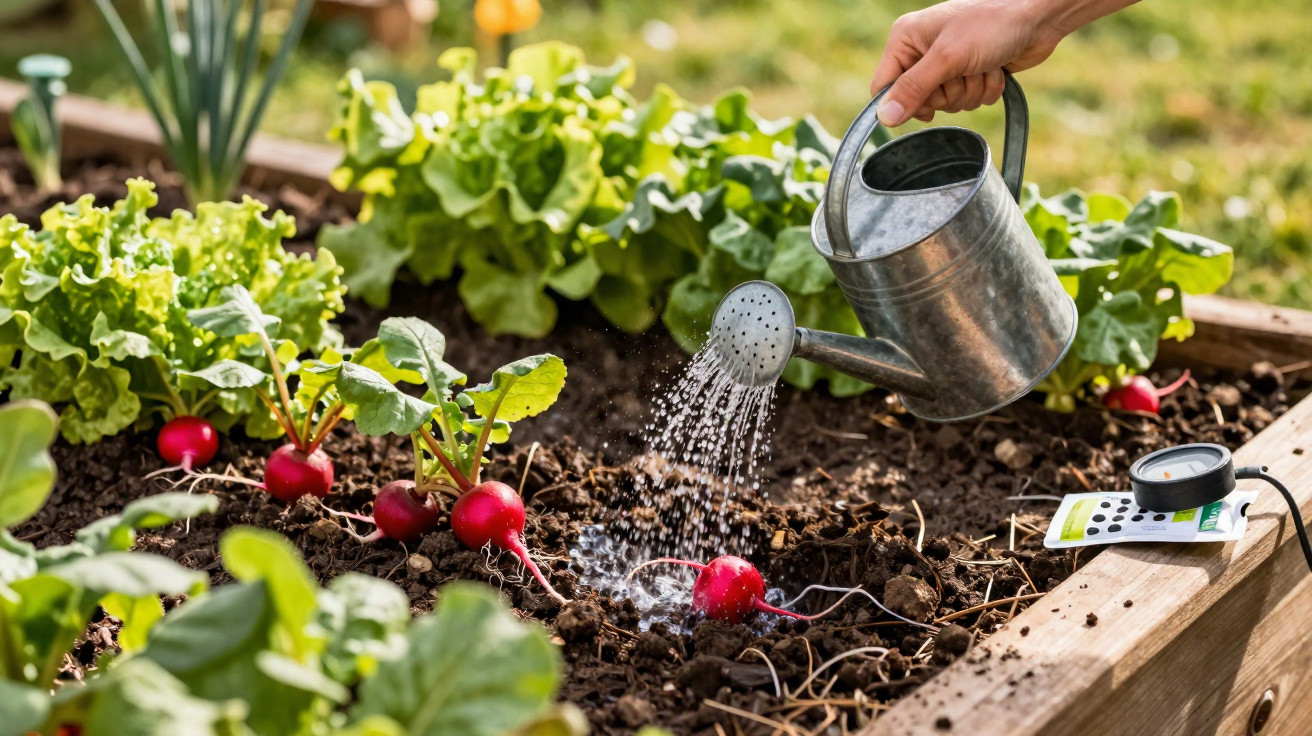
A mulch layer improves the soil’s ability to retain water and slows drying. At the same time, the covering helps prevent extreme surface waterlogging. The following rules of thumb work well for maples planted in borders:
- in normal weather, water deeply around twice a week;
- increase this to three or four watering sessions per week during hot spells;
- water generously less often rather than merely “dampening” the soil every day.
Mulch allows water to soak in gradually instead of running off the surface or evaporating too quickly. Fine roots can therefore access steady, even moisture.
Special considerations for container plants
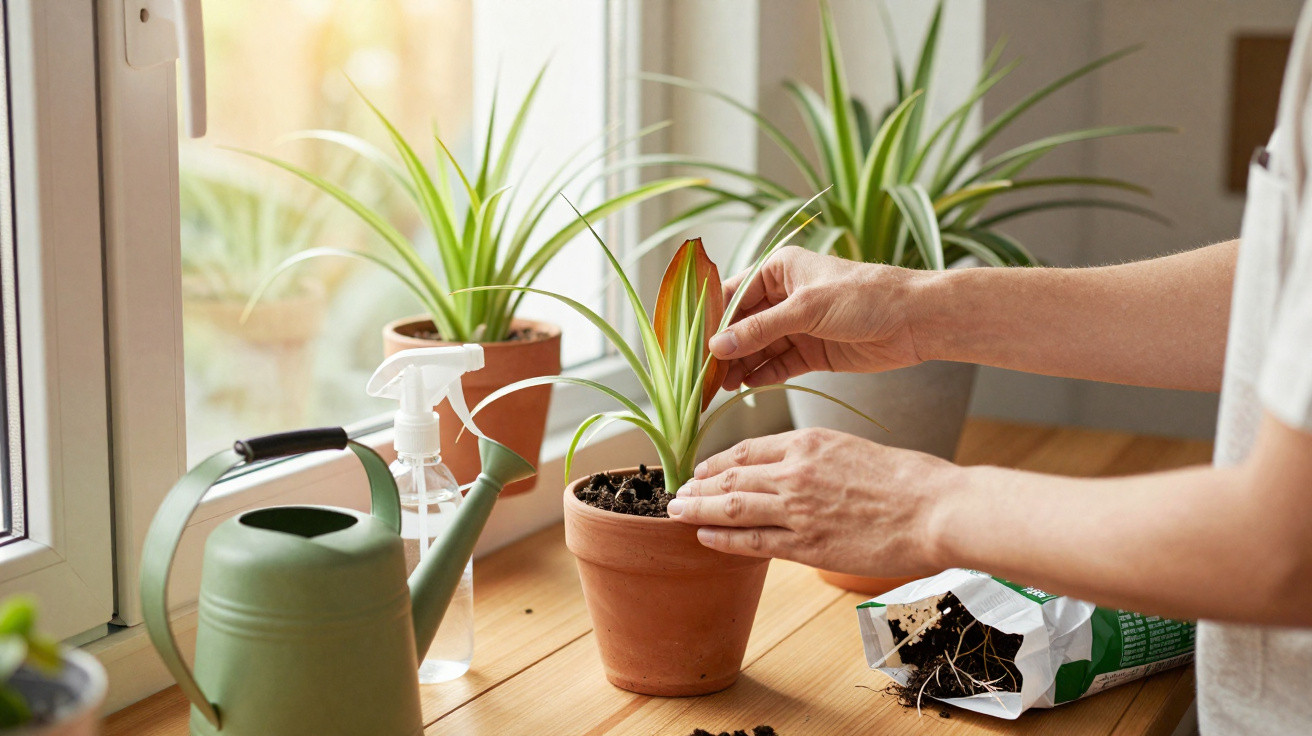
Japanese maples in pots react even more sensitively to drought and heat peaks. For containers:
- apply a mulch layer only 3–5 cm deep;
- empty saucers after every watering so that waterlogging cannot develop;
- protect the pot from midday sun and wind wherever possible.
Compost in a container heats up much faster. The thinner layer prevents the root area from becoming too warm and too wet. Towards the end of summer, watering can be reduced slightly – but only enough to ensure that the rootball does not dry out. This helps the tree prepare strong autumn colour.
Common mulching mistakes – and how to avoid them
Many well-meant care measures weaken Japanese maples rather than helping them. Three common examples are:
- “Volcano mulch”: mulch is heaped against the trunk in a cone. The result is rot and poor gas exchange.
- Plastic beneath the mulch: plastic sheeting or fleece prevents air and water from moving through the soil. Roots then grow towards the surface and become even more sensitive.
- Compost that is too heavy: thick compost layers can compact, retain water and “suffocate” the soil.
Instead, choose loose, structured material and keep the trunk clear to create ideal conditions for a finely branched, healthy root system.
Why March is the ideal time
In March, the tree begins directing its first reserves into buds and new fine roots. The soil is still cool, but will soon dry out more rapidly. The mulch layer makes the most of this transitional period.
Roots can develop undisturbed, without constantly having to contend with frost, intense sun or cooling caused by evaporation. Applying protection only in summer fails to prevent much of the damage, because the stress has already begun.
The long-term benefits of mulching
The advantages become apparent not only in the current year, but during later seasons too:
- the canopy becomes denser and leaf size increases;
- autumn colour appears more intense;
- the tree becomes less sensitive to dry periods;
- the need for additional fertiliser decreases.
Over time, a humus-rich, lightly crumbly soil zone develops beneath the mulch layer – precisely the conditions in which Acer palmatum can fulfil its potential.
What many people overlook: position, wind and pot colour also matter
Even the best mulch cannot fully compensate for a completely unsuitable position. Japanese maples like bright conditions, but not relentless blazing sun, and they tolerate wind only to a limited extent. Anyone placing a tree in an exposed, full-sun front garden is likely to face scorched leaves despite careful maintenance.
For container-grown trees, it is worth considering the pot colour: dark pots heat up much more in sunshine than pale ones. One simple solution is to provide the pot with light shade in summer or place it inside a larger, light-coloured outer container.
Those who mulch deliberately in March, use an appropriate watering method and assess the position realistically will get considerably more from their Japanese maple – with manageable effort but a noticeable improvement in the tree’s health and appearance.

Comments
No comments yet. Be the first to comment!
Leave a Comment