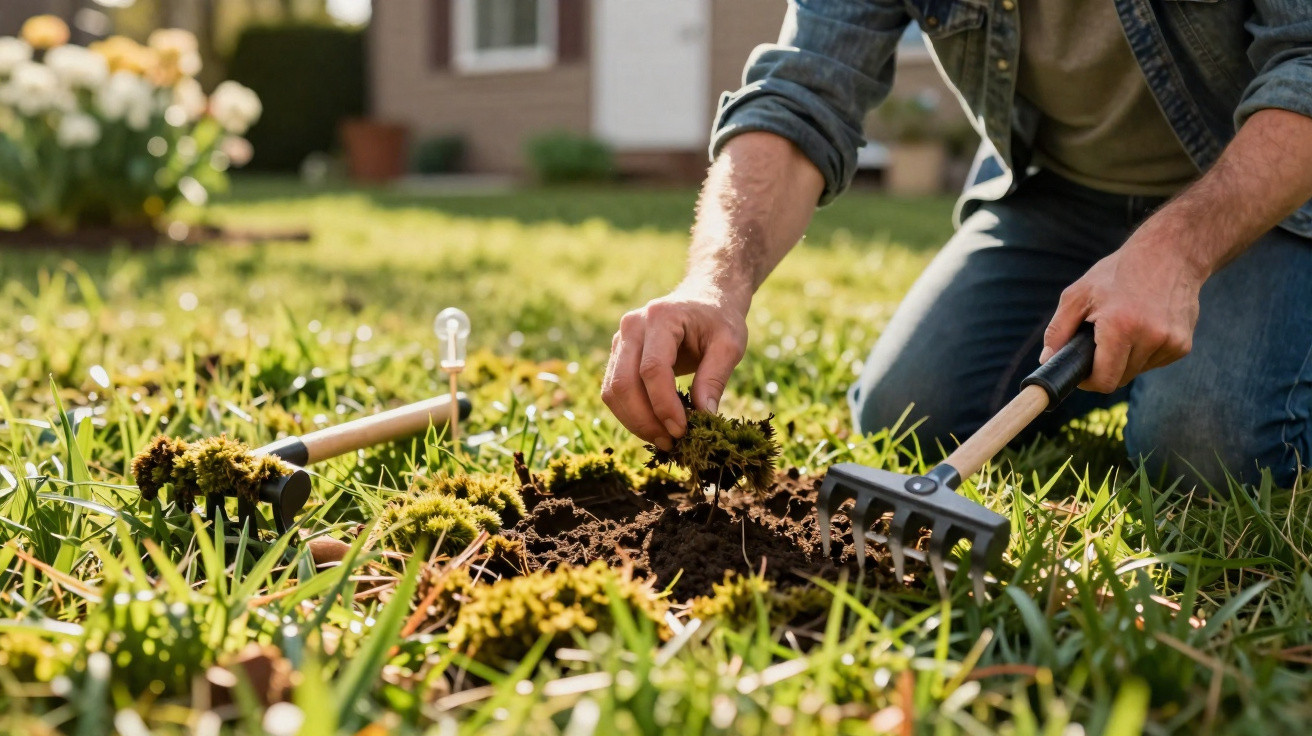
After a wet winter, many keen gardeners are eager to reach for the lawn scarifier – yet one widespread spring mistake can ruin the lawn within just a few days.
Starting too impatiently does more than remove a little moss: it can effectively scalp the turf. Brown patches, bare soil and more weeds are the likely result. A few straightforward checks, along with good timing, can prevent this quite easily.
Why a lawn feels like a sponge after winter
Following a damp winter, the soil in many gardens holds more water than a lawn can tolerate. The turf feels soft and springy underfoot, while shoes leave pronounced impressions. Moss then spreads into areas that were previously a rich green.
There are usually several reasons for this:
- soil that stays wet and has poor air circulation
- mowing too short during either the final or first cut of the season
- clippings left on the lawn, creating a thatch layer
- slightly acidic soil, where moss thrives more readily than lawn grasses
This lawn thatch acts like a wet blanket: air struggles to reach the roots, water drains away more slowly and the grass blades turn yellow. Scarifying addresses precisely this issue – provided it is done at the right time.
What scarifying actually does – and what it cannot do
When a lawn is scarified, blades cut a few millimetres into the soil surface. They pull out moss and thatch without extensively damaging the roots – at least when carried out properly. Many gardeners see it as a miracle treatment, then set the machine far too deep or use it at the wrong moment.
“Used correctly, scarifying brings air to the roots and rejuvenates the lawn – but done too early or too aggressively, it leaves behind a bare, weakened area.”
Scarifying does not replace essential lawn care. If you consistently mow too low, do not feed the lawn or allow waterlogging, the moss will soon return, however often you run the machine over the area.
The typical spring mistake: starting too early on unsuitable ground
Timing is the key issue in spring. As soon as the first warm sunshine appears, many people take the scarifier out of the shed. Although this may look productive, it can cause serious damage to the lawn.
Signs that it is still too early
Walk across the lawn for a few steps, either barefoot or wearing flat shoes. The following signs indicate that you should wait a little longer:
- The ground gives noticeably underfoot and feels spongy.
- Water remains in puddles for several minutes after rainfall.
- When you grasp the turf, you find wet mud rather than firm, crumbly soil.
- The grass has scarcely grown, and you have mown it only once or not at all.
In these conditions, the scarifier cuts deep furrows into the lawn. Its blades remove not only moss and thatch but healthy roots too. The turf becomes thinner, creating ideal conditions for weeds and further moss growth.
“The critical source of mistakes in spring is soil that is too wet and still cold: scarifying it destroys the roots faster than the lawn can regrow.”
The best time to scarify: follow the lawn, not the calendar
For gardens in central Europe, the suitable period generally falls between March and May. However, the month matters less than these three practical signs:
- The soil is free from frost and has dried noticeably, while still not being hard.
- The lawn grasses have visibly grown and have been mown two or three times.
- Daytime temperatures are mostly in double figures, and the soil temperature is around 8 to 10°C or higher.
Only once the lawn is growing actively can it recover from the cuts. Scarifying always puts grass under stress, so it needs sufficient energy to produce new shoots and close any gaps.
Only scarify when there is genuinely too much thatch
Many lawns do not need scarifying every year. A quick test using a metal rake is enough:
- Pull the rake firmly through the turf.
- If only a small amount of material catches in it, feeding and ordinary mowing will usually be sufficient.
- If you collect large quantities of moss and brown thatch, scarifying is worthwhile.
Without a clear thatch problem, scarifying simply places unnecessary strain on the lawn.
How to set the scarifier without damaging the lawn
Besides poor timing, excessive cutting depth is the other major mistake. Many people turn the setting down low “so it gets properly clean”. Yet what appears thorough can tear grass roots out of the ground.
A reliable setting for domestic gardens is:
- Set the cutting depth to only 2 to 3 millimetres into the soil.
- Adjust the machine so that, when stationary, the blades barely touch the ground or only brush it very lightly.
- Walk at a consistent pace, without stopping or jerking the machine forward.
- In heavily thatched areas, make a second pass at right angles to the first.
“The blades should score the turf, not plough it up. As soon as bare roots and wide grooves are visible, the setting was too deep.”
Preparation: scarifying is scarcely worthwhile without these steps
A brief inspection and a few preparatory jobs significantly improve the chances of success:
- Mow the lawn to a height of around 3 to 4 centimetres.
- Collect the clippings carefully so the blades can work freely.
- If the soil is dust-dry, water lightly one or two days beforehand – the surface should be merely fresh and moist, not muddy.
- Plan a light starter feed at the beginning of the season, so the lawn has energy for new growth after treatment.
Ignoring this preparation can lead to blunt blades, machines that clog and deep grooves that take a long time to close.
After scarifying: let the soil recover rather than adding more stress
Immediately after using the machine, a lawn often looks alarmingly torn up. The aftercare now determines whether the shock becomes a fresh start or an ongoing problem.
Remove all moss and thatch
First, clear away every bit of material pulled up by the machine. If it remains on the lawn, thatch can quickly form again in the same place.
- Gather it with a rake or the lawn mower’s collection box.
- Compost the material unless there was an extremely dense layer of moss.
- Dry heavily moss-covered piles separately and add them to the compost only sparingly.
Balance the soil: move away from acidic conditions
Lawns prefer soil that is slightly neutral, whereas moss favours distinctly acidic conditions. Using only iron-based moss killers makes the soil more acidic – a classic case where everything turns brown in the short term, only for moss to dominate again a few months later.
“Calcium-containing soil improvers reduce acidity and help shift the balance in favour of the grasses. Chemical iron-based moss killers often solve the problem only briefly and worsen the trend towards acidity.”
Applying a calcium-rich soil conditioner after scarifying supports stabilisation. Beforehand, it is worth using a quick test from a garden centre to assess the pH level roughly.
Closing bare patches: overseeding is essential, not optional
Where the machine has opened up the turf substantially, gaps will appear. If they are left uncovered, weeds and fresh moss will establish themselves. That is why overseeding immediately after scarifying is essential.
- Use a specialist lawn repair seed mixture.
- Lightly loosen bare areas and rake the seed in well.
- Scatter a thin layer of soil or lawn substrate over it, so the seeds do not dry out.
- Keep the surface evenly moist in the following weeks, without creating puddles.
A moderate spring fertiliser strengthens both the established and new grass. During the first few days after scarifying, children, dogs and heavy garden furniture should stay off the lawn where possible.
How often scarifying makes sense – and when less is more
Many guides suggest an annual scarifying routine. In reality, for most lawns it is enough to treat the grass thoroughly every two to three years, as long as the rest of the care routine is right.
As a rule of thumb:
- treat young lawns gently during their first one to two years
- older, robust lawns can tolerate one or two scarifying sessions each year if they are heavily affected by moss
- those who feed regularly, avoid mowing too short and prevent waterlogging will need the machine far less often
Repeated scarifying in spring and autumn without tackling the underlying causes of moss progressively weakens the turf. The lawn then becomes more vulnerable to drought and heat.
Further adjustments to keep moss under control for good
Scarifying is only one part of the solution. Small changes to day-to-day care determine whether a lawn stays dense or becomes patchy.
- Cutting height: never maintain it permanently at “carpet level”. A height of 4 to 5 centimetres is ideal for a domestic lawn.
- Mowing frequency: cut small amounts more often rather than mowing rarely and drastically.
- Watering: water infrequently but deeply, instead of applying a light sprinkling all the time.
- Soil aeration: aerate heavily compacted areas occasionally using a hand fork or hollow-tine aerator.
Making these adjustments reduces the risk of ruining the lawn within days through an ill-timed spring attack with the scarifier – and helps it remain dense, deep green and resilient underfoot throughout the summer.









Comments
No comments yet. Be the first to comment!
Leave a Comment