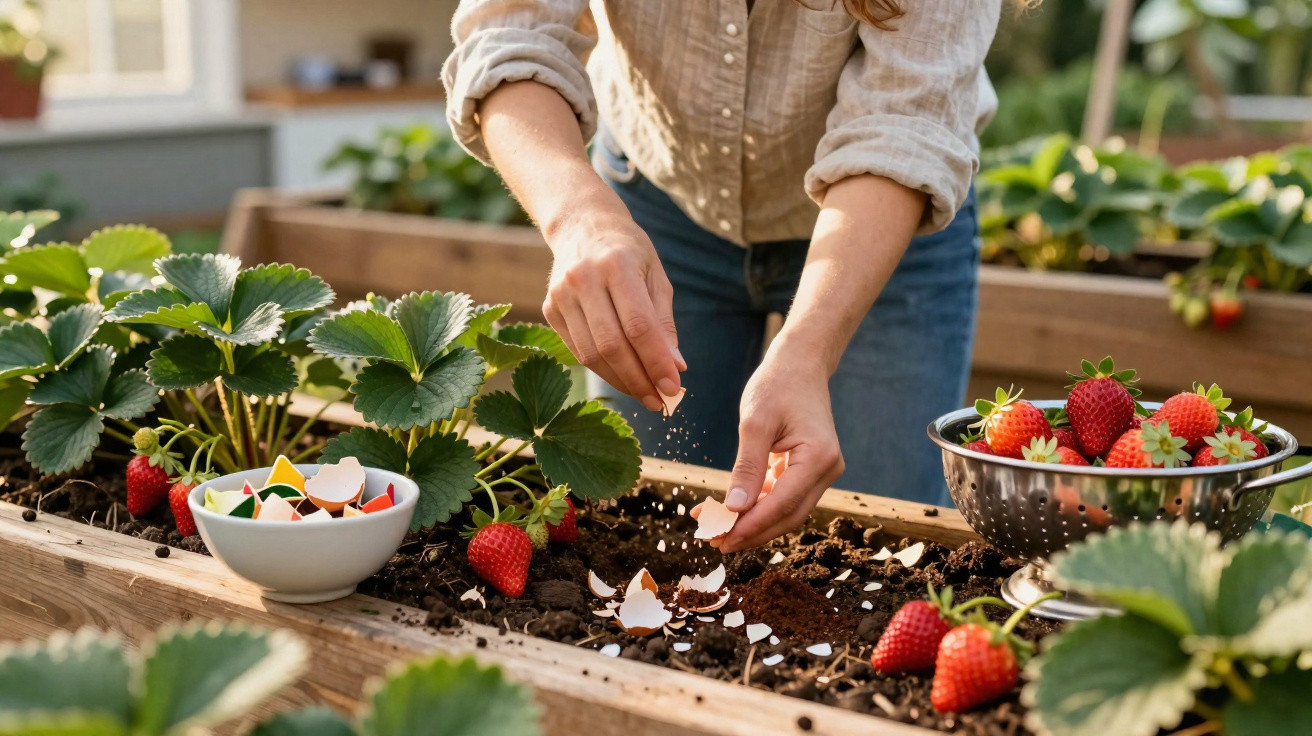
A simple kitchen trick can make all the difference.
Between March and May, the foundation is laid in garden beds, on patios and on balconies for whether strawberries grow large, juicy and flavoursome or remain small and weak. Choosing the right fertiliser at this point gives the plants a powerful start to the season. One waste product produced every morning in countless homes has a surprisingly important part to play.
Why strawberries need extra nutrients in spring
When the first fresh leaves emerge on strawberry plants in early spring, the plants are working hard beneath the surface. They are producing new foliage, renewing their roots and preparing to form flowers. All of this requires nutrients, particularly nitrogen.
This nutrient has a major influence on how vigorous the foliage becomes. That foliage later acts as the plant’s “factory”, supplying the fruit with sugars and nutrients. Without strong leaves, strawberries stay small, dry out more quickly and develop less flavour.
“Strong leaves in spring usually mean noticeably larger strawberries in summer.”
Strawberries thrive in humus-rich, mildly acidic soil that contains plenty of soil life. However, soil in many gardens is depleted or overly calcareous. This is where the kitchen helper comes in.
How coffee grounds support strawberry plants
Dried coffee grounds contain, on average, around two per cent nitrogen, along with smaller quantities of phosphorus and potassium. Their pH is often close to 6, placing them in the slightly acidic range that strawberries generally prefer.
This provides several benefits at once:
- Nitrogen: encourages leaf growth in spring
- Slightly acidic effect: improves many garden soils for strawberries
- Organic matter: feeds earthworms and soil organisms
- Slow release: nutrients are released gradually
Rather than putting coffee grounds straight onto the compost heap, using them specifically for strawberries can cover almost the entire spring feed from kitchen waste. For this to work properly, though, they need to be applied in the right way.
Coffee grounds as a liquid fertiliser: making a strawberry infusion
Instead of scattering a thick layer of coffee grounds around the plants, a gentler method works well: make a type of coffee-ground “tea” and use it to water the strawberries.
Step-by-step guide to coffee-ground infusion
Always begin with thoroughly dried coffee grounds. Damp grounds quickly become mouldy and can form hard crusts on the soil.
- Weigh out dried coffee grounds: around 40–50 g per litre of water.
- Put the grounds into a bucket or watering can and top up with water.
- Leave the mixture to stand for 24–48 hours, stirring from time to time.
- Strain the liquid through a sieve or cloth so particles do not block the watering can.
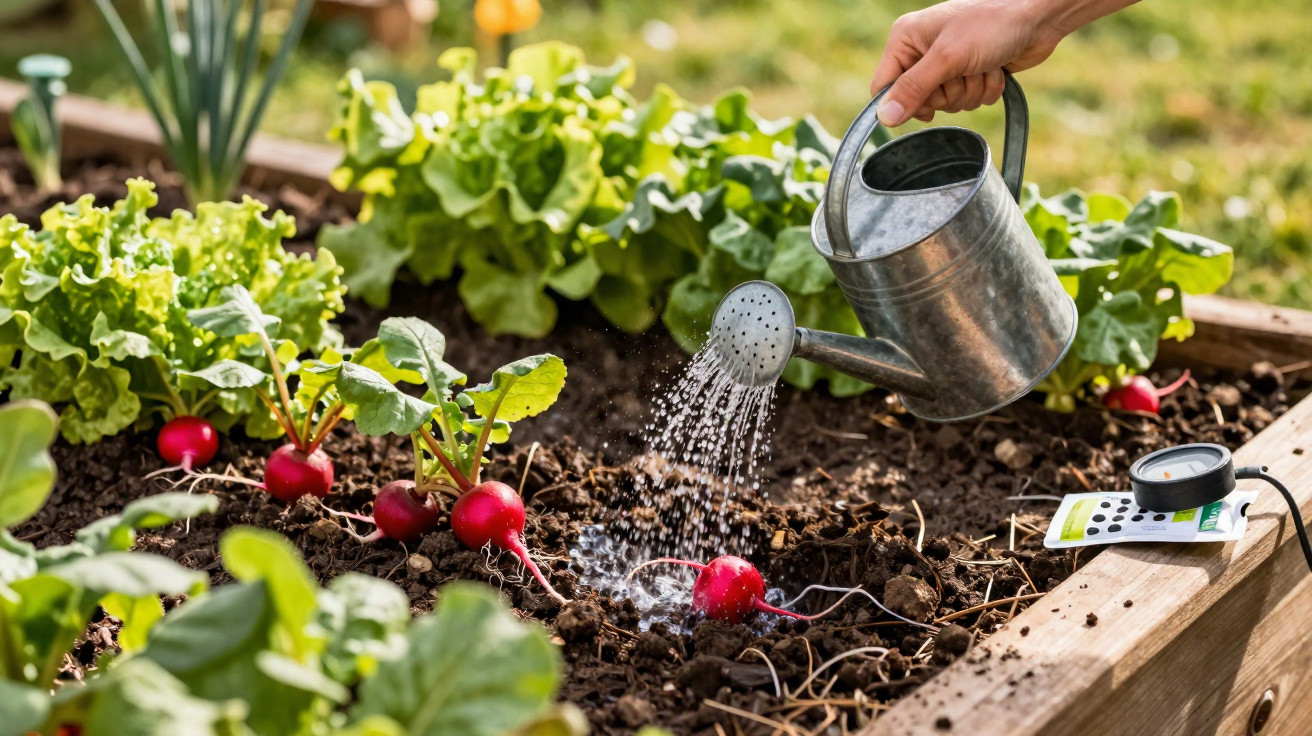
- Water only the soil around each plant, rather than the leaves. Around 250 ml per plant is sufficient.
For a 5-litre container of water, use roughly 200 g of coffee grounds. This is enough to feed several rows of strawberries, making it ideal for garden beds, raised beds or large containers.
When and how often should you water?
Coffee-ground infusion is clearly best suited to the spring growing period. Depending on the region, the most suitable window is roughly from March until the end of May, perhaps slightly earlier or later.
Use the following as a guide:
- One application every three weeks is sufficient in most cases.
- One or two applications are usually enough during spring.
- In soil that is already acidic or particularly heavy, use it only once a year.
Anyone also feeding plants with mature compost or a specialist berry fertiliser should regard coffee-ground infusion as a supplement, not an ongoing substitute.
Too much of a good thing: the risks of coffee grounds in strawberry beds
Coffee grounds may be natural, but they are still a concentrated source of nutrients. Applied in excessive quantities, they can make the soil too acidic or irritate the roots. Strawberries may then produce abundant foliage, while flowering and fruiting become weaker.
“Anyone who gives strawberries too much nitrogen will harvest mainly leaves – but hardly any fruit.”
Several points require particular attention:
- Acidic soil: Use sparingly where the soil is already acidic, for example near rhododendrons.
- Heavy soils: Do not keep working coffee grounds into very clay-rich soil, as this can worsen its structure.
- Risk of mould: Damp, undried grounds left on the surface encourage fungi and dense crusts.
If you are unsure, use a simple pH rapid test from a DIY shop once during the gardening year. If the strawberry bed already has a reading well below 6, coffee grounds should be used sparingly, or only as a diluted watering solution.
A practical extra benefit: coffee grounds deter some pests
Alongside their fertilising properties, coffee grounds offer another advantage: their strong smell repels some animals. Many gardeners report that certain insects and rodents visit plants far less often when some coffee grounds are spread into the upper soil layer around strawberries.
These include:
- Slugs and some types of beetle
- Ants
- Wasps
- Rats and mice
- Some midges
For light protection, a very thin layer of dried grounds, lightly worked into the soil between the plants, is enough. Coffee-ground infusion alone does not produce this effect as strongly because its scent fades more quickly.
Important: coffee grounds are toxic to dogs and cats in larger amounts. Pet owners should therefore avoid leaving visible piles in the bed; work the grounds in well or apply them only through the diluted watering solution.
Combining coffee grounds with other fertilisers
To get the most from strawberry plants, do not rely on a single nutrient source. A broad schedule for strong yet controlled feeding can look like this:
| Timing | Action |
|---|---|
| Late winter | Apply a thin layer of mature compost around the plants and work it in lightly |
| March/April | Give the first coffee-ground infusion to encourage leaf growth |
| Late April/May | Apply a second, relatively weak coffee-ground feed if needed |
| Before flowering | Use a little potassium-rich berry fertiliser or very small quantities of wood ash |
This gives the plants a balanced supply of nitrogen, phosphorus and potassium. The result is vigorous plants, sturdy flower stems and noticeably larger, juicier fruit.
Practical tips for everyday use and balconies
Anyone making coffee every day is continually producing fertiliser. A few straightforward habits make it easy to use:
- Once cooled, spread coffee grounds on a plate or baking tray and allow them to dry.
- Store dried grounds in a breathable paper bag or an open jar.
- Every few weeks, prepare a larger batch of infusion for all strawberry plants.
For balcony planters and pots, use a weaker dose and observe the plants carefully. Nutrients build up faster in containers than they do in beds. If you notice yellow leaf edges or very dark, soft foliage, give the plants one watering with plain water and pause the use of coffee grounds.
If you do not drink coffee, ask neighbours or your workplace. Many households produce more coffee grounds than they could ever use. In the garden, they can become valuable fertiliser rather than ending up in general waste.








Comments
No comments yet. Be the first to comment!
Leave a Comment