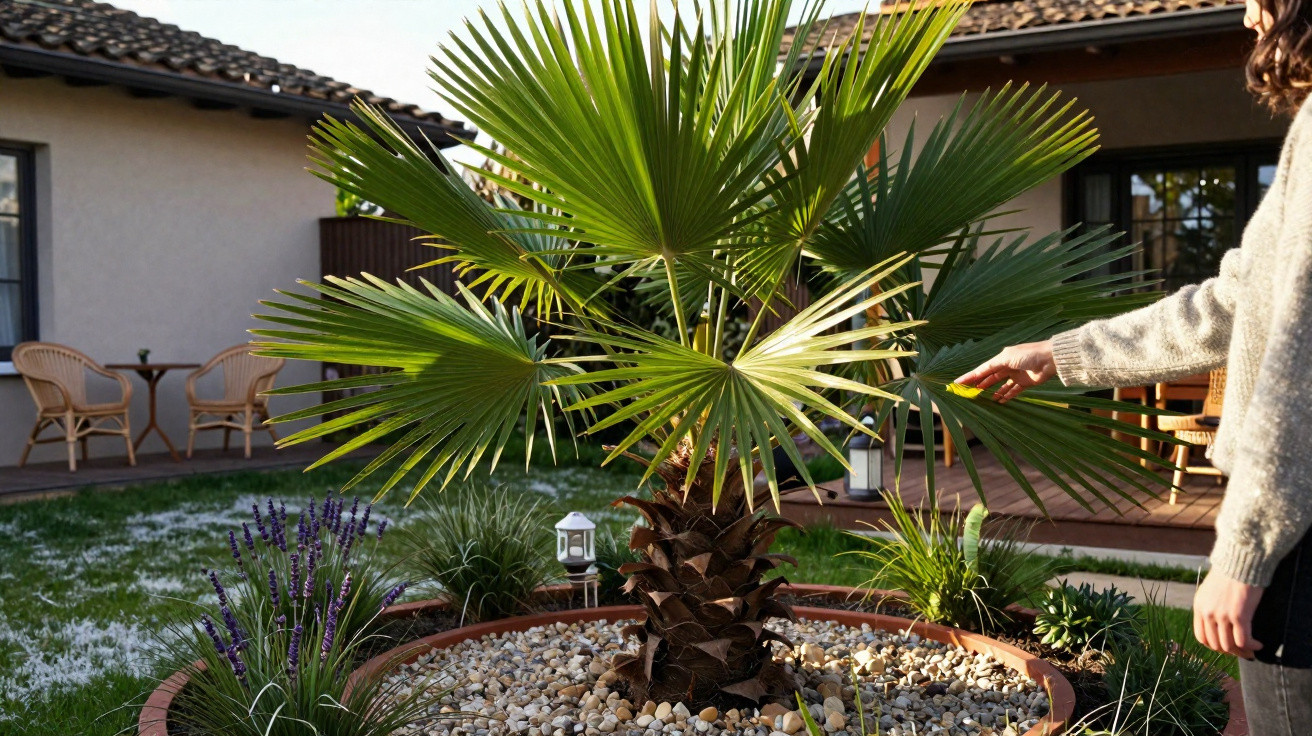
If you have grown tired of a garden containing little more than lawn, a thuja hedge and a few lacklustre beds, Mediterranean postcard scenes can be tempting. The good news is that a southern atmosphere does not require sea views or a mild coastal climate. One classic fan palm in particular, Trachycarpus fortunei, withstands even severe frost and can turn a neatly kept terraced-house garden into an exotic retreat.
A touch of holiday: why this classic palm is so popular
Immediate wow factor instead of an uninspiring lawn
Trachycarpus fortunei, commonly sold as the hemp palm or Chinese hemp palm, makes a striking natural statement even when planted on its own. Its slim trunk, wrapped in fibres, and its large hand-shaped fan leaves introduce a strong structure and a noticeable contrast to conventional garden planting.
“The hemp palm turns any lawn into a scene from a Mediterranean hotel garden – without having to move south.”
Placed freely on a lawn, the palm immediately becomes a focal-point specimen. In a border, it creates a visual backdrop for taller perennials and shrubs. It also casts light, dappled shade, making patios, seating areas or play spaces more comfortable without leaving them completely dark.
Hardy, low-maintenance and remarkably frost-resistant
For many amateur gardeners, the biggest surprise is that this palm does not have to be brought indoors for winter. Once well established, Trachycarpus fortunei can tolerate temperatures of around minus 18 degrees Celsius. This makes it one of the hardiest palm species able to survive outdoors permanently in the Central European climate.
Further advantages include:
- Low water requirements: Once it has become established in garden soil, rainfall will usually be sufficient.
- Moderate growth rate: It grows slowly enough not to become overpowering too quickly, while still making visible progress year after year.
- Little pruning needed: In essence, only old brown fronds need removing from the trunk.
- Adaptable: It suits urban gardens, front gardens and large containers on balconies or roof terraces.
Anyone unwilling to spend time on constant watering, shaping cuts and delicate exotic plants will find this palm species a surprisingly undemanding companion.
The ideal position: where the hemp palm reveals its full potential
Choosing a site: sunshine, shelter and a little stage presence
To show off its exotic character to the fullest, the palm above all needs light. A position in full sun to light partial shade is best. Exposed, draughty corners are less suitable, as strong winter winds can tear the fronds and increase moisture loss.
Suitable locations include, for example:
- a sheltered corner near a south-facing house wall
- the transition between patio and lawn, where it forms a “green column”
- the end point of a garden axis, such as at the far end of a path
- the centrepiece of a small gravel or stone bed
“Positioning the trunk slightly higher on a gentle mound or a low wall heightens the effect: the crown then visibly hovers above the rest of the garden.”
Plants that combine well with the palm
The hemp palm can be paired in many ways, depending on the desired style. Three popular approaches are:
| Style | Suitable companion plants |
|---|---|
| Mediterranean garden | Lavender, rosemary, thyme, agaves, rock roses, ornamental alliums |
| Modern, minimalist look | Grasses such as fountain grass, blue sedge, box or box alternatives, white gravel areas |
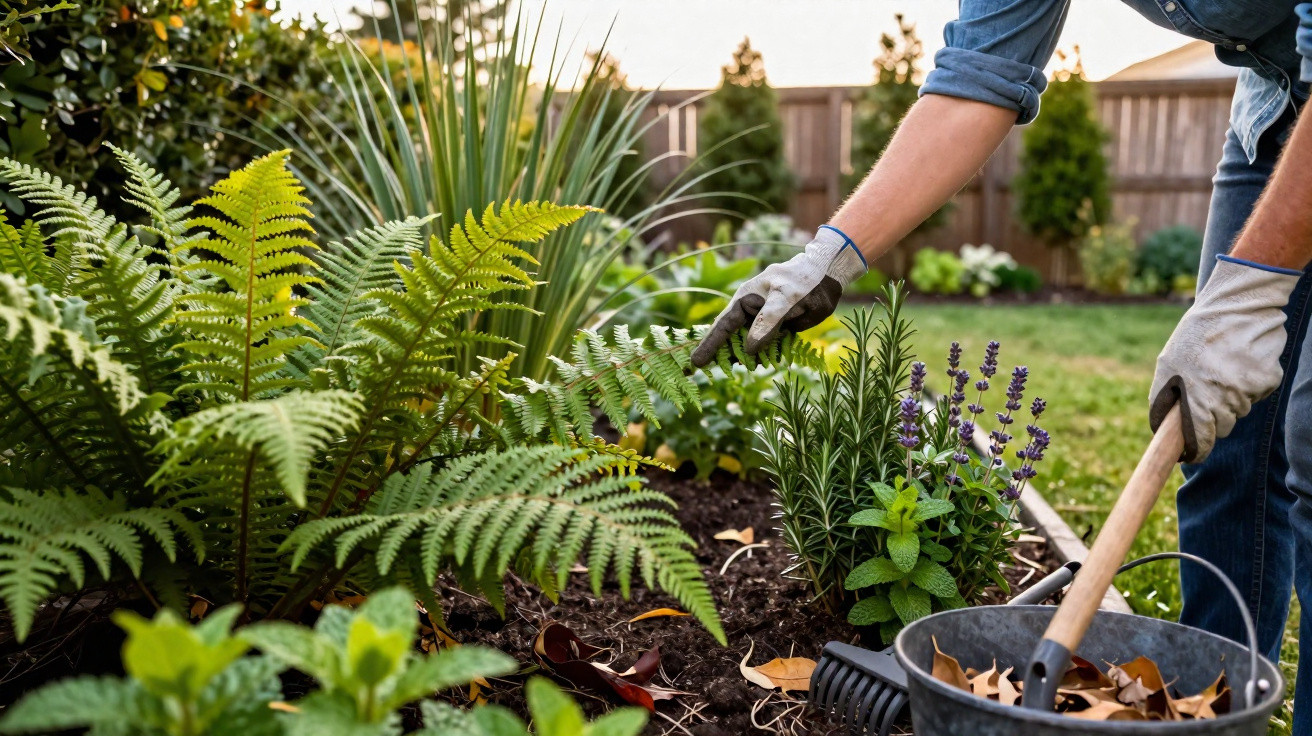
| Japanese-inspired tranquil garden | Fern species, groundcover such as barrenwort, moss areas, stepping stones, pale decorative pebbles |
Grasses and flowering perennials create a soft, lively garden feel. Combined with stone, gravel and a small number of deliberately placed plants, they produce a calm overall scheme with an almost architectural quality.
Planting time and method: an easy, stress-free start
The best planting period: late summer to early autumn
Anyone planning to plant a hemp palm permanently in the ground should pay attention to the calendar. The ideal window runs from late August to around mid-October. At this point the soil remains warm, nights are already becoming cooler, and late-summer rainfall supports root development.
“The earlier in late summer the palm goes into the ground, the more securely it will be established in its first winter.”
Planting late, shortly before the first prolonged frost, is hardly worthwhile, because the roots will no longer have enough time to establish. In colder areas, it makes sense to choose larger specimens with strong, well-rooted root balls, as these have greater reserves from the outset.
Suitable soil and preparing the planting hole
The palm is sensitive to waterlogging, especially during winter. Loose, free-draining soil is therefore more important than an especially high nutrient content.
A recommended approach is:
- Dig a planting hole measuring at least 60 × 60 × 60 centimetres.
- Mix heavy, clay-rich soil with coarse sand or fine gravel.
- Work in a little well-rotted compost, but do not use fresh, strong fertiliser.
- Set the plant so that the top of the root ball is level with the surrounding soil surface.
- Water it in thoroughly to close any air pockets.
An organic mulch ring made from bark pieces, wood chippings or leaves around the trunk retains moisture in the soil and gives additional protection against bare frost during the first winter.
Care throughout the year: minimal effort, major impact
Watering, feeding and protection: what the palm actually needs
During its planting year, the soil around the roots must never dry out completely. In dry spells, gardeners should water deeply once or twice a week rather than applying small amounts every day. Once rooted in, natural rainfall is enough in many areas.
A modest general fertiliser or an organic slow-release fertiliser applied in spring feeds the palm for the season. Usually, nothing more is required. In very mild locations, it is enough to remove dead fronds gradually to expose the trunk.
“In harsh winters, a simple winter fleece loosely wrapped around the crown is usually enough to protect the fronds from icy winds.”
Common problems and how to prevent them
Unlike many other palm species, Trachycarpus fortunei rarely suffers from fungal diseases or widespread pest infestations. Most issues result from unsuitable siting or care mistakes.
- Brown leaf tips: Often caused by insufficient water or very dry wind.
- Yellowish fronds: May indicate a lack of nutrients or waterlogging around the roots.
- Growth stopping: Frequently due to containers that are too small or compacted soil.
Checking regularly that water can drain away properly, and avoiding planting the palm too close to other woody plants, prevents most difficulties. Container-grown specimens need a larger pot and fresh compost every few years.
Design ideas: how the hemp palm turns any plot into a focal point
Light, perspective and small details with a big effect
An illuminated palm crown is particularly impressive in the evening. A warm-white LED spotlight directed upwards into the fronds creates an atmosphere on a patio or lawn that resembles a holiday resort.
Those planting several specimens can create a kind of palm avenue along a path or driveway. Just two or three plants mirrored on either side of an entrance noticeably alter the impression of a house, turning the front garden into a holiday-inspired calling card.
From terraced houses to roof gardens: practical examples
In small urban gardens, one hemp palm often replaces several shrubs that would otherwise take up space without creating real impact. Its slender trunk keeps ground space clear, for instance for a herb bed or a bench beneath the shade of the crown.
On roof terraces, the palm is generally used in a large container with well-drained growing medium. Combined with weatherproof lounge furniture, outdoor rugs and individual grass-filled pots, it creates an open-air living room above the rooftops – visually far removed from its actual postcode.
Those who like to experiment can pair the hemp palm with features such as water basins, small timber decks or fire pits. The plant then acts as a link between modern architecture and its natural setting. An average garden becomes somewhere that genuinely evokes switching off after work and being on holiday – entirely without an airline ticket.

Comments
No comments yet. Be the first to comment!
Leave a Comment