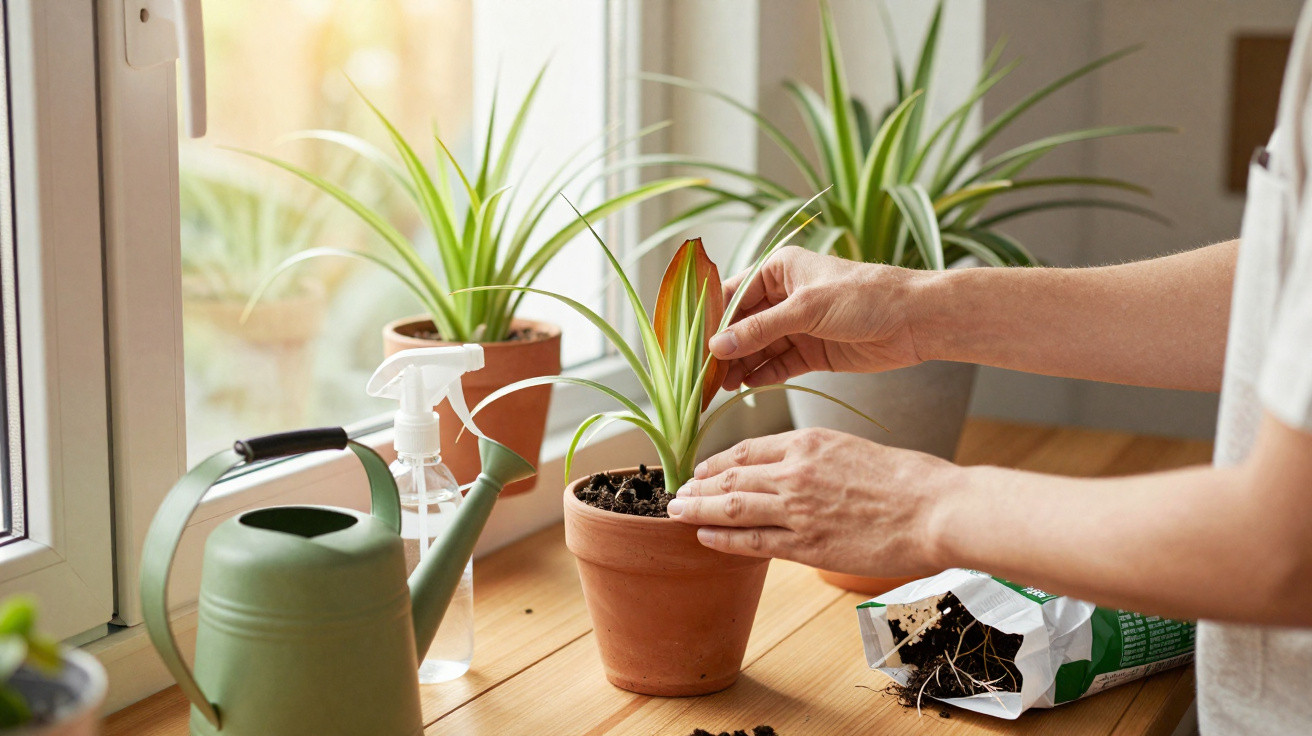
It may have looked perfect in your living room for months – then, suddenly, the leaves of your spider plant start drooping sadly or even snapping.
Many owners only realise something is wrong when the spider plant’s decorative ‘leaf fountain’ loses its shape. Bent, broken or oddly curved leaves are not merely a cosmetic issue. They reveal a great deal about how well – or poorly – the plant is being supplied with water, light and humidity, and whether its roots are still functioning properly.
What a genuinely healthy spider plant looks like
When it is thriving, the spider plant, also often called a ‘spider plant’, has a highly recognisable appearance. Its leaves are:
- vivid green, sometimes with a white stripe
- long, flexible and evenly curved
- springy to the touch, with no sharp bends
- grouped into a dense rosette that resembles a small fountain
The midrib follows the leaf’s smooth overall curve. When you run a finger along it, you should not feel a sudden change of direction or a ‘break line’. Even very long leaves, reaching around 80–90 centimetres, remain supple. There should be no patches that discolour or dent immediately with light pressure.
A genuinely creased leaf looks very different. It forms a distinct angle, almost as if somebody has stepped on it. At that point, the tissue will either be soft and waterlogged or dry and brittle. In both cases, the internal vascular tissue has been damaged, disrupting the delivery of water and nutrients.
Healthy spider plant leaves are long, softly curved and flexible throughout – with no hard creases or crumbly patches.
Why spider plant leaves snap or bend strangely
Before reaching for the watering can in a panic, assess the situation calmly: not every bent leaf is a disaster. Sometimes the cause is simply an accidental knock, such as:
- moving the pot while vacuuming
- trapping a leaf in a door
- a cat or dog jumping against it
- a window slamming and briefly knocking the plant over
In these cases, only one or two leaves are usually affected, while the rest of the plant remains fresh, upright and rich green.
If several leaves – especially new ones – are affected, common care mistakes are more likely to be responsible. These are the most frequent causes.
Too much water: the classic windowsill problem
Spider plants are considered hardy, but constantly wet compost deprives their roots of air. Typical signs that the growing medium is too wet include:
- leaves buckle while becoming soft and yellowish
- the potting compost feels heavy and soaking wet
- the surface dries out, while the compost beneath remains soggy
- a faint musty smell when you lift the pot
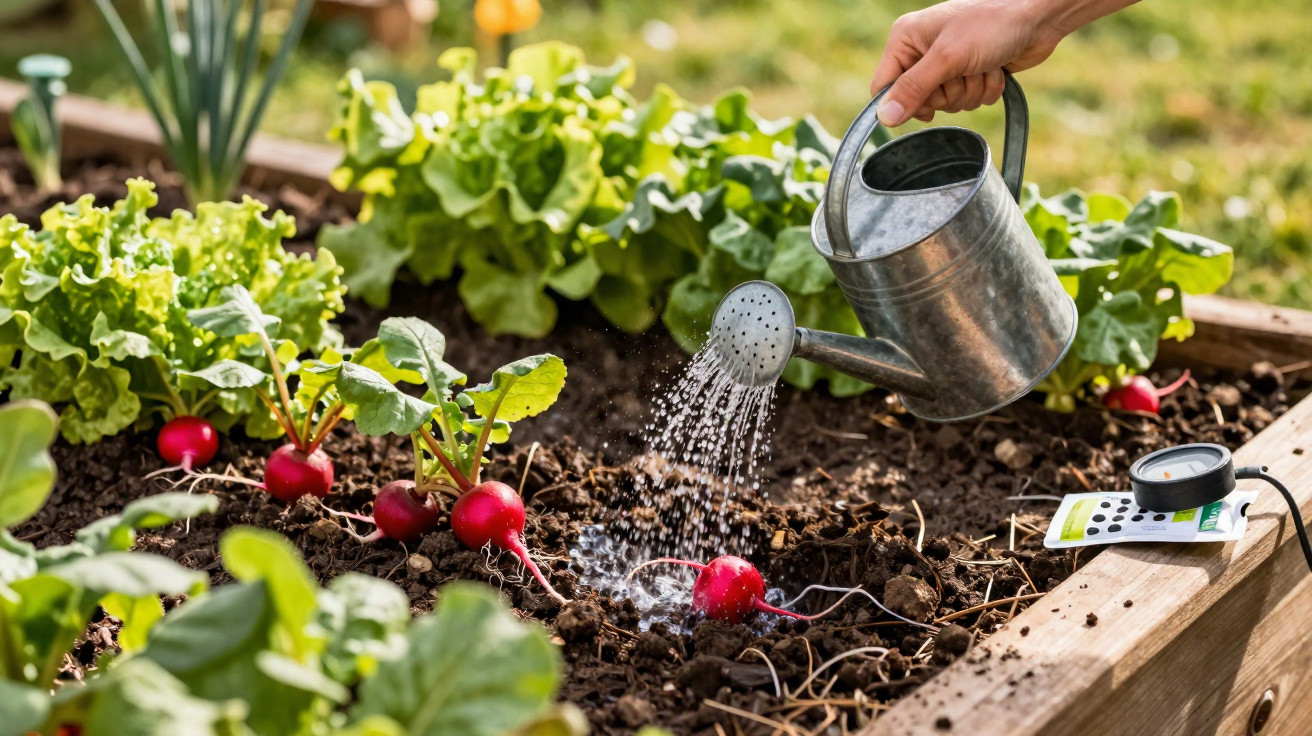
In this situation, even minor damage to the leaf’s vascular tissue becomes a problem because the roots are already struggling. Stop watering for a while, and only water again once the top roughly five centimetres of compost have dried. If you are unsure, use a moisture meter; an inexpensive model is perfectly adequate.
Too little water: dry, brittle and curled
The opposite extreme is generally easy to spot. The root ball pulls away from the edge of the pot, and the compost appears cracked and dusty. The leaves:
- feel hard and brittle at the tips
- snap easily when bent
- may curl slightly
- develop brown, dead ends
The plant simply lacks water. It can no longer keep its long leaves properly supported, so they become fragile. Thoroughly rewet the compost: water slowly from above until water briefly runs out of the bottom, discard the excess from the saucer, then monitor the plant over the following days.
Root damage and rot
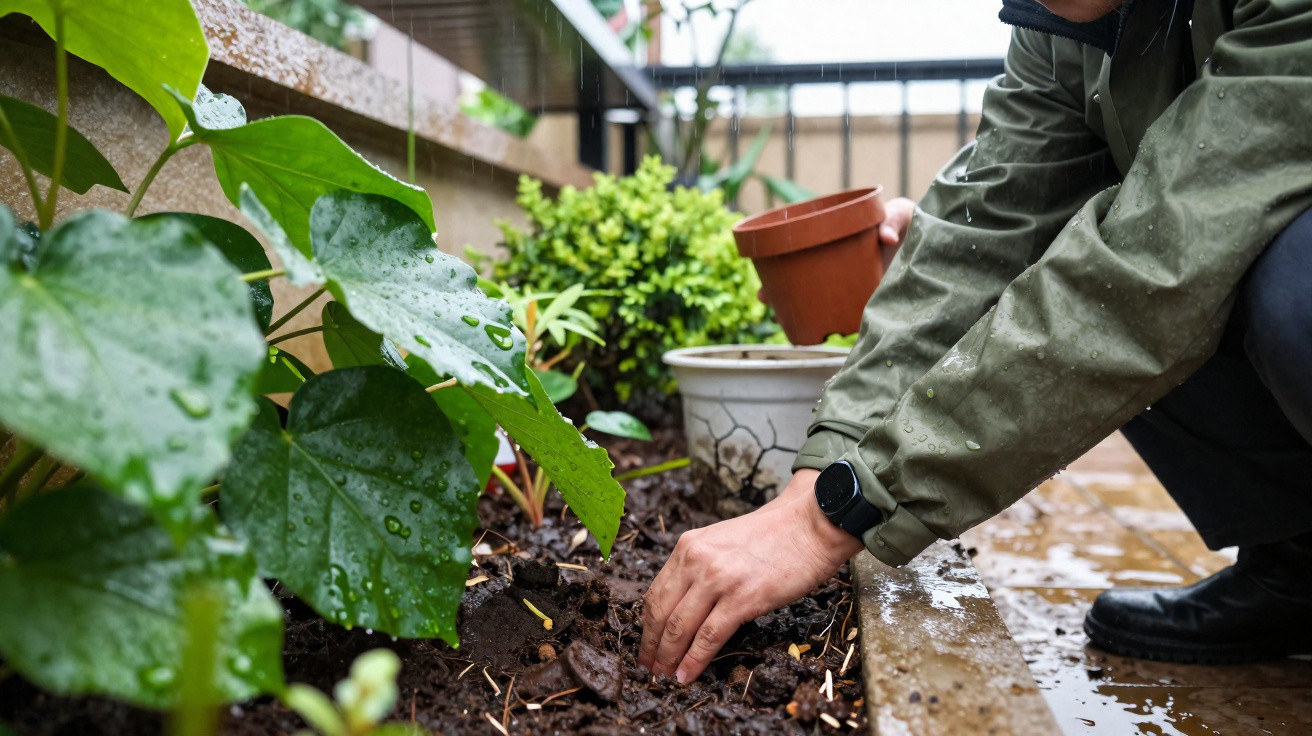
If leaves hang down limply despite you having already adjusted watering, inspect beneath the compost. Carefully lift the root ball out of the pot. Warning signs include:
- roots that are brown, mushy and tear easily
- an unpleasant rotten smell
- hardly any firm, white root tips remaining
This indicates early-stage or advanced root rot. Without intervention, the whole plant may die.
Bent leaves are often only the visible symptom. The real damage is in the roots.
An unsuitable position, dry air and nutrient deficiency
Not every leaf issue is caused directly by watering, although these factors are closely connected:
- Too little light: The plant leans heavily towards the window, and leaves grow soft, long and unstable. Even slight contact can crease them.
- Very dry heated air: Leaf tips dry out, while entire sections become hard and snap easily.
- Nutrient deficiency: Leaves grow slowly and look pale with little firmness, making them more likely to bend over.
Take a critical look at the position: is the pot directly above a radiator? Does the plant receive any direct daylight at all? Has it gone years without being repotted?
What to do with broken spider plant leaves
A leaf that has sharply creased or broken across the middle will not ‘heal’ again. Its cell structures remain damaged and its vascular tissue is severed. Leaving it on the plant not only looks unattractive, but can also create a weak point if rot develops.
The practical approach is:
- Get clean, sharp scissors or a small garden knife.
- Cut the leaf as low down as possible, close to its base.
- Keep the cut area dry, and do not water heavily straight afterwards.
A healthy spider plant quickly produces new leaves from the centre. It often takes only a few weeks before the ‘gap’ appears filled again.
How to keep your spider plant stable in the long term
To avoid dealing with bent leaves again every heating season or after each house move, carry out a simple care check.
The right pot and suitable growing medium
- Pot with a hole: The container needs a drainage hole; otherwise, water builds up and the roots rot.
- Choose the right size: Pots that are too small dry out extremely quickly, whereas overly large ones stay wet for too long – both stress the plant.
- Loose compost: A mix of houseplant compost with a little sand or expanded clay provides air around the roots.
If you tend to overwater, add a thin drainage layer of expanded clay or gravel to the bottom of the pot. This does not replace proper watering, but it reduces the risk of waterlogging.
Use a watering routine rather than instinct
Many problems arise because people water ‘every Sunday’ out of habit, whether the plant needs it or not. A better approach is to:
- test the compost with a finger and water only once the upper centimetres feel dry
- water less often in winter and considerably more frequently during hot summer weather
- remove water from the saucer after 15–20 minutes
A small notebook or note on your phone can help you keep track: record the date, amount of water and any changes of position. After a few weeks, this makes patterns easier to identify and helps you respond more quickly.
Adjust humidity and positioning
It is particularly worthwhile to examine the indoor climate in city flats with central heating. Simple measures include:
- placing a tray of pebbles and water beneath or beside the pot
- keeping the spider plant away from direct heat from a radiator and draughts
- choosing a bright position without intense midday sunshine
A humidifier may be useful when several tropical houseplants share the room. For a single spider plant, the pebble-tray method near a window is usually sufficient.
Why bent leaves reveal so much about plant care
Bent or broken leaves are more than an aesthetic flaw. They act as something of an early-warning system for a spider plant. Its long, slender leaves quickly show whether water transport, light and nutrient supply are right. Anyone who recognises these signs before the roots finally give up can usually save the plant without difficulty.
For many amateur gardeners, this has a welcome extra benefit: learning to notice leaf structure, colour changes and compost moisture in an undemanding plant such as a spider plant makes caring for more sensitive species much easier. Bent leaves then become not an annoyance, but a free lesson in understanding ‘plant language’.


Comments
No comments yet. Be the first to comment!
Leave a Comment