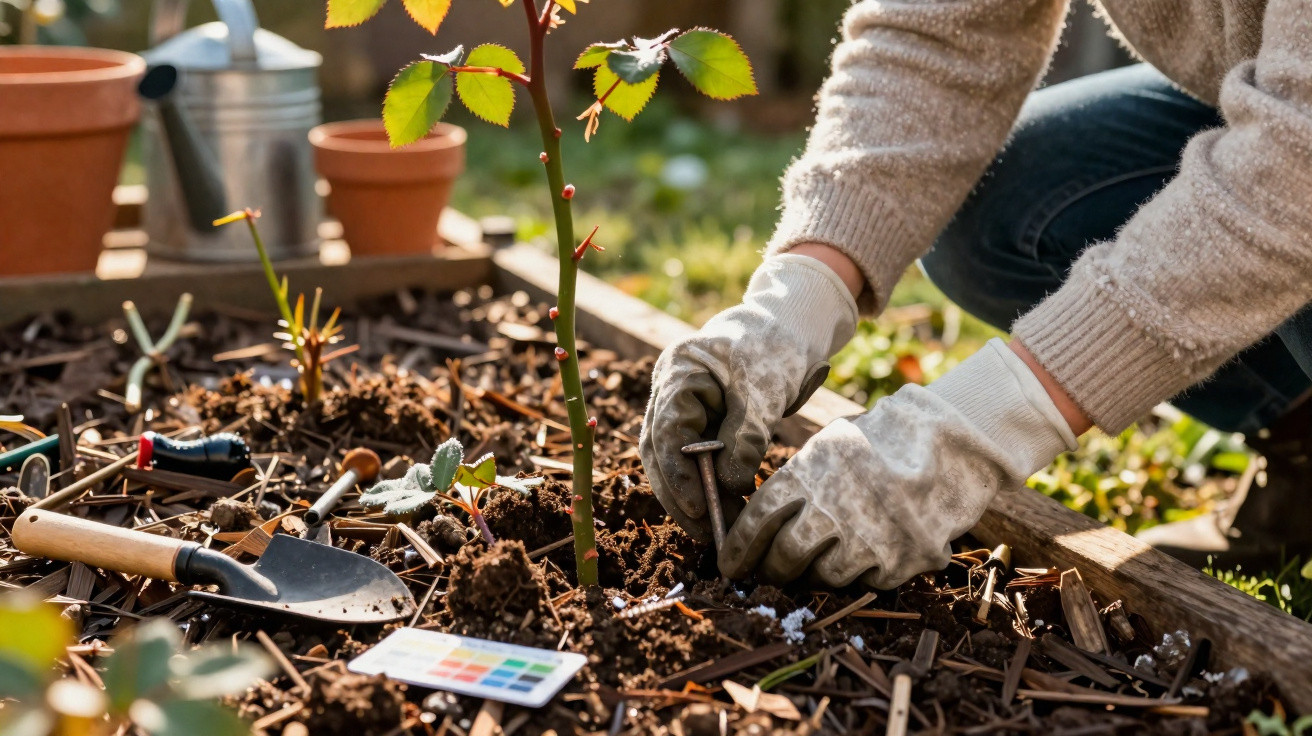
From family allotments to urban balconies, gardeners pass around advice that seems part folklore and part science. One recurring practice involves placing something at the base of the nation’s favourite shrub.
What gardeners say about rusty metal under roses
Some people push a rusty nail, bolt or small section of chain into the soil near the stem. Many older gardeners recall seeing their grandparents do it too. The reasoning is appealingly straightforward: as the metal weathers through cool, wet months, it supplies roses with iron. It is free, makes use of scrap metal and fits easily into winter gardening tasks.
Rust is iron oxide. Iron drives chlorophyll production, deeper green leaves and stronger growth when the soil makes iron hard to access.
Roses need iron, particularly in chalky or limed soils where it becomes bound up. At a high pH, iron may be present in the soil but unavailable to the plant. The rusty object is intended to address this by releasing very small amounts gradually.
The plant science behind the trick
Iron is needed for chlorophyll production, enzyme function and energy transfer. A shortage soon becomes visible on young leaves: the leaf tissue turns yellow while the veins remain sharply green, a condition known as iron chlorosis. Flowering can reduce, buds may fail to develop, and growth becomes slower. When accessible iron is supplied, the foliage often improves within spring weeks.
Rusting metal does release iron, although at a slow pace. Moisture, organic acids and mildly acidic conditions all accelerate this process. In strongly alkaline ground, however, much of the released iron remains locked away. Its usefulness therefore differs between postcodes and individual beds.
In alkaline beds, chelated iron outperforms rusty nails. In neutral or slightly acidic beds, a rusty piece may give a gentle nudge.
How to use rusty metal safely this winter
Choose a suitable piece and position it carefully
- Select plain, uncoated iron or steel. Do not use painted, galvanised, oily or alloy components.
- Opt for small pieces: old nails, small bolts or an offcut measuring 3–5 cm are suitable.
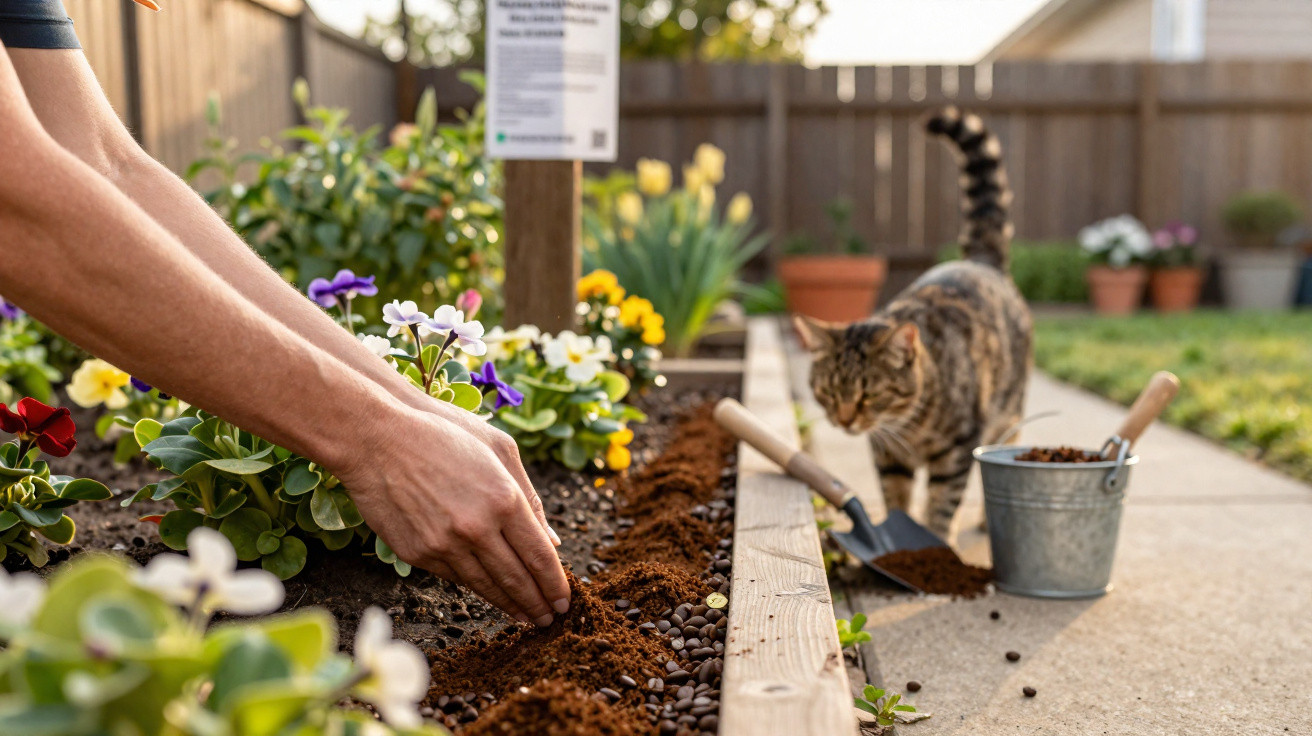
- Insert it upright into the upper 2–4 cm of soil, leaving 10–15 cm between it and the stem to avoid damaging fine roots.
- Water it in afterwards, or allow rainfall to do so. Wet-and-dry cycles encourage weathering.
- Wear gloves, and use an unobtrusive marker if children or pets use the area.
What to look for on your roses
By spring, healthy rose foliage should be an even mid-green. If the newest leaves remain yellow but their veins are dark, the plant may still lack iron. When older foliage pales first, nitrogen or magnesium is more likely to be the cause. A single metal fragment cannot remedy a widespread nutrient deficiency.
When rusty metal works, and when it does not
Roses growing in neutral loam can respond positively to a gradual iron supplement. Compost-rich beds produce gentle organic acids that help keep iron available. In chalky soil or ground that has recently been limed, the metal may rust while the rose still cannot take up sufficient iron. Other treatments are more effective in those conditions.
| Method | What it supplies | Speed | Best for | Cautions |
|---|---|---|---|---|
| Rusty iron fragment | Trace iron slowly | Slow | Neutral to slightly acidic beds | Minimal effect in high pH soils |
| Iron chelate (EDDHA/EDDHA-Fe) | Plant-available iron | Fast | Alkaline soils, pH 7.5–9 | Follow label rates; can stain hard surfaces |
| Ferrous sulfate | Iron, slight acidifying push | Moderate | Slightly acidic to neutral soils | May burn foliage if sprayed in sun |
| Elemental sulfur | pH reduction over time | Slow | Long-term pH correction | Works over months; test soil first |
Real-world results and the winter opportunity
Gardeners who put a small rusty item in place during late autumn often describe more consistent spring colour and fewer patches of chlorosis. Winter rainfall helps dissolve and carry iron into the root zone. Mulch retains this moisture while also supporting microbes that make micronutrients available.
Place metal in late autumn, mulch in early winter, check leaves in spring. Adjust with a chelate only if needed.
The results are seldom striking straight away. By June, the difference may be clearer: leaves stay a fuller green, buds open more readily and new stems grow straighter. In chalky soils, combining the fragment with chelated iron produces more dependable improvements.
Risks not to overlook
Contamination and sharp metal
Avoid items carrying paint, plating or oil. Galvanised metal can introduce zinc, while old paint may contain lead and lubricants create unnecessary hazards. Choose small, blunt pieces and bury them only shallowly. Prevent dogs from chewing the metal, and mark the site with a wire peg so it can be located and removed later.
Soil balance and excessive use
Adding numerous pieces in one place merely creates a cluster of rust without providing worthwhile extra benefit. Limit use to one or two pieces for each established rose. There is little value in adding metal hardware if chelates are already being used as feed.
A quick winter routine for healthier roses
- Test soil pH every two years. Most roses do best at around 6.3–6.8.
- Apply 3–5 cm of composted mulch around the drip line, keeping it clear of the stem.
- Add a small rusty fragment where a mild iron boost is needed.
- On a dry day, remove dead or crossing branches to reduce opportunities for disease to enter.
- Following dry winter periods, water deeply so nutrients continue to move through the soil.
Beyond roses: where the approach can apply
Camellias, azaleas and blueberries can also suffer iron stress in beds with a high pH. As they prefer acidic conditions, a rusty fragment alone will rarely meet their needs. Use acid-forming mulches, use rainwater when possible and apply a targeted chelate if leaves turn yellow. Tomatoes may develop chlorosis during cold springs, but a mild chelate drench at planting is more useful than metal in this case.
Budget notes and a straightforward check
A chelate treatment for a mature rose costs approximately the same as a coffee, whereas a rusty offcut is free. A combined strategy can keep spending down: correct the pH, mulch thoroughly and use the metal as a slow supplementary source. Only add chelate when the leaves indicate that it is required.
Not sure whether iron is deficient or whether pH is preventing its uptake? Check the soil pH and take a quick photograph of the leaves in May. When new growth is lemon-yellow with green veins and the pH is above 7.5, use EDDHA chelate. If the pH is close to neutral, compost and a rusty piece may be sufficient.
Practical measures that strengthen the effect
Moisture management
Regular, deep watering enables roots to take up micronutrients. Brief surface watering leaves iron and other nutrients trapped in dry areas. During dry spells, running a soaker hose for 40 minutes every 7–10 days helps maintain consistent uptake.
Root health and mycorrhizae
Strong fine roots and soil fungi increase the area from which a rose can draw nutrients. Compost and leaf mould boost microbial activity, helping to release iron naturally. Avoid applying heavy phosphorus feeds immediately before tackling iron problems, as excessive P can restrict iron uptake.








Comments
No comments yet. Be the first to comment!
Leave a Comment