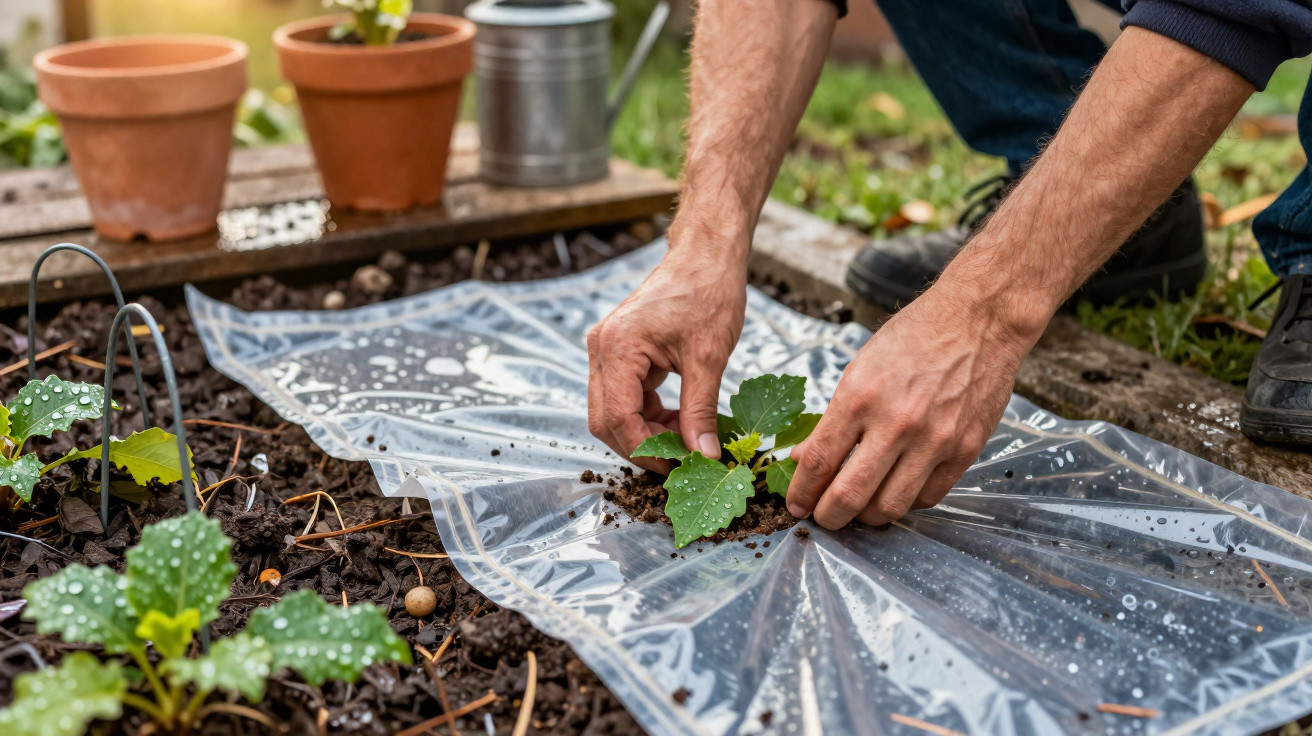
The overnight frost had been severe, yet the worst harm was concealed beneath the coverings.
In the weak January daylight, Helen lifted the plastic sheeting she had carefully placed over her border roses in December. The first warning was the odour: sharp, damp and clearly unhealthy. Then came the sight of blackened, soft stems, leaves stuck together by captured moisture, and soil below that felt cold and waterlogged, like an abandoned sponge.
She had followed the advice repeated in so many winter gardening tips: “Cover your plants!” She had purchased fleece, fetched old bubble wrap and tucked everything in as though preparing children for a snow day. Even so, half of her border was decaying in place.
As an icy gust travelled along the garden path, she held a damaged stem in her fingers. It did not break cleanly. It simply bent over. There was clearly something wrong with the way we “protect” plants in January.
When good intentions suffocate plants
Take a walk through any suburban neighbourhood in January and the familiar winter picture is everywhere. Pots are bundled in plastic, tender shrubs disappear under heaps of fleece, and whole beds are covered as if they were leftovers in a fridge. From afar, it can seem thoughtful, even valiant. Look more closely, however, and you will often spot condensation inside the covering, with droplets hanging there like miniature warning signals.
Gardeners believe they are defending plants against the cold. Often, though, they are holding in water, preventing ventilation and creating an ideal environment for rot. The soil cannot breathe, while stems remain wet for days at a time. One relatively mild and rainy January week can reverse months of attentive planting.
At a small allotment near Leeds, a community gardening group recorded the results last winter. They protected half their young brassicas with firmly fastened plastic tunnels, leaving the remainder beneath breathable fleece. Following a January of chilly rain and several brief frosts, they assessed the losses. Beneath plastic, 37% of plants had yellow leaves and stem rot. Beneath fleece? Less than 10%, with most damage caused by slugs rather than decay.
One volunteer, Sam, said he had removed what he expected to be a healthy winter cabbage. At first glance, its outer leaves appeared sound. Yet around the base, where the stem joined the soil, he found a slimy ring and an odour with only one possible meaning: the plant had spent weeks sitting in a wet collar. The covering had indeed kept rain out, but it had also prevented moisture from escaping.
Accounts like this are common. A 2023 UK amateur gardening survey found that more than half of respondents using “makeshift covers” – bin bags, plastic sheets and old tarpaulins – encountered some form of rot or fungal problem by late winter. Many assumed they were seeing “winter kill” or an unexplained disease. In fact, condensation and stale air, rather than the number shown on the thermometer, were the real enemies.
Poorly covering a plant alters its microclimate in every unhelpful way. Moisture evaporates from the soil, meets the cold inner surface of the cover and condenses. The resulting droplets either fall back down or remain on leaves and stems. With no airflow, this wetness persists. Cold on its own can put a plant under strain; cold combined with trapped humidity turns that strain into decay.
Plastic and other non-breathable materials are the main offenders. They prevent air movement, retain every trace of moisture and may even become warm on sunny winter days. This repeated pattern – warm, humid conditions under the cover during the afternoon followed by freezing temperatures at night – produces tiny splits in plant tissue. Fungi and bacteria can then enter with ease, while root collars remain wet for far too long. Rot is not immediate; it is a gradual, silent January process concealed beneath well-meaning protection.
So when gardeners say, “I covered everything and lost half my plants,” bad luck is seldom to blame. It is simply the physics of water and air at work, unnoticed beneath an overly tight covering.
How to cover plants in January without turning them to mush
Gardeners who come through January with few losses usually make one straightforward change. They aim for “breathable shelter” instead of a “sealed cocoon.” Rather than packaging plants like parcels, they create small tents and loose tunnels. The material stays away from most leaves, small openings allow air to circulate, and moisture has somewhere to go.
The simplest method can seem almost too easy. Drape horticultural fleece, or even an old cotton sheet, over canes or a lightweight frame to make a dome. Secure its edges with pegs or stones, while keeping tiny openings at ground level on the side least exposed to wind. The purpose is to reduce frost and wind, not to vacuum-seal your border.
For plants in pots, raise the container from bare ground using pot feet or bricks, then wrap bubble wrap or hessian around the pot itself. This insulates the roots while leaving the upper growth exposed to air. At night, place a loose fleece “hat” over the foliage, then remove it on milder days so everything can dry.
Gardeners repeatedly fall into the same traps, usually for the same emotional reason: they fear losing plants they value. As a result, they go too far. They add extra layers of plastic and seal every edge “to be safe.” Then the first rainy spell arrives and those covers become damp enclosures. Psychologically, additional covering feels like additional care, though it can sometimes achieve the reverse.
On a dull January afternoon, when wind cuts through clothing and numbs your hands, it is easy to tie a tarpaulin over everything and hurry indoors. Few people want to arrange careful vents or consider airflow. Nevertheless, the extra minute spent leaving a gap or selecting fleece rather than plastic can decide whether a plant sleeps through winter or quietly decays at its base.
There is guilt involved, too. Plants are living things we have chosen to care for, and when they die, we rarely hold the weather entirely responsible. Advice should therefore be supportive rather than critical. Most of us are simply trying our best around work, children and the final scraps of winter daylight.
“You’re not trying to create a sauna,” laughs Claire, a professional gardener in Dorset. “You’re trying to give your plants a windbreak and a dry place to shiver. They’re tougher than we think, as long as they can breathe.”
Her January plant-covering checklist is reassuringly practical. It considers what a genuinely tired person will manage on a weekday, rather than demanding a flawless textbook regime. Let’s be honest: nobody really does that every day. That is why her useful rules stay with people and remain achievable through the untidy middle of winter.
- Choose breathable covers first – fleece, hessian and old cotton sheets are better choices than bin bags and cling film.
- Keep covers away from foliage – use canes, sticks or a crate to leave space between leaves and fabric.
- Leave small air gaps – a few centimetres at the base allow moisture to escape without exposing plants to biting frost.
- Uncover on mild, dry days – even a few hours of fresh air and winter sunshine can prevent moisture accumulating.
- Protect roots more than leaves – insulate pots and mulch soil, but allow top growth to breathe and harden naturally.
The quiet January choices that decide your spring
January can make the garden appear motionless: bare branches, muddy paths and little visible life beyond an occasional brave hellebore or emerging bulb. Yet some of the most important choices for spring are made now, discreetly, through small decisions about coverings, moisture and air.
There is the instant when you decide between plastic sheeting and fleece. There is the choice to raise a cover with a pair of spare canes instead of drawing it tightly across the leaves. There is also the moment when you step outside on an unexpectedly bright afternoon and pull back the covers, allowing cold daylight to reach the soil.
At a deeper level, this is about trust: trust that plants can withstand some cold, that dryness and ventilation matter as much as warmth, and that doing slightly less – less sealing, wrapping and overprotection – can bring much more life when spring arrives. Psychologically, it resembles easing your hold on something you care for rather than gripping it so tightly that it breaks.
In practical terms, the pattern is evident. Plants wintering beneath breathable, gently fitted protection enter spring cleaner, firmer and ready to grow. Those kept under sweaty plastic throughout January often bear hidden signs of rot and infection. The complete result only becomes obvious in March, when one pot erupts with fresh growth while the pot beside it simply… does not.
We have all uncovered winter protection with equal measures of hope and dread. Is the plant beneath resting or rotting? Will it recover strongly, or collapse at the touch of a finger? The small, quiet January choices – the material you use, how tightly it is fitted and how often you allow plants to breathe – shift the balance. It is something you can change now, without purchasing a single new plant.
| Key point | Detail | Benefit for the reader |
|---|---|---|
| Use breathable materials | Fleece, hessian and sheets permit air and moisture to circulate | Reduces rot and fungal problems while still easing frost |
| Keep covers off foliage | Support material on frames, canes or crates | Stops leaves remaining wet and cold against plastic or fabric |
| Vent on mild days | Lift or open covers when conditions are dry and calm | Allows trapped moisture to escape and resets the microclimate |




Comments
No comments yet. Be the first to comment!
Leave a Comment