You know that low-level panic when you pass your plants and sense that something is not quite right? The leaves may still be green, yet the entire plant appears worn out, as though it has been surviving on no sleep for weeks. You have tried watering more, watering less, fertiliser, stylish pots and even speaking to them like colleagues close to burnout. Still, nothing seems to improve.
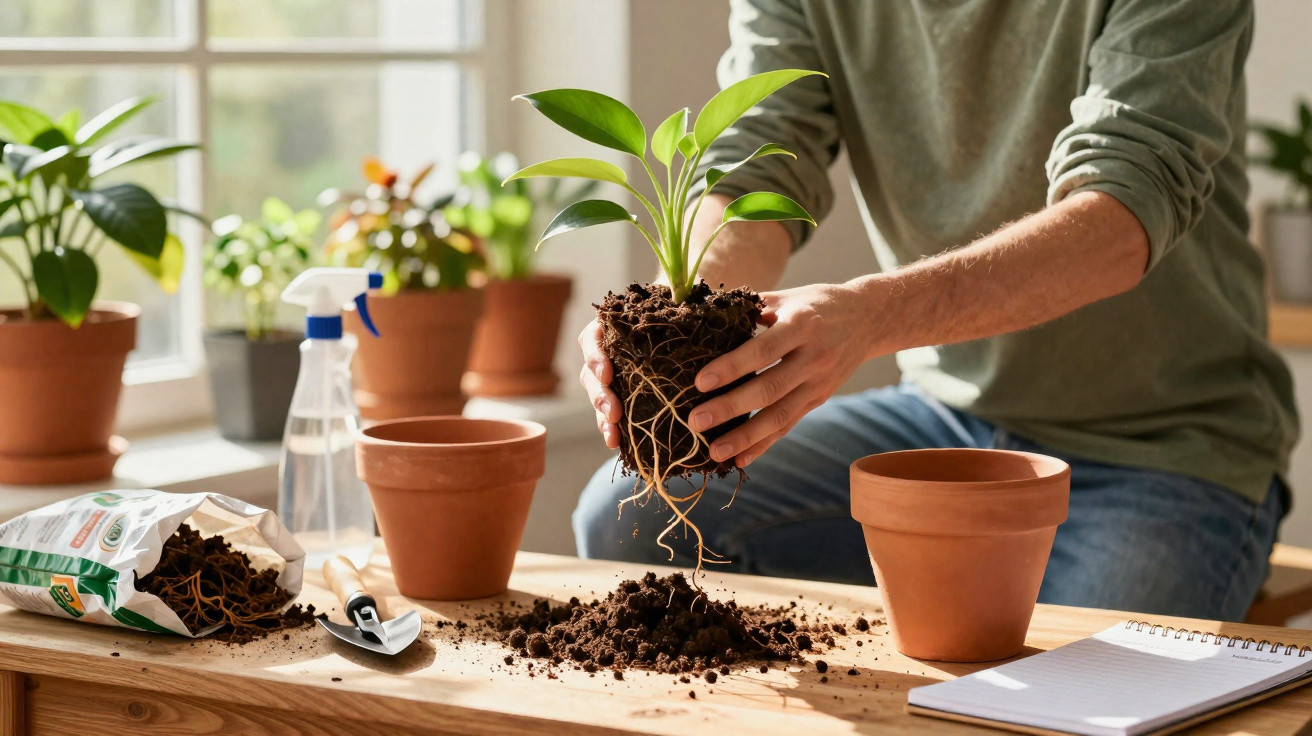
Then, while moving a pot to clean the windowsill, you spot it: roots winding endlessly around a dense, cramped mass of soil. All at once, it makes sense.
Your plant is not demanding.
It is trapped.
The overlooked mistake that leaves plants weak
Most plants that struggle are not dying because they lack affection. They are worn down by spending far too long in the same container and the same soil. The quiet error many plant owners make is failing to renew the space around the roots. We buy a plant, place it on a shelf, water it for years… and never revisit the pot.
Above the surface, it can all appear normal: a new leaf here, a bud there and the occasional droop. Under the soil, however, the roots can become a dense tangle, looping around the pot like a goldfish in a bowl too small for its ambitions.
Imagine a friend proudly showing you a fiddle-leaf fig she has owned for three years. It is in the same pot, with the same soil, in the same corner. It is alive, strictly speaking, but no taller than when she first brought it home. Its leaves have brown edges, the soil dries within a day and water passes straight through it.
You help her ease the plant from its pot, and it emerges as a compact cake. There is almost no loose soil, only a white network of roots coiled around itself. This is known as being root-bound, and it is like wearing the same shoes from age 10 to 25. You may be able to walk, but you will never run. As soon as she repots it in fresh soil with a little more room, the plant reacts as if it has been given a second chance.
When roots are confined, the entire system suffers. Soil becomes compacted, water cannot soak through correctly, oxygen is forced out, and nutrients either become depleted or build up in odd, stressful ways. The plant appears to need more water or fertiliser, so that is what you provide… but nothing really gets better.
What is actually breaking down is the underground infrastructure. Roots cannot extend, explore or store energy. A poor root system creates a weak plant, regardless of how ideal your lighting, watering or fertiliser routine looks on paper. Healthy plants are built from the roots up, not from the leaves down.
How to free root-bound plants and restore their strength
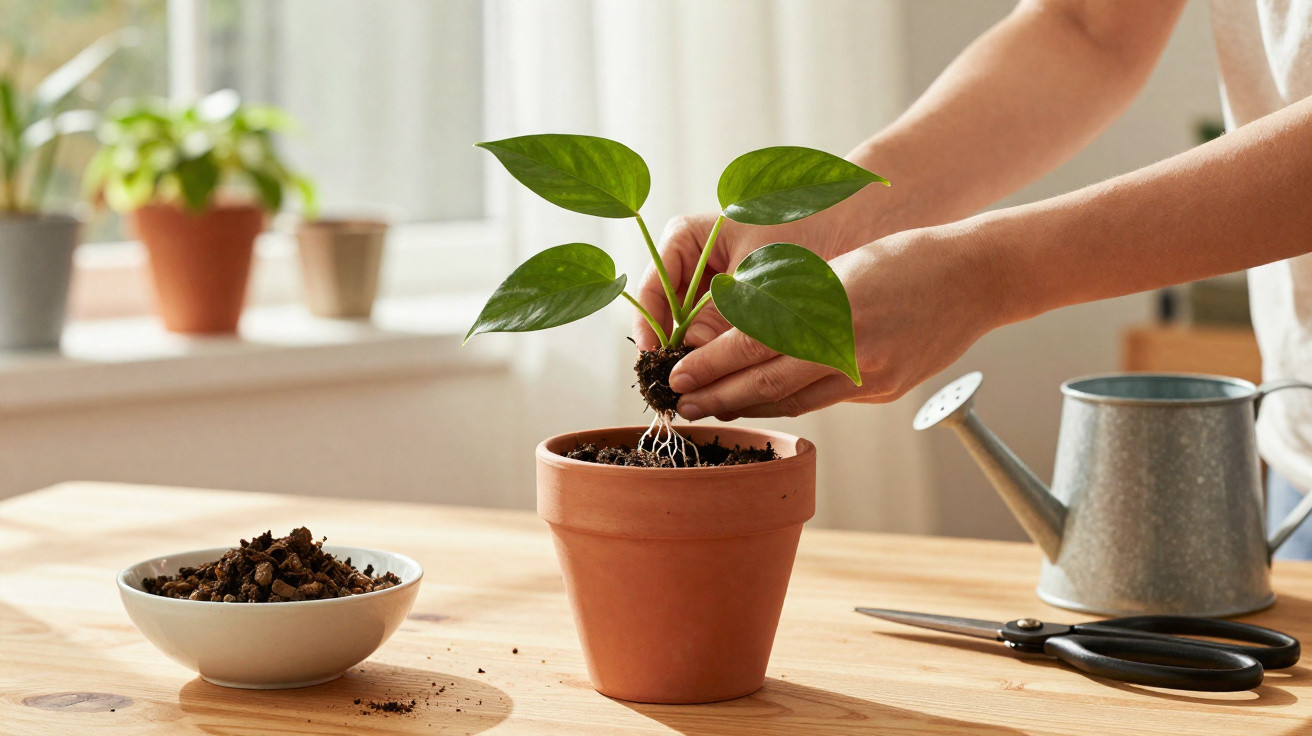
The most effective thing you can do for a weary plant is not give it another misting or an expensive nutrient stick. It is to repot it properly, using fresh, airy soil and a slightly larger home. Begin by carefully sliding the plant out of its container. Roots tightly circling the pot are your clue.
Gently work through the root ball with your fingers. Do not worry about easing some of those looping roots outwards. Breaking a few will not kill the plant; instead, it encourages the roots to branch and grow again. Select a new pot one or two sizes larger, with a drainage hole, then fill it with a mix that suits the plant: chunky for aroid houseplants, gritty for succulents and rich, moisture-retaining soil for thirsty varieties. Water it deeply, then allow it to settle.
Many people see repotting as an advanced form of plant parenting, something for “real” gardeners with potting benches and outdoor sinks. They delay it for months, then years, because their plant is not actually dying. It is merely… existing. We have all had that moment of looking at a dusty spider plant and thinking, “I’ll deal with that later.”
In truth, nobody carries this out every day. But overlooking it season after season gradually drains your plant’s strength. Its leaves become smaller. Growth slows down. Pests find it easier to take hold. It is not a spectacular collapse, but a gradual decline that often becomes clear only when you compare it with photographs from last year.
“Every time you repot, you’re not just changing a container. You’re resetting the plant’s future,” says a London-based houseplant seller who’s been rescuing sad supermarket plants for a decade. “Fresh soil and room for roots is like opening a window in a stuffy room. Everything breathes again.”
- Inspect the roots once a year
Choose one day each spring to remove your plants from their pots and examine their roots. - Refresh the soil regularly
Even if the pot does not need to be larger, swap compacted, depleted soil for a fresh mix appropriate for the species. - Look out for root-bound signals
Water running straight through, soil shrinking away from the pot sides and stunted growth commonly indicate restricted roots. - Choose the correct pot size
Move up one or two sizes, rather than choosing an enormous pot. A container that is too large can leave roots sitting in cold, wet soil. - Put roots before leaves
Yellow or drooping leaves often begin with an issue below ground, rather than a cosmetic problem above it.
Rethinking plant care: less spraying, more repotting
Once you understand that root health is the hidden engine, you begin viewing your plants in a new way. Shiny leaf sprays and attractive watering cans lose some of their appeal, while the unremarkable bag of soil suddenly seems far more important. Instead of asking, “Why are the leaves sad?”, you start asking, “What’s happening under the surface?”
This change does more than rescue plants; it transforms the relationship. Rather than becoming a panicked firefighter, you become a calm architect, rebuilding from the foundation. Repot a plant once, and you may see one that barely changed for two years produce new leaves as though it is catching up. You also realise how much calmer it is to act thoroughly but infrequently, rather than doing small things constantly.
| Key point | Detail | Value for the reader |
|---|---|---|
| Repot regularly | Inspect roots and renew soil roughly once a year | Avoids concealed weakness and stunted growth |
| Watch for root-bound signs | Circling roots, quickly drying soil, water rushing through | Enables you to act early, before plants crash |
| Prioritize root-friendly soil | Airy, free-draining mixes matched to each plant | Creates stronger, more resilient plants with less effort |




Comments
No comments yet. Be the first to comment!
Leave a Comment