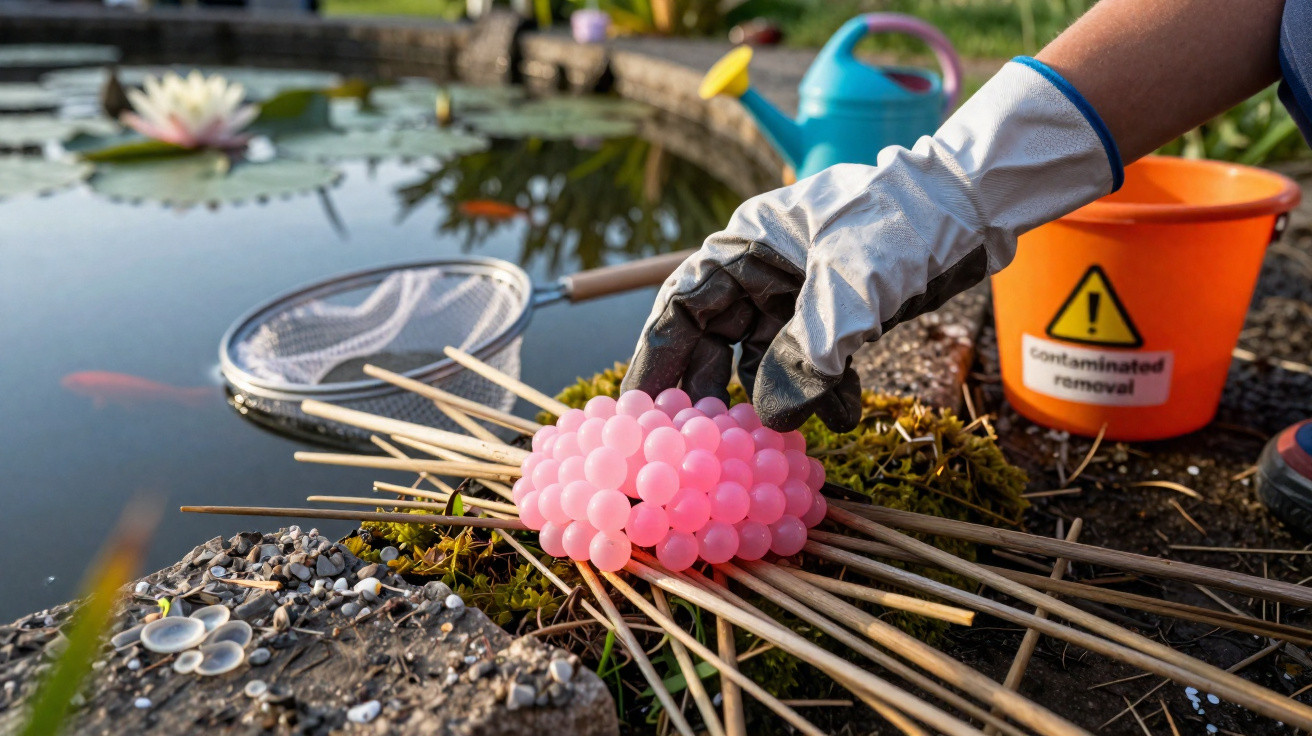
Bright pink clusters suddenly appearing on a fence, wall or pond edge may look harmless, but they can pose a threat to both gardens and health.
Anyone who finds vivid pink egg masses in a damp corner of the garden or beside a pond will often be unsure what they are looking at. Bird eggs? An unusual fungus? The reality may be far more serious. These colourful formations can signal the presence of a highly problematic invader that is spreading worldwide and has the potential to disrupt entire ecosystems.
What these pink egg masses in the garden can really indicate
In many cases, the striking grape-like eggs belong to the golden apple snail (Pomacea canaliculata). Originally spread through the aquarium trade, it is now regarded in many areas as one of the most aggressive invasive snail species.
This is why it is so hazardous to gardens and ponds:
- It lives in water and on land: Unlike most aquatic snails, the golden apple snail also travels across flower beds, lawns and walls.
- It produces vast numbers of offspring: One female can lay several thousand eggs during its lifetime.
- Its vivid colouring is a warning: The pink to neon-pink egg clusters are not merely decorative; they are a genuine alarm signal.
The egg masses adhere to hard surfaces just above the waterline like small, uneven bunches of grapes. They may be found on wooden posts, concrete rings, stones, bridge supports or stems of waterside plants. In damp gardens, they can also appear on walls, garden sheds or around the edge of water butts.
“Anyone who ignores these bright egg masses risks an almost uncontrollable snail population becoming established within a single season.”
Important: do not touch them with bare hands. Direct contact carries risks, as explained below.
How to identify suspicious pink eggs in detail
Problematic egg masses usually have the following characteristics:
- Colour: strong pink to almost neon pink, becoming slightly paler over time
- Shape: an elongated, grape-like cluster, often ranging from the size of a grape to half a peach
- Surface: made up of many tightly packed small spheres
- Location: always above the water, and only rarely directly in it
- Attachment: firmly stuck to walls, posts, stems or metal surfaces
If you are uncertain, take a photograph and record the size, where it was found and the surrounding setting, such as a pond, ditch, rice field or wet meadow. This information helps specialist bodies assess the finding.
How golden apple snails damage the environment and garden
Golden apple snails voraciously consume aquatic plants and vegetation along the bank. At first, garden owners may only notice “a few nibbled leaves”, but the effects can extend much further.
Ecological damage in and around water
- Aquatic plants are eaten over large areas.
- Sheltered areas and spawning sites for fish and amphibians disappear.
- Algae gain the upper hand because they face less competition.
- Oxygen levels fall, and the water becomes unbalanced more quickly.
In garden ponds, fish, frogs and insect larvae may then die. The water turns cloudy, develops unpleasant smells and can soon become barely usable.
Risk to beds, ornamental plants and agriculture
Because these animals also search for food on land, aquatic plants are not their only targets:
- young vegetable plants and seedlings
- ornamental plants around the pond edge
- rice and other wetland crops on agricultural land
In rice-growing areas, these snails have already proved to be a serious pest. Entire fields can be severely damaged within a short period, creating substantial financial pressure for farming businesses.
Health risks for people – not just a garden issue
Less widely known is that these snails may also present a medical risk. They act as intermediate hosts for various parasites. Some affect the liver, while others can cause a particular form of meningitis in people, known as eosinophilic meningitis.
“Anyone who comes into contact with snails, eggs or potentially contaminated water without protection exposes themselves to an unnecessary risk of infection.”
Barbecues beside a garden pond, children playing near the water’s edge and dogs swimming in the water can all become problematic where a population of these snails is present. In such areas, gloves and thorough handwashing after work in or around water should be standard practice.
What to do if you find pink eggs in the garden
Speed matters. The sooner action is taken, the better the chance of keeping an infestation limited.
Step-by-step guide when you first find them
- Take photographs: Photograph the egg mass and its surroundings from several angles.
- Record the location: Note the address, the type of water body and the number of egg masses.
- Contact the authorities: Inform the environmental or agricultural authority and, where appropriate, the relevant nature conservation body.
- Use protection: Work only while wearing gloves, and avoid direct skin contact with eggs, snails and water.
- Keep the area closed off: Keep children and pets away from the location.
- Inspect nearby areas: Check other damp spots, walls and waterside areas for further eggs.
Specialists can establish whether the find really involves golden apple snails or a harmless native species. In many cases, a reliable distinction is only possible in a laboratory.
Long-term protection: plan the garden to make life harder for snails
Removing one egg mass is rarely enough. Anyone living in an at-risk area, or who has already had an infestation, should adjust their garden accordingly.
Manage water features carefully
- Inspect ponds regularly and remove dead plant material.
- Avoid stagnant puddles and permanently wet corners where possible.
- Do not plant waterside areas too densely, so that checks are easier.
- Service filters and pumps regularly.
The clearer the view of walls, stones and stems just above the water surface, the more quickly new egg masses can be spotted.
Plant choice and garden design
Around water features, tougher and less vulnerable plant species can help limit damage. A varied garden with many different structures can also help to maintain balance within the mini ecosystem. Natural predators of snails, including certain bird species, benefit from hedges, perching places and diverse food sources.
How aquariums contribute to the spread – and what you can do about it
Many populations of these snails can be traced back to aquarium contents being disposed of incorrectly. What appears harmless in a tank at home can become a problem for whole regions in the stream behind the house.
| Incorrect disposal | Better alternative |
|---|---|
| Pouring aquarium water into a stream or pond | Dispose of the water via the drain |
| Releasing plants and animals “into the wild” | Rehome animals with retailers, clubs or other keepers |
| Taking in unknown species | Use only reputable sources and research them first |
Informing neighbours, fellow gardeners and local aquarium keepers can prevent new snail populations from becoming established at all. Many countries already have bans or strict rules for certain species, and for good reason.
Why acting early makes such a difference
Invasive species often follow the same pattern: at first, isolated animals or eggs appear and few people take them seriously. Only when the damage is impossible to overlook does the major alarm begin – by which time significant time, money and effort are needed to bring the problem even partly under control.
Taking pink egg masses seriously turns you into an early-warning system for your own property. A quick call to the authorities, a few minutes spent checking the pond edge and a pair of gloves for work in water can often prevent high costs later for restoration, pond cleaning or even medical treatment.
Pink eggs on a fence or pond edge are therefore more than an unusual splash of colour: they are a clear sign to respond promptly and thoughtfully before a striking detail becomes a serious garden and environmental problem.


Comments
No comments yet. Be the first to comment!
Leave a Comment