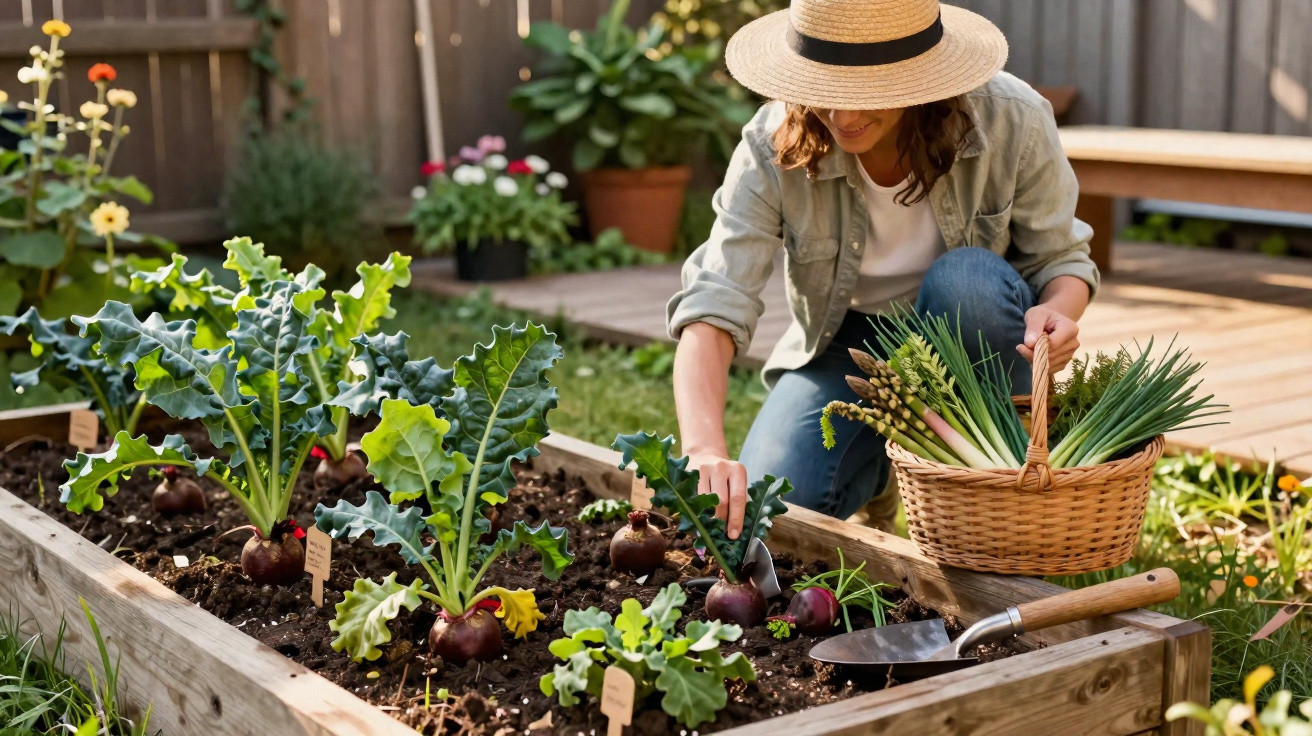
Plant once, harvest for years: choosing certain vegetables can greatly reduce garden chores while keeping harvest baskets increasingly well filled.
Many amateur gardeners eventually tire of sowing anew every year, buying young plants, battling late frosts and watering constantly. Anyone who wants to manage their vegetable garden more comfortably over the long term can take a different approach: grow plants that return by themselves and turn the garden into something close to a self-service buffet.
What perennial vegetables are
Gardeners refer to “perennial vegetable plants” or “permanent vegetables” when crops remain in the same spot for several years and can be harvested repeatedly. Some are genuinely perennial, such as asparagus or rhubarb, while others spread independently through roots and seeds, including Jerusalem artichokes and crosnes.
The principle is straightforward: prepare the bed thoroughly, then let the plant do much of the work. Once it has established strong roots, it generally needs only:
- occasional watering during prolonged dry spells;
- a layer of mulch for protection and nutrients;
- light weeding so that it is not smothered by other growth.
Perennial vegetables provide harvests from the same bed year after year, requiring considerably less work than traditional summer crops.
Why an “almost autonomous” vegetable garden is worthwhile
Once a bed of permanent vegetables has been established, its benefits soon become clear. Because the soil is not dug over every year, life within it remains stable. Earthworms, fungi and microorganisms can develop lasting structures that keep the ground loose and fertile.
There are further advantages too:
- Less watering pressure: Deep-rooted plants can access water reserves lower down in the soil more effectively.
- A longer harvesting season: Many species repeatedly produce fresh shoots from early spring well into autumn.
- Greater diversity for insects: Flowering herbs such as chives or perennial fennel attract pollinators and beneficial insects.
- Lower costs: Seeds and young plants need to be bought far less often.
Experienced gardeners therefore often call it a “light version of a self-sufficiency bed”: you do not have to live completely self-sufficiently, but you secure a reliable basic supply of fresh greens.
The 15 most popular plants for a permanent vegetable bed
With a thoughtful selection, even a small area can become a surprisingly productive corner. Common choices include:
Leafy vegetables and stems that return every year
- Perennial leek (Allium ampeloprasum): Forms clumps from which stems or leaves can be harvested regularly.
- Perennial tree kale (Daubenton types): Harvested like leafy kale without killing the whole plant.
- Good King Henry: A traditional cottage-garden vegetable whose leaves can be cooked like spinach.
- Garden sorrel: Tart, fresh leaves for salads, soups or herb quark.
- Rhubarb: A classic pie ingredient that produces sturdy stalks for many years.
- Lovage: Tastes intensely of celery and seasons soups almost free of charge for years.
Perennial culinary herbs for the kitchen and balcony
- Chives: Hardy and undemanding, sending up new growth each spring.
- Perennial basil type: Suitable for long-term growing in sheltered positions or containers, with an aroma similar to its annual relatives.
- Perennial fennel: Grown mainly for its foliage; ideal with fish dishes and in salads.
- Wild garlic: Thrives in partial shade and supplies the first robustly flavoured leaves in spring.
Root and tuber vegetables that multiply themselves
- Jerusalem artichoke: Produces edible tubers and grows so vigorously that it is best given a corner of its own.
- Crosne: Small, twisted tubers with a delicate flavour, ideal for food lovers.
- Horseradish: A hot root that reliably regrows, perfect for sauces and as a home remedy.
- Artichoke: A striking perennial whose buds are considered a delicacy and also attract bees.
- Asparagus: Requires patience at first, but can then be harvested for more than a decade.
Asparagus and rhubarb often remain productive in the bed for more than ten years - one major effort when planting, followed by long-term enjoyment.
How to plan your permanent vegetable bed
Anyone starting with perennial plants for the first time should bear a few practical points in mind. Not every plant suits every site, and some spread with considerable vigour.
| Criterion | What to consider |
|---|---|
| Space required | Large perennials such as artichokes or lovage can take up one square metre or more. |
| Soil type | Asparagus prefers light, free-draining soil, while rhubarb grows well in moist, humus-rich ground. |
| Light | Most plants want sun, but wild garlic and sorrel thrive much better in partial shade. |
| Kitchen use | Consider whether you mainly want leaves, herbs, tubers or stems, then make your selection accordingly. |
It is best to confine particularly vigorous growers, such as Jerusalem artichokes, horseradish or crosnes, to a separate bed or large containers. Otherwise, their root runners may suddenly appear among lettuce, carrots and flowers.
Setting up a bed without a major effort
Creating a permanent bed takes less work than many people assume. A clear sequence has proved effective:
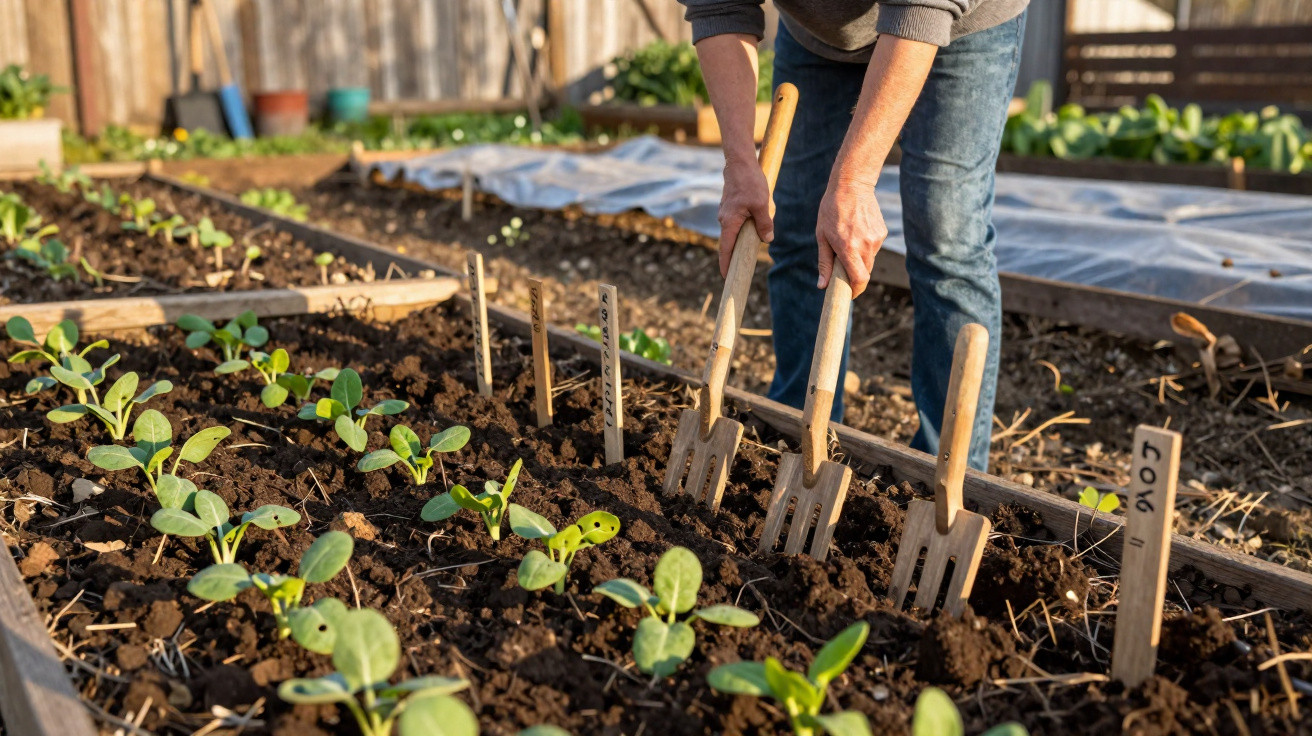
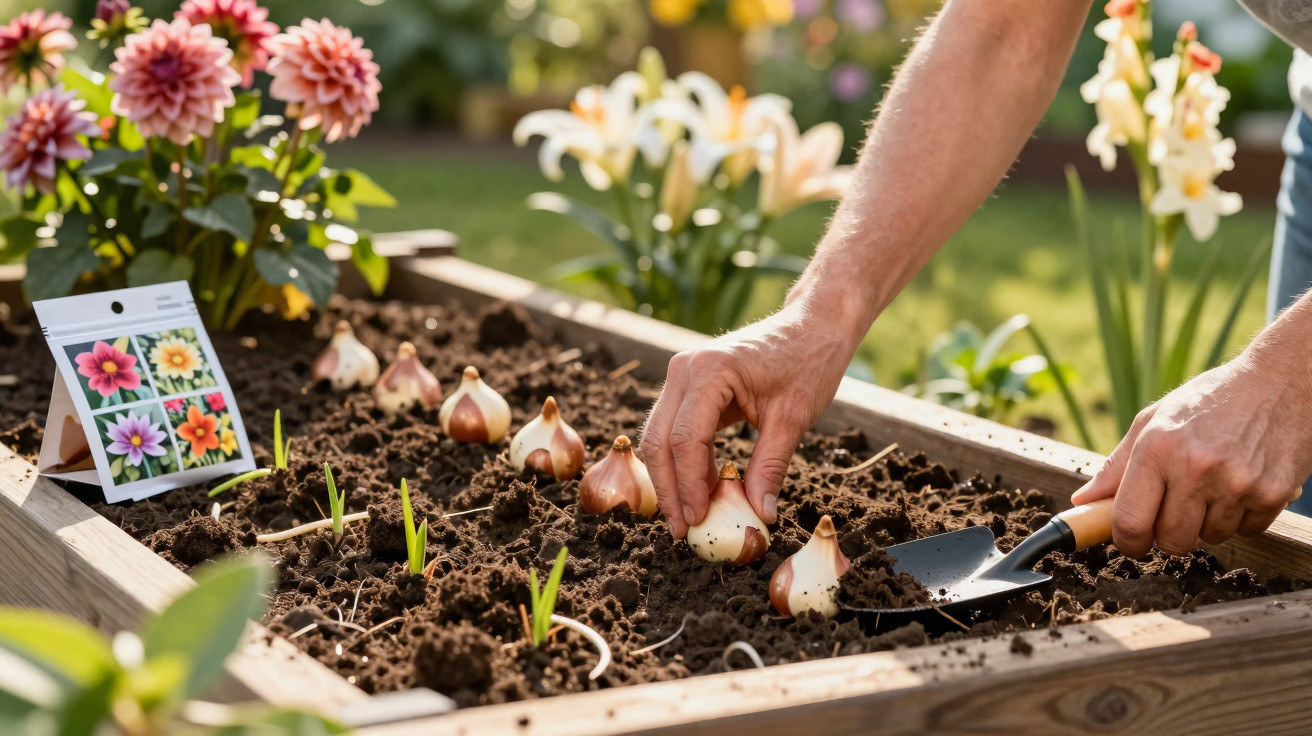
- Loosen the soil with a digging fork or specialist hoe without turning it over completely.
- Remove coarse roots from troublesome weeds as thoroughly as possible.
- Work in mature compost or well-rotted manure.
- Plant generously, allowing the perennials enough room to develop.
- Mulch the area straight away with leaves, straw or grass clippings.
During the first year, the plants still need a little more attention and water. Once their roots are established, care is usually limited to occasional checks, topping up the mulch and selective thinning.
Combining perennial vegetables and annual beds intelligently
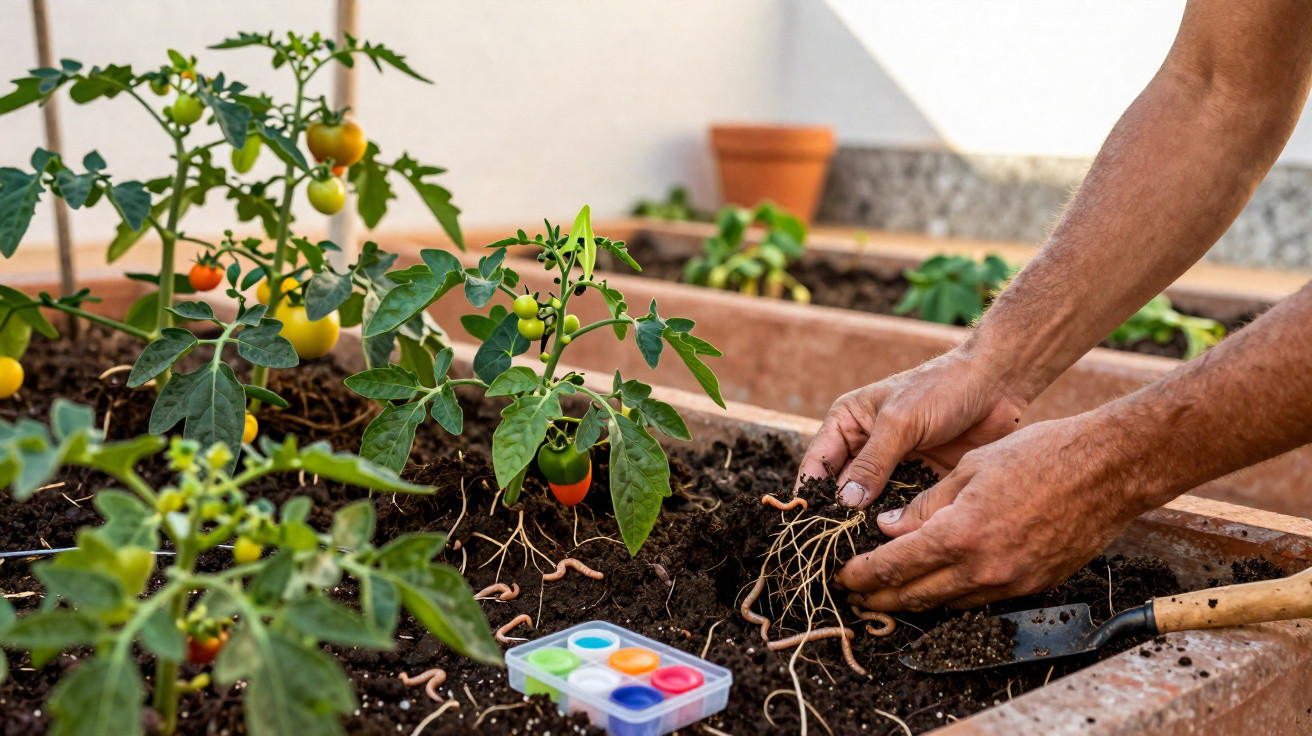
There is no need for an entirely permanent garden. Many gardeners choose a mix: one area of perennial plants reliably supplies basic ingredients, while conventional annual beds provide tomatoes, peppers, courgettes and similar crops.
One possible framework for small gardens is:
- a corner with rhubarb, sorrel and chives for spring cooking;
- a shaded strip with wild garlic beneath shrubs or trees;
- a sunny position for perennial leek, lovage and hardy kale;
- a separate area or containers for Jerusalem artichokes and horseradish.
This means there is almost always something ready to harvest from March until late autumn: the first wild garlic leaves, young sorrel shoots, then rhubarb stalks, followed by chive flowers and artichoke buds in summer, and tubers in autumn.
Practical tips for avoiding mistakes
People new to the approach often encounter similar problems. Several typical pitfalls are easy to avoid:
- Planting too closely: Perennial plants grow larger over the years. It is better to leave gaps at first and fill them with annual lettuces.
- Choosing the wrong site: Wild garlic in full sun or asparagus in heavy clay soil will usually lead to disappointment.
- Harvesting too much: Especially with young perennials, leave some shoots in place so the plant can build up strength.
- No mulch: Bare soil dries out, loses nutrients and encourages weeds - a layer of mulch saves a great deal of work.
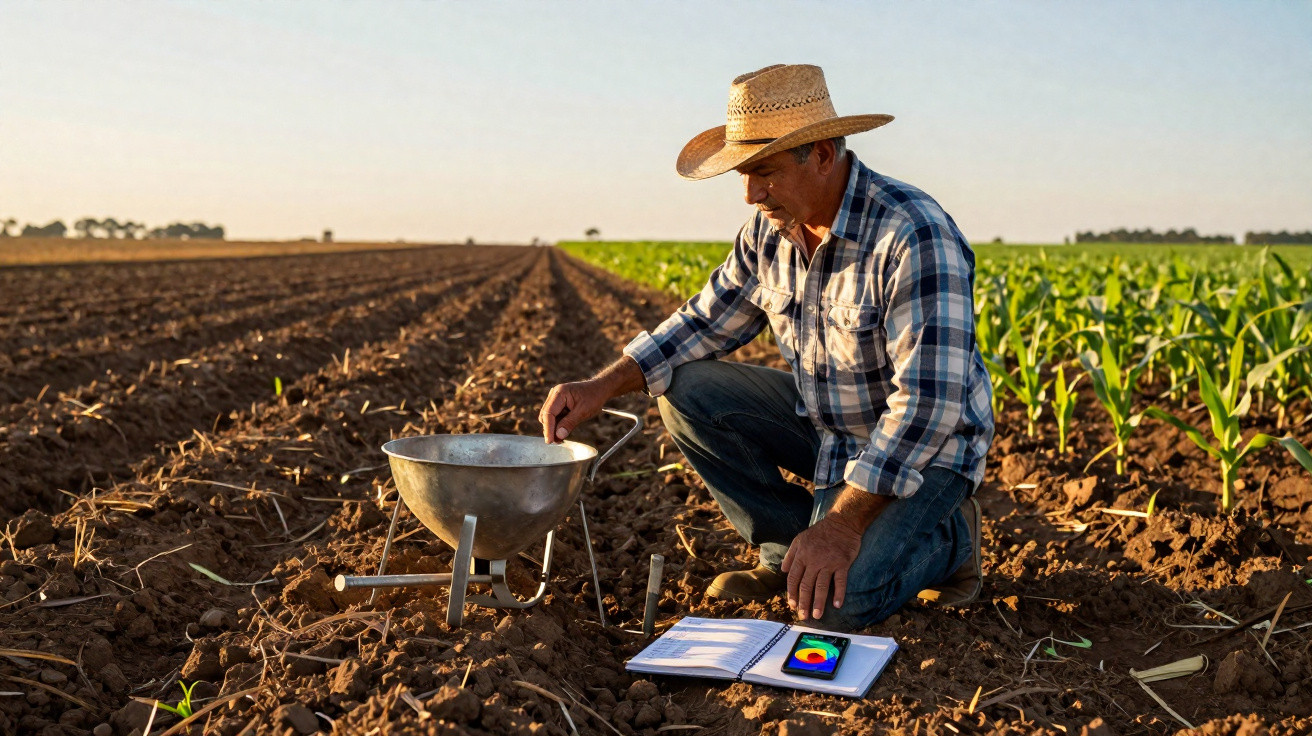
Knowing your soil makes the process much easier. A simple spade test reveals whether the ground is more sandy, clayey or stony. Heavy soils benefit from sand, compost and leaf mulch, while very poor sites need organic fertiliser and regular additions of compost.
Why the effort pays off as early as the second year
In the first year, the idea can sometimes seem disappointing: plants are still small and harvests are modest. From the second or third year onwards, the picture changes. The perennials are established, form strong roots, cope better with dry spells and noticeably increase their yield.
Harvests also become far more evenly spread across the year. While conventional summer crops may produce everything at once in August, sorrel, perennial leek and chives provide smaller but steady portions over many months. Many amateur gardeners soon find that, with less rush, they can still bring plenty of fresh greens in from the garden.



Comments
No comments yet. Be the first to comment!
Leave a Comment