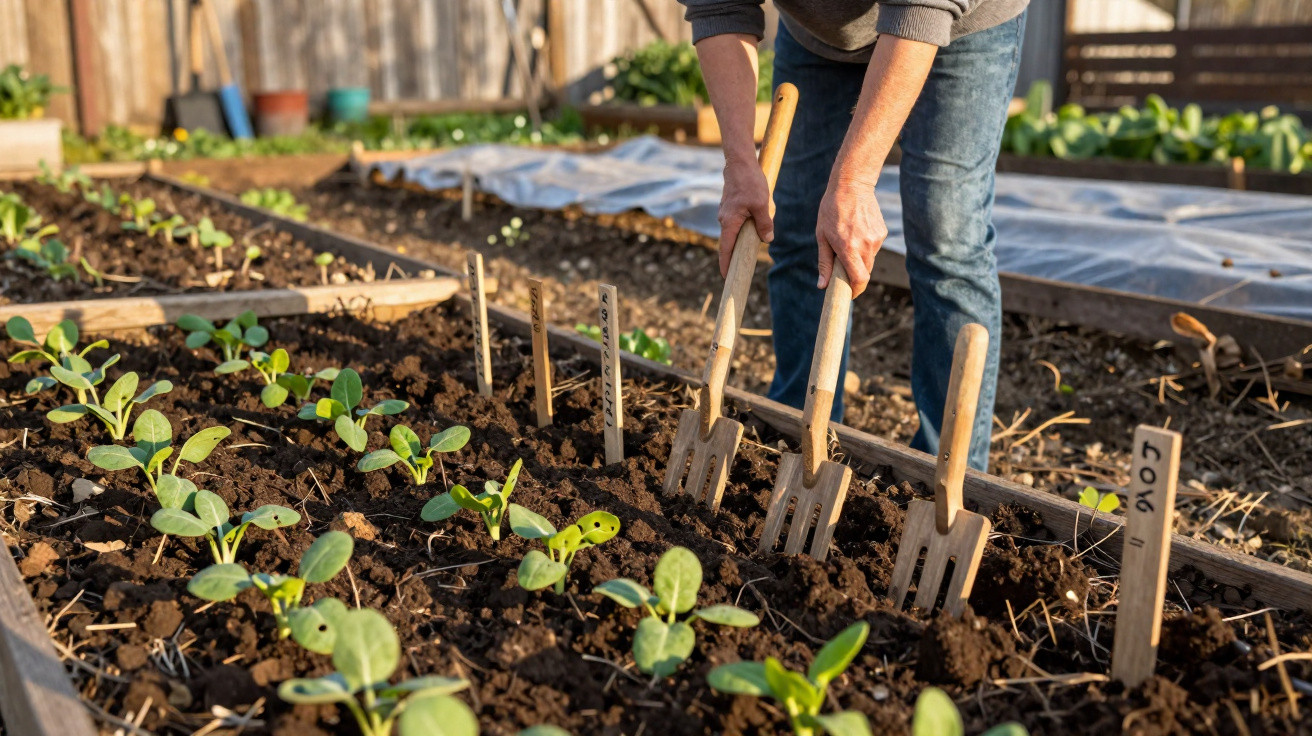
Gardeners from France to the UK and the US are increasingly ditching expensive repellents and plastic devices in favour of a simple, almost forgotten technique associated with picnics and school fêtes: creating a thicket of wooden forks to guard vulnerable crops.
Why winter beds become a free-for-all
January and February can be difficult months in the garden. Garlic, onions and broad beans planted in autumn begin to emerge, while early sowings remain just beneath the soil. Meanwhile, the beds are bare, the ground is loose, and the whole area is highly appealing to local wildlife.
Freshly cultivated soil can seem like a superior litter tray to neighbourhood cats. Birds, meanwhile, find an all-you-can-eat spread of seeds, worms and young shoots. In small urban and suburban gardens, one night of disturbance may undo weeks of careful preparation.
Freshly loosened soil is one of the biggest magnets for both cats and birds in winter gardens.
For cats, a bed that has been dug over, enriched with compost and levelled out offers ideal conditions: it is easy to dig, reasonably dry and often tucked away in a peaceful spot. Their scratching can dislodge seeds, uncover roots and snap plants. Cat droppings can also add concentrated nitrogen and salts that scorch tender growth, as well as introducing pathogens.
Birds cause damage in another way. Pigeons, blackbirds and magpies soon identify regularly fed areas and uncovered soil. They forage for grubs and tug up newly germinated seeds. Peas, broad beans and salad leaves are particularly tempting when they first appear, as they are tender and rich in sugars.
Many gardeners reach for netting or chemical deterrents. However, nets may entangle wildlife, appear untidy and make weeding harder. Sprays and pellets bring concerns about residues, pets and soil health. This is why a basic, old-fashioned solution is gaining renewed attention.
The wooden fork revival: from picnic essential to garden tool
The idea may sound faintly ridiculous: position wooden forks throughout a bed with their tines pointing upwards, like miniature stakes. Yet it is appearing widely on gardening forums and social media because it offers several benefits at once: it is inexpensive, unobtrusive, reusable and biodegradable.
Wooden forks create a low, invisible fence that animals dislike crossing but plants can grow between.
In contrast with plastic spikes, which may break into sharp pieces and remain in the ground, wooden cutlery comes from a renewable material. It gradually decomposes and contributes organic matter rather than microplastics. Plenty of gardeners already have unused packs left from summer barbecues or children’s parties.
The purpose is not to harm animals, but to make the surface sufficiently inconvenient that cats and birds choose to go elsewhere. Cats dislike unstable or prickly ground because it affects their balance and comfort when squatting. Birds that feed on the ground favour clear landing areas, where they can move freely and keep watch for predators.
How to create an effective “fork barrier”
This technique succeeds only when forks are arranged closely and purposefully. A few forks placed haphazardly in the ground will not deter a persistent tomcat. Instead, picture a compact miniature woodland.
Spacing, height and angles that actually work
- Spacing: Set forks 5–8 cm (2–3 inches) apart. Cats should not have enough room between them to settle comfortably.
- Height: Keep the tines 3–6 cm (around 1–2 inches) above the soil: sufficiently high to inconvenience paws and birds, but low enough to avoid shading seedlings.
- Angles: Lean some forks slightly instead of positioning every one vertically, removing any obvious route for landing or walking.
Press the handles firmly into the soil so that wind cannot make them wobble. Place them in rows, surrounding newly sown sections, or in a grid across raised beds. In particularly small beds, gardeners often mark out the entire edge before filling in the areas around the most exposed rows.
The goal is not height, but density: a confusing maze that breaks up both landing strips and toilet spots.
After a day or two, most cats will have explored the bed, encountered several uncomfortable tines and opted for a neighbour’s compost heap or an uncovered flowerbed. Birds faced with unfamiliar obstructions generally pass over the bed in favour of open lawns or unprotected areas.
Fork barriers can also label your crops
Every fork’s wooden handle provides an additional useful feature: a built-in plant label. This small benefit appeals to organised gardeners who would otherwise buy plastic labels or decorative slate markers.
Write the variety and sowing date on the flat handle using a pencil or permanent marker. It should remain legible for several months, which is long enough for seedlings to become easy to identify.
| Use | How the fork helps |
|---|---|
| Animal deterrent | Creates a prickly, cluttered surface that cats and birds dislike |
| Plant label | Handle used to note variety and sowing date |
| Soil health | Wood slowly decomposes, adding organic matter |
| Waste reduction | Replaces plastic tags and rigid plastic spikes |
At the close of the season, undamaged forks can be soaked, cleaned and put away for use the following year. Forks that are splintered or stained can be added directly to the compost heap or a leaf mould pile, where they will break down gradually.
From winter into spring: protecting the most vulnerable stages
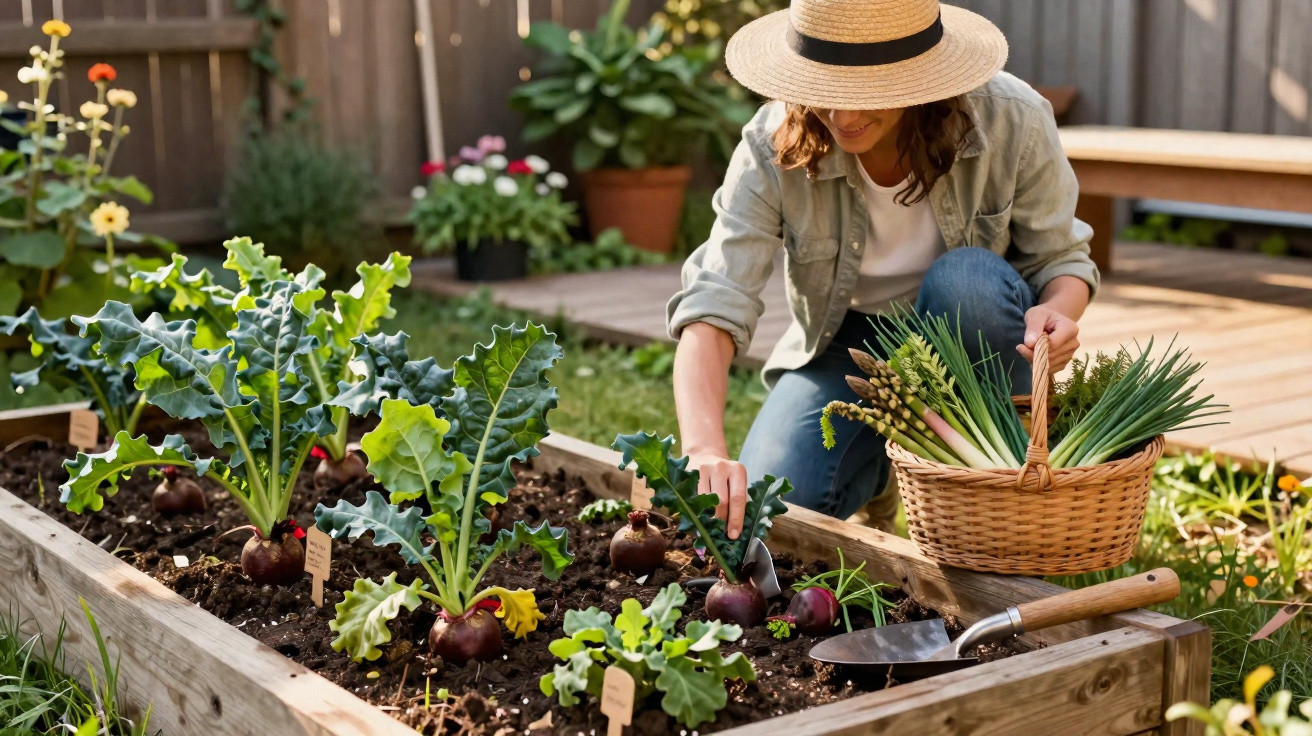
Wooden forks are particularly helpful from late winter into early spring, when germinating seeds and seedlings face their greatest risk. At this point, roots are shallow and stems are delicate. One scrape by a cat can pull up an entire row of spinach or beetroot.
When a barrier is in place, plants suffer fewer interruptions. The benefits then build: roots become more established, leaves grow thicker, and plants are better able to cope with spring’s shifts between frost and milder weather.
Early protection often translates into sturdier plants and earlier harvests, without any extra fertiliser or heating.
When plants are roughly 15–20 cm (6–8 inches) tall and have formed a thick canopy, damage from paws and beaks normally declines considerably. The forks can then be removed gradually, beginning at the edges and monitoring whether wildlife becomes interested again.
Where the method works best – and where it does not
Wooden forks work particularly well in small and medium beds, raised planters and community plots where budgets are limited. They take little time to install and can be moved easily when planting arrangements change.
In very large fields or allotments containing dozens of lengthy rows, the approach requires more labour and may be impractical as a stand-alone measure. Gardeners in these situations often pair it with other low-impact methods, including:
- temporary mesh tunnels over the most vulnerable crops
- rough woodchip or pruning mulches in corners favoured by cats
- designated “sacrifice” spaces, such as an uncovered patch away from beds, intended to divert cats
Safety should also be considered. Households with young children need to make clear that forks are not toys and may be sharp if someone falls on them. Keeping the tines low and avoiding especially rigid hardwood cutlery can help lessen this risk.
Why biodegradable barriers are important for soil life
This homemade garden solution reflects a wider change in gardening practice. As concern grows over microplastics and chemical run-off, more home growers are reconsidering which products they introduce to their soil.
Any plastic net, spike or label left in a bed can fragment under frost and sunlight. The resulting particles become mixed into the ground, where they are difficult to extract and may contain pollutants. Earthworms and other microfauna vital to soil structure may also swallow them.
Wooden forks, on the other hand, behave much like small twigs. Bacteria and fungi break them down over time, converting them into humus. This helps improve water retention and nutrient exchange, both of which are fundamental to resilient kitchen gardens.
Practical ways gardeners are adapting the trick
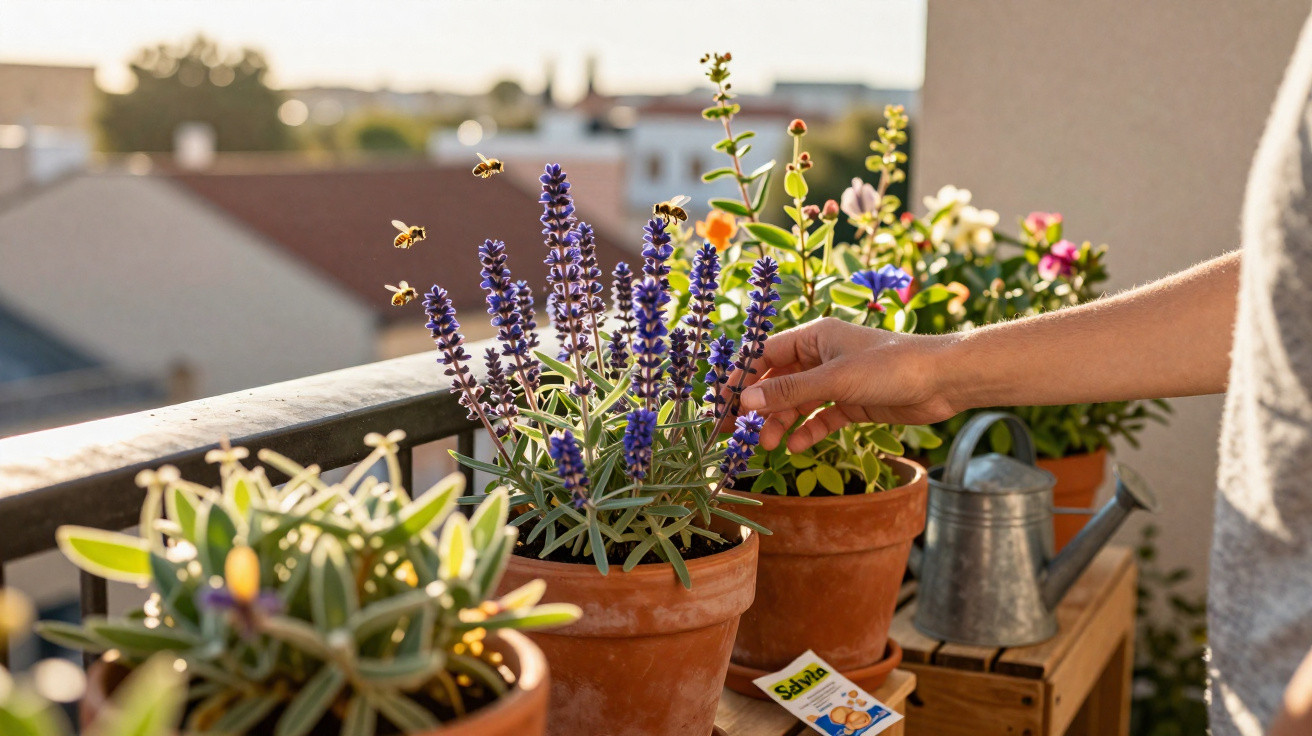
Urban gardeners say they use closely packed forks in balcony containers, where cats from neighbouring flats may wander. Since pots have only a small area of exposed soil, a few pieces of cutlery can protect herbs and salad mixes without restricting growth.
In suburban back gardens, some gardeners use forks only during the weeks after sowing peas, carrots or radishes. Others maintain a bucket of forks beside the shed as a ready-to-use kit whenever they notice fresh scratching or bird damage.
There is also scope to experiment. Some gardeners alternate forks with short willow twigs or pruned raspberry canes, making a mixed barrier that can double as support for pea tendrils. Others try forks of varying sizes, choosing small coffee forks for compact seed trays and larger forks for wider beds.
For gardening newcomers, the method also raises a worthwhile point about deterrence and harm. Many commercially available spikes and chemical products aim to frighten or punish animals strongly. A dense arrangement of wooden forks falls at the gentler end of the scale: irritating and persistent, but not cruel. That distinction matters where pets, hedgehogs and visiting wildlife occupy the same spaces as lettuces and leeks.







Comments
No comments yet. Be the first to comment!
Leave a Comment