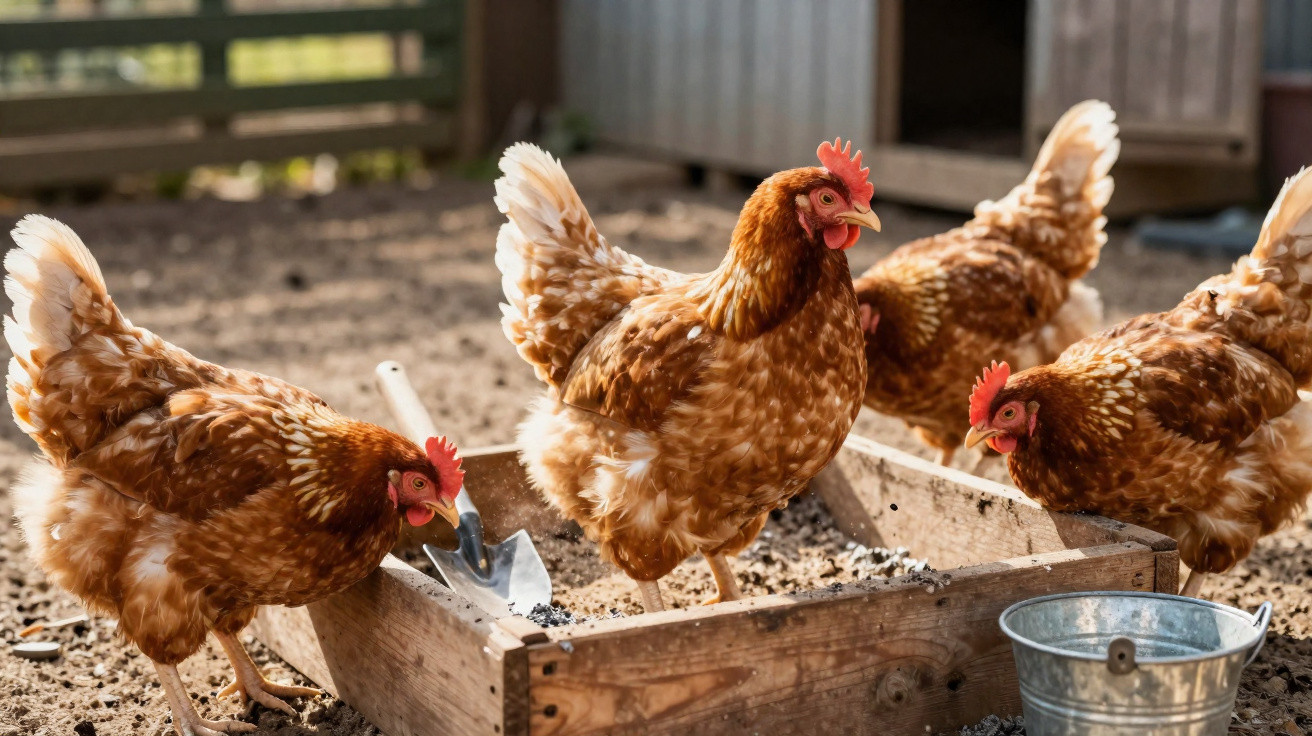
In spring, a look inside the hen house often reveals the same scene: restless birds that keep scratching, scruffy plumage and fewer eggs. The cause of this trouble is usually the same: red poultry mites and other parasites hiding in cracks, timber and nest boxes. Rather than continually buying more chemical treatments, savvy keepers are increasingly using a remarkably straightforward solution based on the birds’ natural behaviour.
Why chickens suddenly roll in sand
Anyone watching their birds closely will soon notice that chickens enjoy vigorously rolling in dry soil or fine sand. They scratch around, dig shallow hollows, flop onto their sides and effectively take a dust bath. Although it may seem playful, this is actually a complete grooming routine.
The tiny particles work their way down to the skin. They loosen flakes, detach parasite larvae and eggs, absorb excess skin oil and dehydrate unwanted inhabitants. External pests in particular, including red poultry mites, feather lice and lice, therefore face a serious problem.
“A well-prepared dust bath works like a natural shower against parasites – but without water or chemicals.”
A water bath, by contrast, offers chickens no benefit. In fact, wet feathers lose their insulating effect, cool down more quickly and create an ideal environment for bacteria and mites. Birds that are repeatedly soaked become more susceptible to illness and often lay less well.
The centrepiece: a simple container filled thoughtfully
The good news is that an effective dust bath does not require expensive specialist products. Most of the necessary materials can be found in almost any garden, while the remainder is likely to be in the shed.
Suitable containers for a chicken dust bath
Possible options include:
- a sturdy wooden box
- an old plastic mortar tub
- a shallow galvanised tub
- a feed trough or mortar tray from a DIY shop
The sides need to be high enough to stop the material from being scratched straight out, yet low enough for the birds to step in comfortably. A rim height of around 15–20 centimetres works well in most hen houses.
The ideal dust bath mixture
The contents are crucial: every grain must be dry from start to finish. For a larger container, a reliable mixture is as follows:
| Ingredient | Quantity | Purpose |
|---|---|---|
| Fine, dry sand | 10 litres | Mechanical “exfoliating” effect that removes larvae and tiny parasites from the skin |
| Sieved wood ash | 5 litres | Dries out and suffocates parasites, while binding excess skin oil |
| Fine garden soil | 5 litres | Blends the ingredients, making the bath pleasant and easy to shape |
Sand does the heavier work. As birds roll about, thousands of small grains slip between their feathers and dislodge mites and other crawling pests from the skin. Ideally, the sieved wood ash comes from a wood-burning stove or fireplace, has cooled completely and contains no nails or remaining charcoal. Its fine particles enter the parasites’ breathing openings and literally dry them out.
The soil prevents the blend from becoming too slippery or too coarse. It creates a softer surface, encouraging birds to spend longer in it. If desired, small quantities of diatomaceous earth can also be added, but it should be used sparingly and its dust should not be inhaled.
Choosing the right place in the run
Even the best mixture has little effect if it is in the wrong location. Above all, a dust bath needs to stay dry.
How keepers can choose the ideal spot
- an area protected from rain, such as beneath a roof overhang
- as sheltered from wind as possible, so the material is not blown away
- easily accessible to every bird rather than squeezed into a tight corner
- set slightly away from feeding areas, preventing droppings from getting directly into the bath
For a small group of four to five chickens, a container measuring roughly 50 x 50 centimetres and around 15 centimetres deep will generally be sufficient. Those keeping a larger flock should provide several baths or choose a suitably bigger trough. This helps prevent stress caused by disputes over the “favourite spot”.
Dust bath maintenance: little effort, substantial effect
Cleaning is fairly straightforward. Once a week, a quick pass with a small rake or hand trowel is usually enough to break up clumped areas and remove visible contamination.
Over time, the material changes. When the contents become heavy, damp or an unattractive grey colour, keepers should replace the entire mixture. The old material can simply be put on the compost heap.
“Many keepers report that, after a few weeks of regular dust-bath use, scratching and feather pecking stop – and the nests start filling with sound eggs again.”
Providing a dust bath permanently helps stop parasites gaining momentum at an early stage. Isolated mite colonies do not develop into a major infestation because the chickens can groom themselves every day.
How keepers can spot a mite infestation
A dust bath works as a preventative and supportive measure, but it does not replace inspections. Typical signs of issues with red poultry mites and similar pests include:
- chickens are restless, sleep poorly and frequently change position on the perch
- feathers look dull and untidy, and bald patches develop
- noticeably fewer eggs and thinner shells
- small traces of blood on eggs or perches
- tiny dark dots or red deposits in cracks and beneath perches, particularly visible at night
In these circumstances, a dust bath alone will usually no longer be enough. Keepers should also clean cracks in the hen house, empty nest boxes, make perches removable and, where necessary, use approved treatments. The dust bath nevertheless remains an important part of preventing another severe build-up of parasites.
What to consider when using wood ash
Wood ash is effective, but it requires a few basic precautions. Only untreated, natural wood is suitable. Painted boards, glued panels and coated timbers do not belong in a stove or fireplace, and certainly not in a dust bath.
Before it is used in the chicken area, the ash should be passed through a fine sieve. This removes nails, larger pieces of charcoal and other foreign material. Anyone unsure can use less ash and increase the proportion of sand instead. The mixture should remain light and pleasant, rather than producing dense dust clouds whenever the birds move.
Why a dust bath offers more than parasite control
A well-used “sand spa” provides several benefits at once. It keeps the birds occupied, reducing stress and easing disputes over rank. In smaller runs especially, every additional activity opportunity acts as an outlet.
Well-maintained plumage also supports good health. Feathers insulate more effectively, the birds become chilled less quickly and cope more easily with changes in the weather. Strong overall condition is often directly reflected in laying performance: more sound eggs and fewer problems with shell defects or shell-less eggs.
Anyone observing their birds will quickly see how readily they take to the new area. Chickens queue up, happily throw themselves onto their backs, close their eyes and let the mixture sift deep into their feathers. This sight says more than any theory, showing that a natural instinct has finally been given enough space.









Comments
No comments yet. Be the first to comment!
Leave a Comment