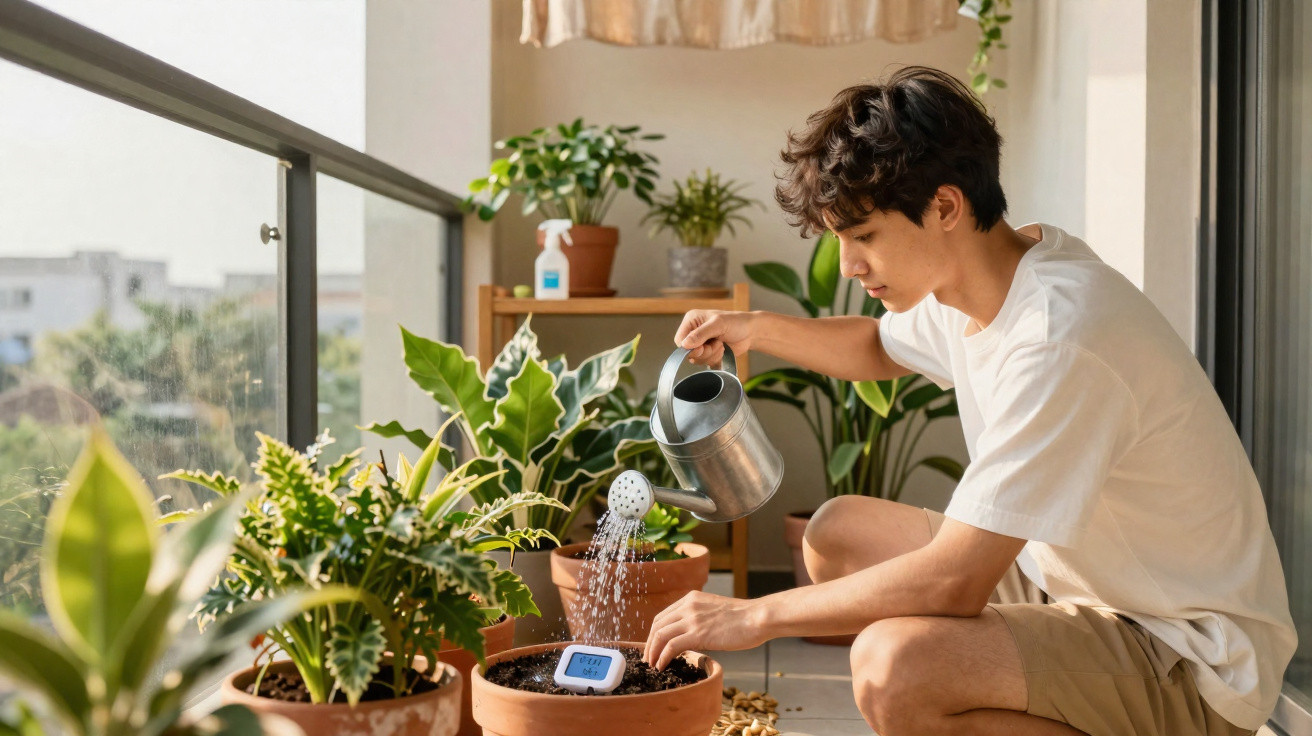
The heat is the first thing you notice.
Before you have checked your emails, made coffee or looked at your to-do list, a quiet line of plants is already waiting on the balcony or kitchen shelf, slightly limp beneath the morning sun. You seize the watering can as though it were a firefighter’s hose, give every pot a fast shower and leave with a vague sense of achievement. You have “done the plants”.
A few hours on, one leaf has gone crispy at the edge. Another plant has taken on a strangely washed-out look. The surface of the compost is dry again, despite your morning watering. You begin to question whether the sun is too fierce, whether your flat is somehow hopeless for houseplants, or whether you simply were not born with a “green thumb”.
Then a gardening friend drops by, watches your watering routine for half a minute and says: “You know you’re doing that all wrong, right?”
Why so many people water plants incorrectly in hot weather
Warm conditions can mislead us. The air feels punishing and your own skin feels parched, so you instinctively sympathise with your plants and overwhelm them with well-meaning water. A dry soil surface makes you immediately think, “more water, more often”. It seems considerate, even a little heroic, as if a plastic watering can could defeat a heatwave.
Plants do not respond to heat as people do. Their roots are out of sight, their leaves have protective waxy surfaces, and water travels gradually through their stems. We act quickly and emotionally, whereas the plant reacts slowly and silently. Most watering errors begin with that disconnect.
The effect is even stronger on a balcony. Containers warm up like miniature ovens, moisture disappears rapidly and whoever is holding the hose starts to worry. Hot weather does more than dehydrate plants: it magnifies every watering habit, whether helpful or harmful.
Imagine a compact urban courtyard in mid-July, with temperatures reaching 32°C in the shade. Each evening, a neighbour leans over the railing with a bottle of water and gives every plant a brief drink. Each pot gets no more than ten seconds. The compost darkens briefly, only to turn pale again before the evening is over.
Come August, the lower leaves of her basil are turning yellow. Brown marks appear on the tomato leaves. The mint seems healthy above the surface, yet it lifts from the pot with barely any roots attached. She blames the “crazy heat”, buys replacements the following spring and repeats exactly the same pattern.
A little further across the courtyard, another balcony is full of plants growing in larger pots, with mulch spread over the surface and saucers beneath. Its owner waters less frequently but takes longer over it. Their compost remains dark and feels cool when touched. It is the same city and the same sunshine, but with a very different result. There is no magic involved: the water is simply reaching where it needs to go, the roots.
Here is the awkward reality: in hot weather, plants can die not just from lack of water but from stress. Sudden changes from sodden to completely dry compost, cold water poured onto overheated roots, and continual tiny sips instead of proper drinks all take their toll. It is rather like offering someone a spoonful of water every hour while they run a marathon.
When only the top layer gets wet, roots remain close to the compost surface, where the heat is intense and moisture vanishes quickly. If we soak plants too often, their roots sit in stagnant water with too little oxygen and can begin to rot. From above, both problems can look much alike: distressed plants, yellow foliage, stems that are either soft or brittle, and an owner convinced they simply “don’t get gardening”.
Successful watering is less about volume than it is about depth and timing. A plant has no interest in how guilty you feel or how scorching the afternoon has become. What matters is whether water ever reaches its concealed, living centre.
How to water plants properly in warm weather
One straightforward rule can transform your results: water more deeply and less often. Rather than giving a small sprinkle every day, allow the upper few centimetres of compost to dry a little, then water slowly and thoroughly until surplus water drains from the base of the pot. This should be a genuine soak, not a quick splash.
For plenty of houseplants and balcony containers, that can mean watering every 2–4 days during warm weather, rather than doing it automatically at 7 a.m. every day. Push a finger into the compost as far as your second knuckle. If it is cool and faintly moist, hold off. When it feels dry and crumbly, it is time to water.
Early morning and late evening are the most suitable times. Water can travel down towards the roots before the sun removes it, while the plant has several quiet hours to absorb it. Your role is not to “refresh” the leaves; it is to replenish the underground reservoir without fuss.
When temperatures climb, people tend to make the same small collection of errors. They water foliage instead of compost, assuming it will “cool” the plant. They tip ice-cold water straight from the tap over a pot that has been baking in the sun. Or they leave a plant standing in a saucer of water for days, effectively turning its roots into a swamp.
There is also the familiar habit of guilt watering. You return from a weekend away, spot a drooping and unhappy-looking plant, then respond by flooding it. It may revive for a few hours before slumping again, as its roots struggle with such an abrupt shift. The motivation is kind, but the outcome is less so.
We also tend to overlook how varied plants can be. A cactus sitting in full sun needs its compost to dry out between waterings. A bathroom fern, on the other hand, is happier with consistent, light moisture. Hot weather nevertheless pushes us towards one blanket reaction: “Everything looks thirsty, pour water on everything.” Let’s be honest: nobody really does that thoughtfully every single day.
“Think of your watering can like a slow IV drip, not a pressure washer,” laughs one urban gardener I met during a heatwave. “When I started watering less often but for longer, I lost fewer plants in August than in May.”
A few modest routines can have a considerable effect:
- Leave water in the watering can for an hour so it is not ice-cold.
- Aim water at the compost rather than the leaves, particularly in strong sunshine.
- Spread a fine layer of mulch, such as bark, pebbles or even straw, to keep compost cooler.
- Place pots in groups so they provide one another with shade and retain more moisture.
- Pick up the pot: if it feels very light, it is probably ready for a drink.
On a difficult day, these practical measures are easier to maintain than grand gardening principles. They can become part of everyday life, somewhere between cleaning your teeth and switching off the lights.
The subtle change that saves plants and nerves
We do not often describe watering as a relationship, but it is exactly that: a shared rhythm between you and something unable to speak, only to respond. Heat exposes the strain in that relationship. Plants cannot relocate themselves into the shade or top up their own water supply. They rely on a person who is also hot, tired and distracted.
There is an unexpected reassurance in learning to water well. Rather than treating every drooping leaf as an emergency, you begin to notice recurring patterns. How long does this particular pot normally stay moist? Which plant sulks if you miss a day? Which one easily forgives you? A shelf or balcony table gradually reveals individual personalities.
That is when enjoyment quietly arrives. You see one plant remain lush during a heatwave because you finally moved it into a deeper pot and watered it more slowly. You spot fresh leaves in September on a plant you had been certain was lost in July. On a small scale, it can feel as though you have slightly altered the weather itself.
We all recognise the feeling of walking past somebody else’s flourishing jungle and wondering, “What’s their secret?” In many cases, it is neither unusual fertiliser nor costly misting equipment. It is simply this: they stopped watering in a panic and began watering with attention. The watering can did not change; the hands using it did.
The next spell of hot weather will arrive whether or not you feel prepared. One morning, you will open the window and feel warm air against your face. You will glance at your plants and briefly remember all the summers when half of them failed to survive.
Perhaps this time you will stop for a moment. Feel the compost. Judge the pot’s weight in your hand. Take up the watering can with a slightly altered purpose. From the outside, that tiny pause may seem like nothing, yet it can mark the difference between another frustrating season and a calm, green August that you will want to talk about.
| Key point | Detail | Benefit for the reader |
|---|---|---|
| Water less often, more deeply | Allow the surface compost to dry slightly, then soak it until water runs from the pot | Reduces stress, supports strong roots and means fewer plants die in hot weather |
| Timing and technique matter | Water early in the morning or evening, at compost level, using temperate water | Reduces evaporation and shock, making each watering genuinely effective |
| Small habits change everything | Mulch, suitable pot choices, grouping plants and simple compost checks | Makes watering easier, more intuitive and less driven by summer anxiety |


Comments
No comments yet. Be the first to comment!
Leave a Comment