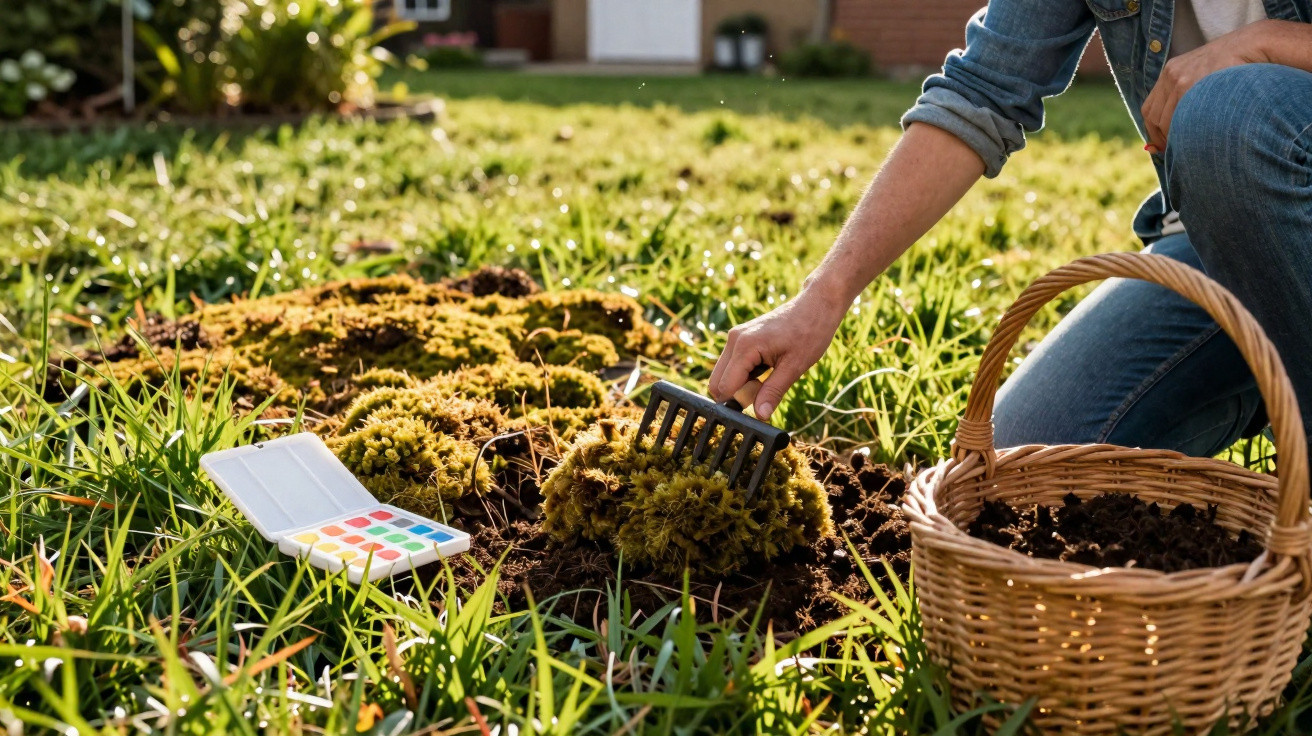
The lawn suddenly looks patchy, soft and spongy – not because of rain, but because of a quiet green invader.
In many gardens, moss spreads unnoticed until the lawn edge resembles a woodland path more than a well-kept green carpet. Before instinctively reaching for harsh chemical treatments, it is worth pausing: there are remarkably simple, natural ways to push moss back while making your garden more resilient, lively and better able to cope with climate conditions.
Why moss is taking over your lawn
Moss is not simply a quirk of nature; it is a symptom. It ruthlessly reveals where a lawn is struggling. These plants belong to the bryophytes, do not develop deep roots and thrive in conditions where grasses give up: damp, shaded and compacted.
“Anyone who removes moss without changing the causes is inviting it back – usually sooner than expected.”
Common triggers in the garden include:
- Acidic soil: A low pH weakens lawn grasses, while moss remains unaffected.
- Waterlogging: Water pools and drains poorly, leaving the soil cold and clammy.
- Shaded positions: Beneath trees, behind walls or in north-facing areas, the lawn does not receive enough light.
- Nutrient deficiency: Depleted soil leaves grasses starving, whereas moss requires far less.
- Mowing too low: Cutting a lawn too short exposes the soil, creating an ideal launchpad for moss.
Unless these factors are addressed, moss will return after even the most thorough removal. Tackling the underlying causes instead creates a lawn that is naturally more resistant.
Four natural ways to tackle moss and strengthen your lawn
1. Mow properly instead of taking lawn cutting to extremes
The most seemingly ordinary measure often determines success or failure. A lawn kept consistently shorter than around four centimetres loses its protective cover. Sunlight then reaches the soil directly and dries out the upper layer – yet, ironically, moss cushions ultimately benefit because the grasses are under constant stress.
A lawn-friendly mowing routine looks like this:
- Remove no more than one third of the blade length with each cut.
- Mow regularly but not obsessively – roughly once a week during active growth periods.
- Use a sharp blade so that grass blades are cut cleanly rather than torn and frayed.
“The denser the lawn grows, the harder it is for the moss layer to establish itself – measured mowing creates the best ‘moss brake’.”
2. Feed the soil organically
Rather than using fast-acting mineral fertilisers, which work like energy drinks for grass blades, more and more gardeners are choosing organic alternatives. Compost, pelleted organic lawn feed or horn meal release nutrients more slowly, but in a more lasting way.
This has a double benefit:
- The lawn receives steady nutrient supplies without sudden “growth shocks”.
- Soil life – bacteria, fungi and earthworms – becomes more active and naturally loosens the ground.
A broad seasonal schedule for many gardens is as follows:
| Season | Action |
|---|---|
| Spring | Apply organic lawn feed and overseed weak areas |
| Summer | Feed lightly if required, but be more restrained during hot weather |
| Autumn | Use potassium-rich organic fertiliser to improve winter hardiness |
3. Get air into the soil: aerate rather than give up
Compacted soil is one of moss’s strongest allies. Anyone who has seen puddles sitting on a lawn after heavy rain knows the issue: water cannot penetrate deeply, oxygen is lacking and roots almost “suffocate”.
Aeration, or ventilating the soil, can help here:
- Make small holes at regular intervals using spiked shoes or dedicated aerating forks.
- On heavily compacted ground, use hollow tines that remove small plugs of soil.
- Fill the holes with sand afterwards so that they do not immediately close up again.
“Every air channel in the soil directly attacks the conditions moss loves most: dampness, cold and a lack of oxygen.”
4. Weaken moss cushions through targeted scarification
Scarification means mechanically “combing” the lawn. A vertically operating rake or an electric scarifier lightly cuts into the soil, slices through moss thatch and removes dead plant material.
The sensible approach is to:
- Work in spring or early autumn, when the lawn is actively growing.
- Keep the depth moderate to avoid damaging the turf over large areas.
- Overseed bare patches afterwards and apply a light dressing of sand.
Immediately after scarification, a lawn can look alarmingly battered. Within a few weeks, healthy grasses will fill the gaps – provided the soil has air, nutrients and enough water.
Moss as an enemy – or part of a new garden vision?
The traditional ideal of a garden in Germany is an immaculate, lush green lawn, free from anything that is not grass. That standard is beginning to shift as more amateur gardeners consider insects, birds and the climate. In this debate, moss is no longer seen solely as a nuisance.
“Moss provides shelter for tiny creatures, retains moisture and acts like a natural carpet in places where the lawn has long since given up.”
A growing number of garden owners now divide their outdoor space in principle:
- Intensively maintained lawn areas, for example for children, sport or gatherings.
- Partly shaded zones where moss, clover or wild herbs are tolerated or even welcomed.
- Corners deliberately left wilder to provide habitat for insects and birds.
Within such concepts, moss is no longer considered a disaster, but an indication of damp, cool microclimates that are taking on a new role in increasingly hot summers: natural “coolers” in the garden.
How to redesign problem areas in the lawn sensibly
Rather than fighting year after year in spots with particularly heavy moss growth, it can be worth taking an honest look: is lawn really suitable here at all? Under densely branched trees, in narrow courtyards or on permanently damp north-facing slopes, alternatives are often less stressful:
- Shade-tolerant ground cover instead of a conventional lawn.
- A deliberately designed “moss garden” area with stones and natural materials.
- Woodchip, gravel paths or small seating areas as dry zones.
This shifts the question from “How do I get rid of moss?” to “Where can moss stay – and where can it not?”. That change of perspective eases many frustrations, particularly in older gardens.
What many people underestimate about moss in the lawn
Several aspects lie behind this harmless-looking green growth, yet they are often overlooked in everyday gardening:
- Risk of unsuitable products: Chemical moss killers can harm soil organisms, enter groundwater and affect pets.
- Long-term effects: Anyone who ignores soil structure makes moss problems worse year after year, despite intensive effort.
- Optical illusion: Moss often appears greener than grass in winter, so its spread can seem greater than it really is in summer.
At the same time, a nature-friendly approach has clear benefits: fewer chemicals, stable soil life and a lawn that copes better with weather extremes, from heavy rainfall to heatwaves. Combining measures such as aeration, organic feeding and suitable cutting heights builds a genuine “protective shield” against moss instead of forcing you to start again every year.
A realistic example: a city garden with heavy soil, enclosed by high walls, develops dense patches of moss in spring. Over one year, the owner changes just three things: she aerates, uses organic fertiliser and stops mowing so short. By the second spring, the moss patches remain but are smaller. By the third year, grass is dominant again. The process is not spectacular, but it is sustainable – and that is exactly what makes it increasingly appealing to many gardeners.












Comments
No comments yet. Be the first to comment!
Leave a Comment