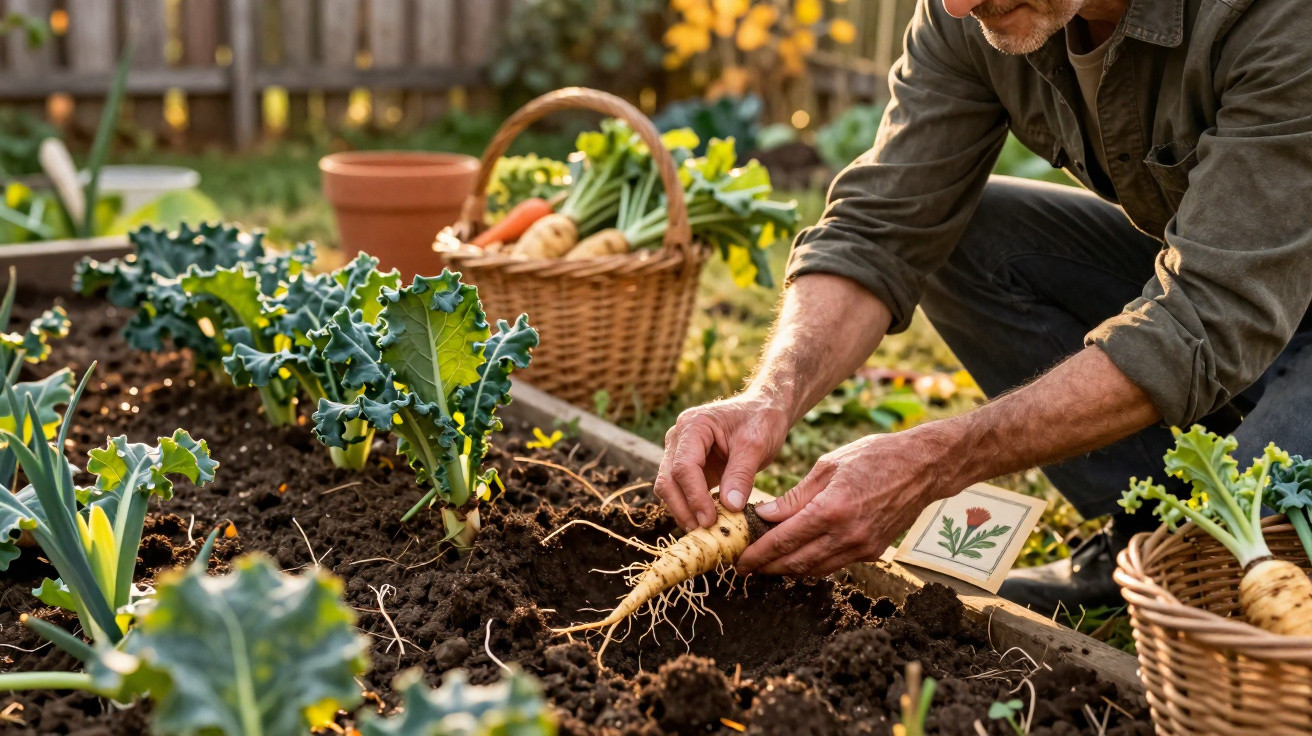
As winter approaches and gardens begin to look bare and weary, an old-fashioned root vegetable offers a quiet promise of a fresh, understated return.
Today’s gardeners may pursue unusual seeds and photogenic harvests, but some of the most satisfying crops lie dormant beneath the ground, simply waiting for the cold weather to ease.
The return of an old favourite: salsify moves into the spotlight
To plenty of British and North American gardeners, salsify may sound more like an ingredient from a restaurant kitchen than a useful garden crop. However, this slender, elongated root once grew alongside carrots and parsnips in cottage gardens throughout Europe. It sustained households towards the end of winter, when stored produce was dwindling and fresh leaves were still far away.
Historically called “goatsbeard” for its shaggy seed heads, salsify appears rather unremarkable while growing. There is a narrow brown root, a clump of foliage and little else to catch the eye. Its appeal emerges through both cooking and timing: sown in October, it rests beneath frosty soil before producing tender, pale roots as winter’s harshest period begins to recede.
Salsify turns a “hungry gap” – those bleak weeks between winter stores and spring crops – into a window of fresh, delicate harvests.
Its taste is often the first surprise for new growers. It is widely described as a mild blend of artichoke and asparagus, with a faintly nutty sweetness that works particularly well with butter, cream and citrus. For previous generations, that flavour brought welcome comfort and variety during a season otherwise dominated by cabbage and turnips.
What makes salsify distinctive: flavour, texture and nutrition
An unobtrusive root with an elegant taste
Salsify produces long, narrow roots, commonly measuring 20 to 30 cm. Its beige-brown skin conceals white, almost ivory-coloured flesh. Proper cooking keeps the texture delicate and smooth rather than fibrous. Whether steamed or gently sautéed, it retains its form well and readily takes on accompanying sauces.
Straightforward preparation suits its flavour best. Butter, lemon juice, a little salt and fresh herbs are enough to reveal its qualities. Its gentle taste also makes it suitable:
- as an accompaniment to roast chicken or fish
- in creamy soups containing potatoes and leeks
- in gratins flavoured with a touch of nutmeg and cheese
- sliced into batons and roasted with carrots and parsnips
Salsify offers winter comfort food without heaviness: gentle sweetness, light texture, and real versatility in the pan.
Why gardeners focused on nutrition are interested again
In addition to its flavour, salsify adds valuable nutrients to winter meals. The root supplies dietary fibre, which can aid digestion during months when fresh fruit often features less prominently in the diet. It also contains minerals including potassium, along with small quantities of vitamin E.
Salsify fibre includes inulin, a prebiotic substance that may help support a healthy gut microbiome. This makes it appealing to people seeking greater plant diversity in their diet throughout winter. Servings remain modest, but they provide welcome variety when seasonal options are limited.
Why sow in October: a traditional method that still succeeds
Autumn sowing for an early crop of tender roots
While many root vegetables are generally sown in spring, traditional gardeners in France and parts of Britain planted salsify in mid-autumn, often during October. The reasoning is simple: cool ground supports even germination, and winter temperatures slow development without harming the roots.
For an effective October sowing, gardeners generally:
- dig and loosen the soil deeply, removing stones that may cause roots to fork
- make shallow drills around 2–3 cm deep
- leave approximately 25–30 cm between rows
- water lightly and add a thin mulch to stop the surface forming a crust
Salsify copes well with cold, rain and the first frosts. Although its top growth stops during severe cold periods, the plants seldom come to harm. As conditions become milder in late winter, growth resumes on its own and the roots expand to harvest size while other crops are still slow to begin.
Autumn sowing uses winter as an ally, turning months of apparent inactivity into quiet root building beneath the surface.
Suitable companions in the vegetable plot
Salsify prefers loose soil without stones, yet it is fairly adaptable about neighbouring plants. Gardeners often grow it with other root crops, including beetroot and carrots, or close to onions and leeks, which require comparable soil conditions.
Experienced growers sometimes alternate salsify rows with winter lettuces or spinach. These leafy crops cover the ground, lessen the effect of wind on young plants and use the available space more efficiently. Such mixed planting also keeps the soil active and healthy through the colder season.
It is usually best not to sow salsify immediately after demanding legumes in depleted soil. A basic rotation - roots after brassicas, followed by legumes and then fruiting crops - helps reduce soil-borne disease and maintains the bed’s productivity over several years.
Winter hardiness: how salsify withstands frost
A vegetable that welcomes cooler weather
Salsify holds its reserves in the root, safely below soil level. This protects it against brief cold spells and even a light covering of snow. Growth stops when temperatures fall sharply, then begins again gradually once they rise, without a loss of quality.
Gardeners often value this natural pause function. Rather than requiring a single harvest, the crop can remain in the ground and be lifted when required. In contrast with some root vegetables, it remains tender for several weeks when harvested before flowering begins.
Instead of racing against the weather, gardeners let frost safeguard their winter “pantry” directly in the soil.
Other hardy crops for the October sowing period
An October sowing of salsify is seldom the only crop being started. Many growers use this same period for hardy vegetables that can span the winter gap, such as winter leeks, broad beans, spinach and cold-tolerant salads. Together, these crops keep beds in use and help shield exposed soil from erosion.
This approach also offers further benefits. Active roots nourish soil organisms over winter, while a modest canopy of leaves reduces nutrient loss in heavy rain. Upkeep is minimal: a little weeding, occasional monitoring for slugs, and little more is generally required before late winter.
From ground to plate: finding the ideal harvest point
When and how to lift roots for the finest texture
Harvest timing is important. Depending on local conditions, gardeners usually begin lifting salsify from late March into early April. The aim is to harvest before flower stems appear. Once the plant directs its energy towards flowering, the root may become tougher and lose some of its delicate character.
To remove long roots without breaking them, many gardeners choose a border fork over a spade. They loosen a broad column of soil around each plant before carefully levering out the root. Soil that is slightly damp is ideal: dry earth encourages roots to snap, while waterlogged soil sticks and compacts.
| Stage | What to check | Action |
|---|---|---|
| Late winter | Leaves green, no flower stalks | Test-dig a few roots, assess size and tenderness |
| Early spring | First sign of central stem thickening | Begin main harvest to catch peak flavour |
| Mid-spring | Visible flower stems forming | Finish lifting roots; keep some plants only for seed |
Cooking ideas that let salsify stand out
There is one practical consideration after lifting: salsify oxidises quickly. When exposed to air, its white flesh browns. To avoid this, cooks peel the roots directly into water acidulated with lemon juice or vinegar. After that, there are numerous ways to use them.
Many home cooks begin by simmering peeled batons in salted water for around 20–25 minutes, until they are just tender. The roots can then be:
- finished in a frying pan with butter, salt and herbs
- cooked as a gratin with cream, pepper and nutmeg
- combined with potatoes in a more delicately flavoured purée
- blended with stock and cream to make a silky soup
A simple plate of buttered salsify with lemon rivals far richer dishes, precisely because the flavour stays subtle and clean.
Returning salsify to modern gardens
Straightforward growing in urban and compact spaces
Despite its traditional image, salsify is well suited to contemporary low-input gardening. Once established, it needs only average care, no specialised equipment and very little water, as long as the soil drains freely. Light sandy or loamy soils are most suitable, while heavy clay may need generous additions of compost and sand to prevent distorted roots.
A small raised bed or deep container can accommodate a short row. Depth is the essential requirement: containers need to allow roots to extend for at least 30 cm. With autumn sowing, these planters remain productive throughout winter rather than standing empty after tomato plants have finished.
Salsify seldom suffers from significant pest problems. Slugs can graze on young foliage, but established plants generally tolerate minor damage with ease. This makes it a useful choice for gardeners wishing to lower chemical inputs while keeping maintenance realistic.
Seed swaps and the shared stories of overlooked vegetables
Salsify offers more than a crop; it also has a quiet cultural significance. Older gardeners often associate it with family allotments, Sunday meals or wartime cooking. When younger gardeners enquire about it, memories often follow: grandparents sowing after the first autumn rain, roots being scrubbed at an outdoor tap, or the scent of a large pan simmering on the cooker.
Community gardens and seed swaps are increasingly important in this respect. A small packet of salsify seed can start a discussion between generations. People exchange not only varieties, but recipes, sowing times and locally learned techniques. This sharing helps preserve uncommon crops without relying exclusively on commercial catalogues.
Each forgotten vegetable that returns to the bed brings back both biodiversity and human memory.
Looking further: related crops, cautions and sensible decisions
Gardeners who enjoy salsify frequently consider two close relatives. Scorzonera, also known as black salsify, produces darker roots with similar culinary uses and an even greater tolerance of cold. Where room permits, both can occupy the same bed, providing a broader selection of flavours and textures from a single growing approach.
There are several factors worth noting. Salsify seed loses viability fairly quickly, so fresh seed used each year gives better germination. Deep digging may be difficult for anyone with back problems, making narrower beds or raised rows a helpful option. Some people also react to the latex-like sap released during peeling; sensitive skin can be protected with gloves.
Even so, it remains an appealing balance. A single October sowing requires little attention during winter yet provides fresh, distinctive roots at a time when shop shelves often offer the same limited range of vegetables. For gardeners hoping to extend the growing season, reduce food spending slightly and make meals more varied, this quiet goat-bearded survivor of traditional plots merits serious reconsideration.











Comments
No comments yet. Be the first to comment!
Leave a Comment