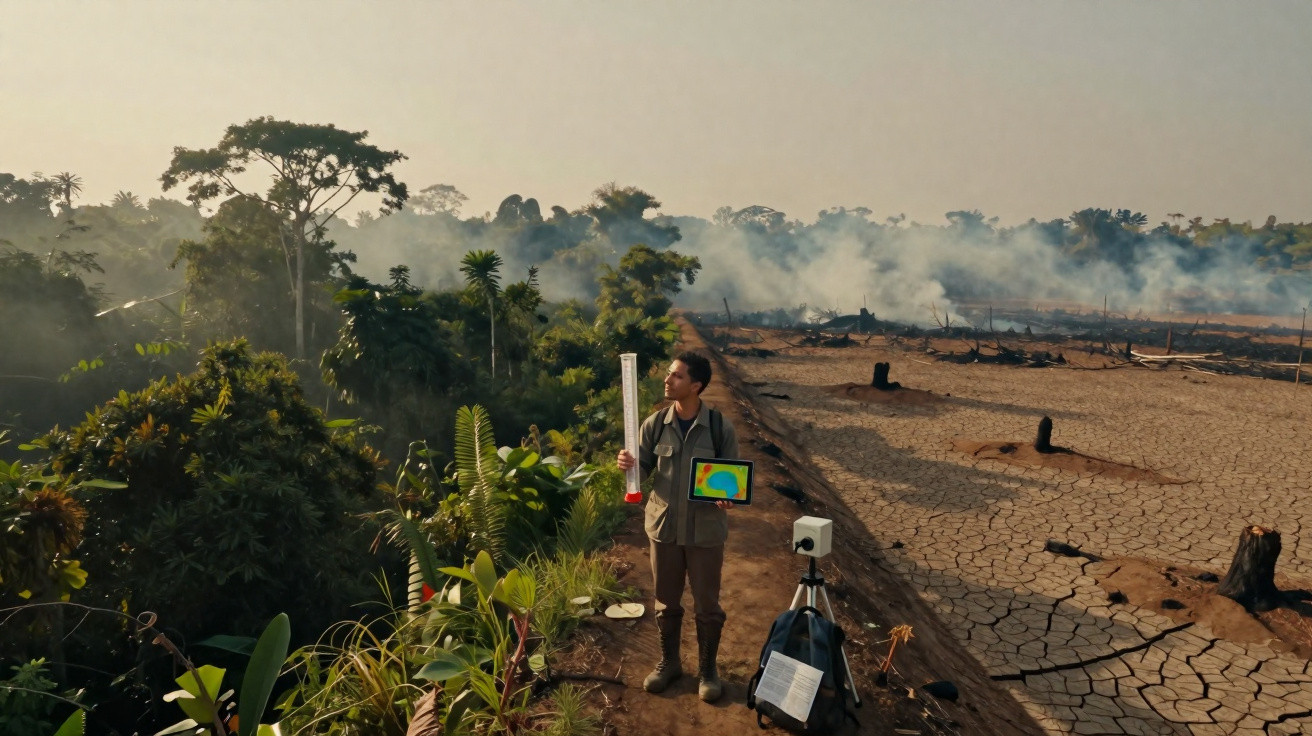
Farmers in the southern Amazon have cleared woodland for crop cultivation for decades.
New research indicates they could be undermining the very conditions on which they rely - while climate change is accelerating the problem more quickly than previously anticipated.
The research was headed by Eduardo Maeda, an Earth system scientist at the University of Helsinki.
How Amazon forests generate rain
One fact that catches many people off guard is that Amazon deforestation does not invariably cut rainfall straight away. On a limited scale, it may even increase it.
After a section of forest is cleared, the exposed ground becomes hotter. The heated air rises and draws moisture from neighbouring trees into the atmosphere, where it condenses before returning as rain.
A modest clearing encircled by unbroken forest may therefore receive more rain than it previously did.
However, as clearing expands, this effect reverses. Eventually, too little forest remains to continue supplying moisture to the wider system.
“If you deforest 80% of a small farm, but it’s surrounded by forest, it’s not a big deal. But if you deforest 80% of the whole state, then it will have a huge impact,” Maeda said.
Researchers describe the threshold at which rainfall shifts from rising to falling as a tipping point. This study’s key result is that climate change is bringing that threshold nearer, meaning it is reached with progressively lower levels of deforestation.
What the researchers found about southern Amazon deforestation
The researchers used a weather simulation model to test different combinations of warming and deforestation. Their focus was the southern Amazon, where agricultural expansion has made the region a major deforestation hotspot for decades.
In conditions resembling those between 2005 and 2014, rainfall across an area measuring 90 by 90 kilometres begins to decrease after roughly half the land has been cleared.
Under projected 2050 deforestation in that scenario, annual rainfall falls by about 1.7%. That would be troubling, but manageable.
The outcome changes substantially when warming in a low-emissions future is included. The tipping point occurs when only 45% of land is without trees, and rainfall could decline by nearly 14% by 2050.
Under a high-emissions scenario, the reduction starts with just 10% of land treeless, resulting in almost 11% less rainfall by mid-century.
For the most severe warming scenario, the researchers calculate that rainfall in areas exceeding 210 square kilometres could only be stabilised by limiting deforestation to 10% of the land.
Brazilian legislation currently permits up to 20% to be cleared.
“That is not enough,” Maeda said. “We need to do more.”
A trap with no straightforward escape
What makes the situation truly challenging, rather than simply another example of short-sighted land use, is the feedback loop at its centre.
Agriculture that fuels deforestation needs dependable rainfall to continue. Yet deforestation is gradually weakening that dependability.
Climate change compounds the pressure by making the system increasingly sensitive to every further hectare that is cleared. The longer this continues, the narrower the route out becomes.
The financial consequences are tangible. A 4% reduction in yearly rainfall could reduce Amazonian soya yields by as much as 8%.
For an area that has shaped much of its agricultural identity around soya, that is a significant figure.
“The way I see this is like the snake eating its own tail,” Maeda said. “Our results demonstrate to producers in the south of the Amazon that their activities are impacting their profits and their future.”
What could genuinely help
Maeda is not suggesting that agriculture should cease. Around one-fifth of Amazon forest has been cleared over the last 50 years, and those who make their living from this land will not simply disappear.
The aim is not to walk away from the land, but to manage it more effectively and prevent further clearance.
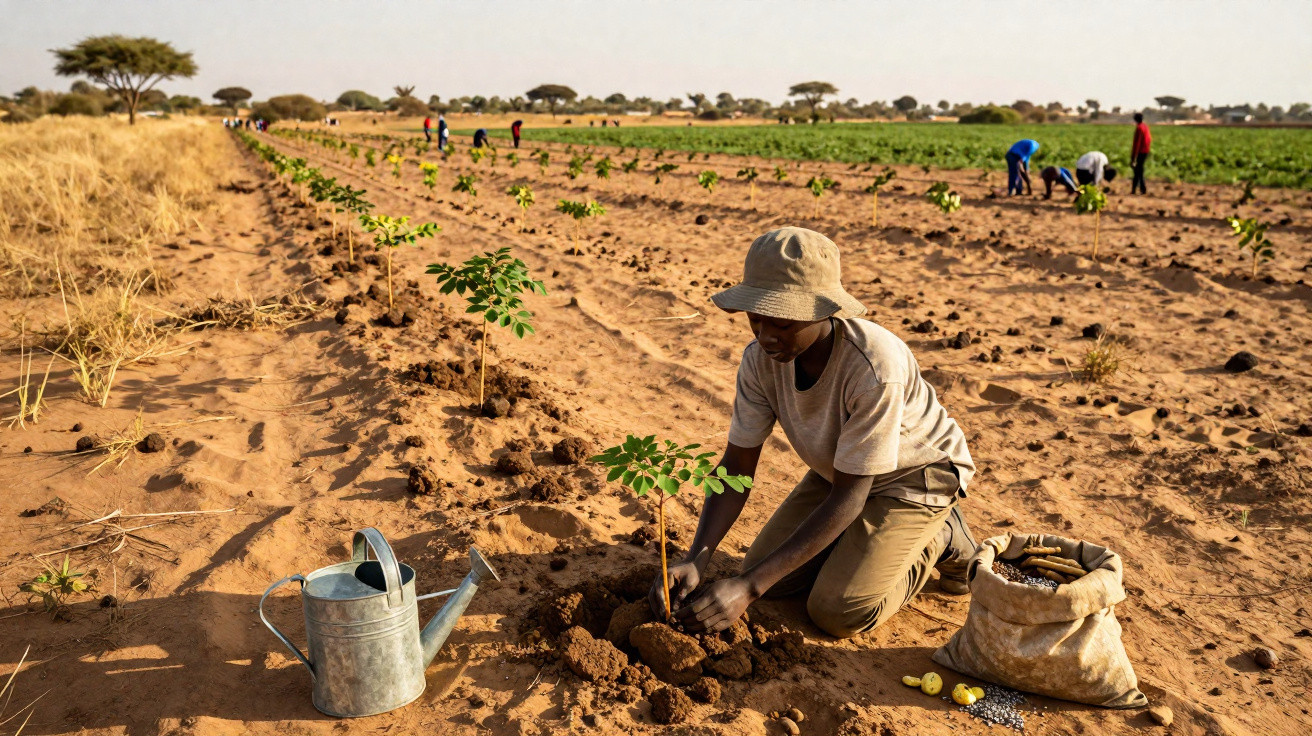
Agroforestry offers one practical option: agricultural systems that reintroduce native trees among crops.
Such systems cannot substitute for primary rainforest, but they retain some of the processes that sustain the wider system, including moisture cycling, temperature control and a measure of ecological stability that exposed fields cannot offer.
“We already have a lot of deforested areas, so the argument is that we don’t need any more,” Maeda said. “We just need to make these areas more productive and to produce things in a way that is better integrated into the ecosystem.”
In other words, forests are not merely land cleared to create space for farming. They are also part of what enables farming in the first place.
Amazon farmers may grasp this more clearly than anyone, since they will be the first to recognise when the rain no longer arrives.













Comments
No comments yet. Be the first to comment!
Leave a Comment