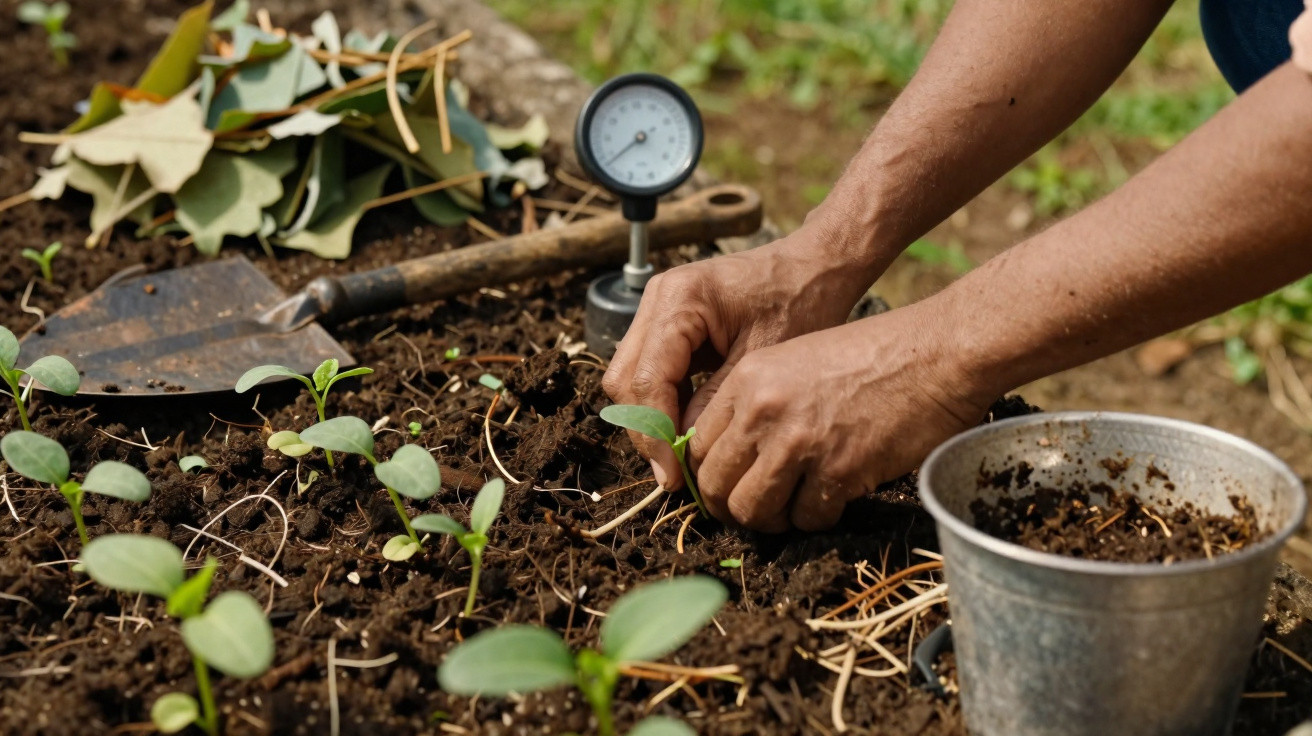
Each spring, an all-too-familiar scene unfolds in gardens and on compact balconies.
With the best intentions, a gardener reaches for a fork or spade and begins “improving” the soil, assuming that extra effort will produce healthier plants. The ground is dug over, broken apart and raked until it appears light, tidy and almost magazine-ready.
Yet a week later, the surface has formed a crust. Rather than soaking in, water runs away. Seedlings seem pale and sluggish, with faint yellowing around their leaf edges. Something is clearly not right, although there is no obvious disaster to point to.
What often goes unnoticed is the subtle damage taking place beneath the surface. It begins with one habit that seems entirely sensible.
Gardeners’ soil habit that quietly drains nutrients
The practice seasoned gardeners most want people to abandon is vigorous, repeated soil turning. This does not only mean deep mechanical cultivation: it also includes continually digging, forking and “fluffing” the topsoil whenever you plant or weed.
It may seem as though you are helping the soil to breathe. In fact, you are tearing up the structure that holds nutrients and living organisms together. Every pass through the bed cuts roots, fungal networks and worm tunnels on which plants quietly rely.
The bed may look freshly cultivated. Below ground, however, it resembles a house that has been shaken just after every piece of furniture was finally arranged properly.
In a small Kent suburban garden, one home gardener proudly rotavated each spring. On the first day, the soil looked beautiful: dark, loose and almost like cake crumbs. His lettuces, however, remained the size of young seedlings. After rain, water pooled on the surface before draining sideways out of the bed.
Two doors away, another gardener had given up digging three years previously. She added compost only to the surface and planted with a hand trowel. Her soil looked less “perfect”, with mulch fragments and an occasional leaf still visible. By midsummer, though, her beans, tomatoes and dahlias were clearly taller and a richer green.
Both gardens began with the same clay-heavy soil and experienced the same weather. The key difference was that one bed had largely retained its underground structure, whereas the other had its living networks torn apart every spring.
Repeatedly turning soil abruptly exposes buried organic matter to oxygen. Microbes then break it down more rapidly, releasing nutrients in a brief, dramatic flush. Soon afterwards, the reserves are exhausted. Nitrogen especially may escape as gas or be washed deeper into the ground by rain, beyond the reach of shallow roots.
Meanwhile, tiny soil particles lose the natural clusters that hold them together. Without roots, fungi and worm castings acting as a binding agent, they compact or create a surface crust. Water and air then struggle to penetrate. You may describe this as “poor drainage”, but the problem began with excessive cultivation.
This explains the pattern many gardeners see: excellent growth in the first year after thoroughly digging a bed, followed by sparser, weaker plants in later years. The soil appears active, while its nutrients are quietly being lost.
What to do instead: gentler soil care that keeps nutrients in place
The easiest change is to replace “turning” with “opening” the soil. Instead of overturning large sections, loosen only what is needed for planting and allow roots and soil organisms to do the rest. Think less like a builder and more like a caretaker.
With a hand fork or broadfork, carefully rock the soil without reversing its layers. Push the tool in, tip it slightly, and move along. Apply compost, leaf mould or well-rotted manure over the surface as a protective layer rather than digging it deeply into the bed.
Feeding from above reflects what occurs naturally in woodland. Fallen leaves decompose and nourish the soil from the surface down. Crucially, the nutrients remain in the upper 15–20 cm, where most feeding roots can reach them.
Many people hear “no-dig” and picture an unruly, impossible-to-manage bed. In practice, after the first season it is often neater and requires considerably less work. You can begin by laying cardboard over grass and adding a thick layer of compost above it. Plant directly into this layer, without the drama of the spade.
A common error is removing every leaf and scrap of mulch simply because it seems “messy”. Bare ground is rather like leaving a fridge door open. Nutrients escape, moisture evaporates and soil life slows. A light mulch helps keep all of these in place.
Another pitfall is swapping heavy digging for intensive raking and hoeing. The implement may be different, but the behaviour remains the same: continually disturbing the surface. Let’s be honest: nobody really keeps that up every day without becoming exhausted or disappointed. The answer is to do less and allow time and roots to restore the structure you have been trying to create.
Traditional gardeners sometimes express the idea very plainly.
“Every time you turn that soil upside down, you’re asking it to start from zero again,” says a retired market grower from Devon. “If you stop fighting it, you’ll be shocked how quickly it starts feeding your plants on its own.”
To make the change more practical, here is a quick guide to screenshot and keep near the shed.
- Stop doing: deep turning, annual rotavating, and maintaining “clean” bare soil between plants.
- Start doing: mulching the surface, making individual planting holes, and loosening gently rather than overturning soil.
- Watch for: increased worm activity, crumbly topsoil and improved water absorption after rain.
- Accept: a few leaves, twigs and pieces of compost on the surface as evidence of living soil.
How to spot nutrient loss and rebuild soil that actually feeds your plants
Most gardeners do not have a laboratory in the shed, but soil still offers small signs that are easy to read. Pale new leaves, undersized plants that never properly develop, and beds that dry out sooner than the rest of the garden are familiar indications that nutrients and soil structure are out of balance.
On a warm day, observe what happens when you water your beds. If water beads and runs off like rain on a waxed car, the top layer has probably crusted because of repeated disturbance. Healthy, nutrient-rich soil tends to absorb water readily, even when it looks dry.
Your hands can provide another useful test. Press a trowel into the ground. If it takes your full body weight, the soil is not merely “heavy” - its internal structure has been harmed.
| Key point | Details | Why it matters to readers |
|---|---|---|
| Stop deep, routine digging | Restrict digging to planting holes or particular problem areas, rather than turning entire beds every season. | This limits nutrient loss and safeguards the underground networks that quietly nourish your plants. |
| Feed from the surface | Apply 2–5 cm of compost or mulch to the surface once or twice yearly instead of mixing it in deeply. | It keeps nutrients within the root zone, saves time and recreates natural woodland-style fertility. |
| Keep soil covered | Use mulch, cover crops or close planting so that bare soil is seldom exposed. | This prevents crusting, erosion and nutrient wash-out while retaining moisture and life in the soil. |
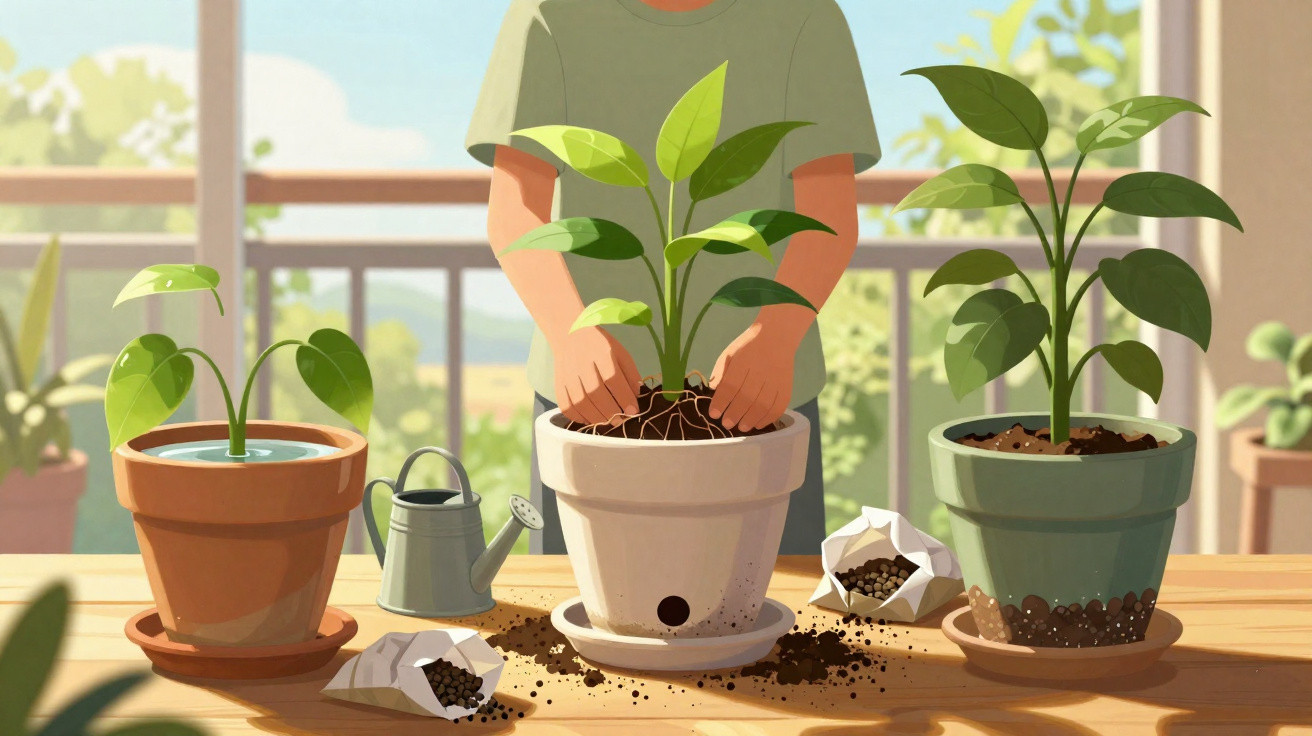
The same principle applies to pots and containers on a small balcony. Frequently emptying soil out, completely “refreshing” it and crumbling it between your hands may appear attentive. Over time, though, potting compost degrades, compacts and loses its open structure far more quickly when it is handled excessively.
A kinder approach is to top up containers with fresh compost and potting mix, repotting completely only when roots are visibly circling or the plants are struggling. This allows each container to retain some of its established life instead of resetting everything every month.
We have all experienced that late-evening moment when the garden seems worn out, plants droop slightly and it feels as though we have let them down. Often, the answer is not more fertiliser or more labour, but a calm adjustment to how you treat the soil beneath your feet.




Comments
No comments yet. Be the first to comment!
Leave a Comment