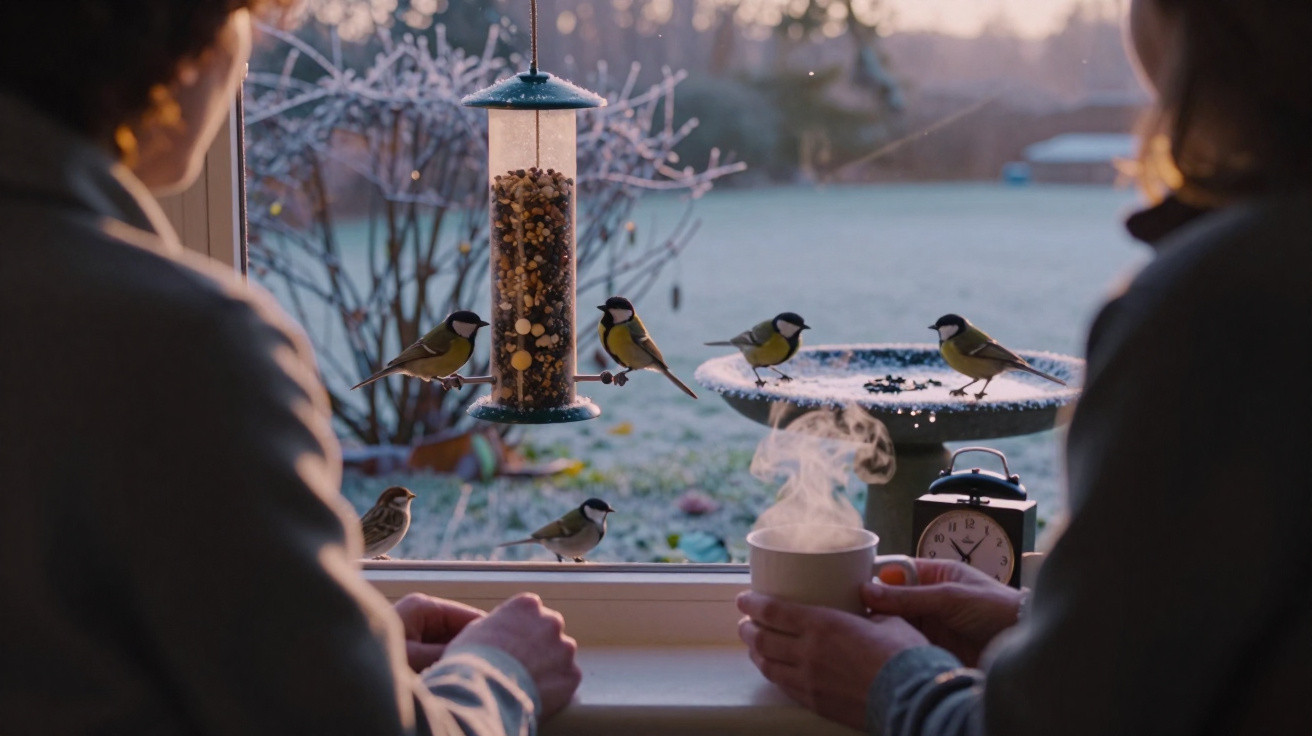
On icy mornings, certain gardens seem unusually still, whereas others come alive with beating wings and faint chirps at a remarkably exact time.
This difference is not down to chance or to owning the most elaborate plants. It is chiefly a matter of timing, reliability and providing food suited to small birds trying to get through the coldest part of the year.
Why some gardens buzz with birds while others stay quiet
If there are trees or hedgerows nearby, tits and other small garden birds will almost certainly be flying overhead. They may not, however, choose to land in your garden. These lively, colourful birds do not travel aimlessly. In winter, each journey uses valuable energy, so they only call at locations that seem safe and dependable.
Like many passerines, tits remember precisely where and when they have previously found food. They form a mental map of the local area: one balcony at dawn, a feeding table later on, then another garden around midday. If your garden is absent from that internal schedule, they will simply continue flying past.
For small birds in winter, a reliable daily schedule can matter more than the size of the garden itself.
The real time they pass through the garden
Despite what many people assume, garden birds in winter do not feed whenever the mood takes them. Their habits follow distinct patterns, particularly when temperatures are low.
The morning rendezvous: just before sunrise
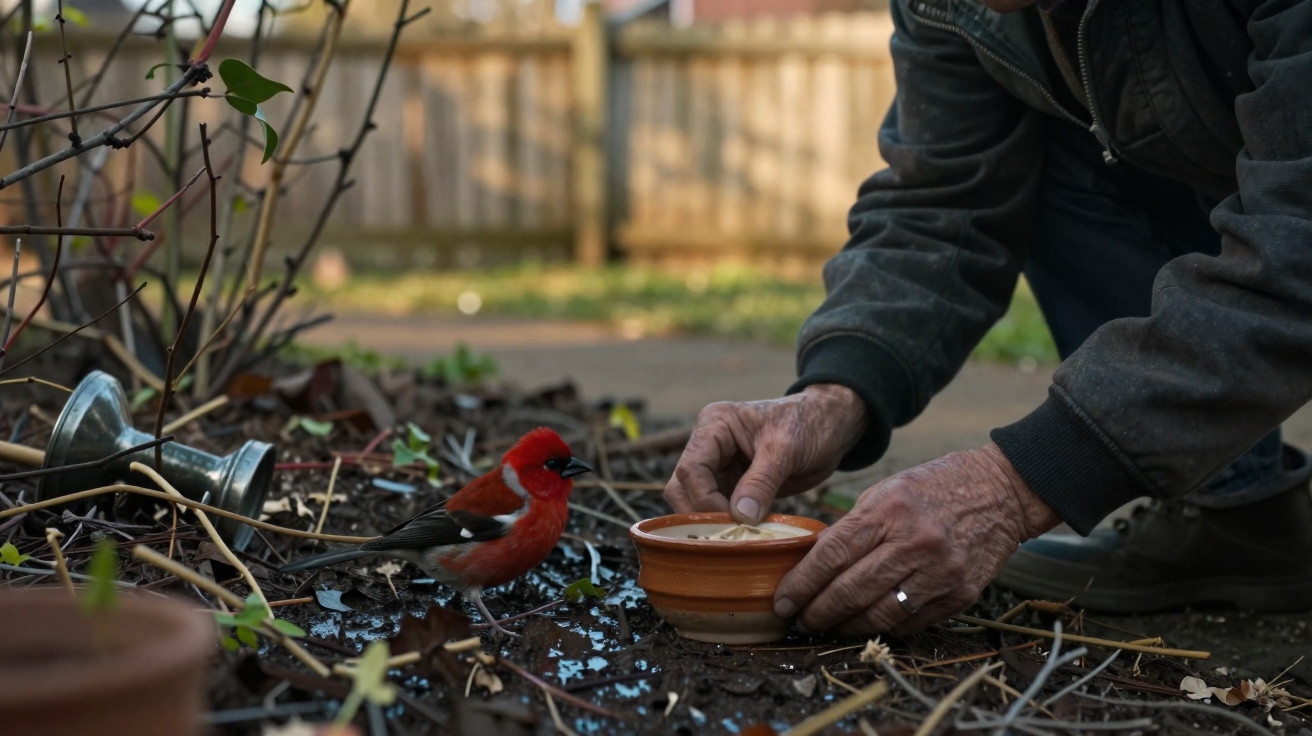
Field observations and specialist sources point to one clear approach: to make tits add your garden to their winter route, set out food at the same time each morning, preferably immediately before or at sunrise.
At this point, birds are emerging from a long and hazardous night. Simply keeping warm will have used a large proportion of their fat stores. Their first food of the day can determine whether they retain enough energy to forage and escape predators.
Feed them at the same early hour and, within days, they start arriving almost to the minute for their breakfast stop.
The result can be remarkable. Following one or two weeks of a carefully maintained routine, small groups may wait in surrounding branches, watching the door or window you normally use, before diving down once you have moved away.
Why constant timing matters more than quantity
A great many people top up feeders whenever it occurs to them, with no fixed time. To a bird, that makes the garden an uncertain option. On a bitterly cold morning, it cannot afford to take a chance on somewhere that may have no food.
A small serving provided each day at nearly the identical time, on the other hand, is much more appealing. Birds can arrange their whole feeding route around that dependable stop, cutting down both their search time and the energy wasted flying around unnecessarily.
- Pick a feeding time close to sunrise.
- Maintain it every day, including at weekends.
- Continue the pattern until at least early spring, around March.
- When you are away, ask a neighbour to follow the schedule.
Disrupt the routine too frequently and the flock may move to a different garden with a more dependable timetable.
The winter diet that keeps them alive, not just entertained
A regular feeding time alone will not secure repeat visits if the food does not meet winter requirements. During cold weather, tits need to sustain a high body temperature despite their very small bodies. This calls for calorie-rich foods, especially those containing fat.
What to serve on the coldest days
Rather than unusual blends, specialists suggest several straightforward essentials:
- Black sunflower seeds – oil-rich and simple for most small birds to open.
- Fat balls or suet blocks without plastic nets – netting may catch legs or claws, so use suitable feeders instead.
- Unsalted peanuts (in a mesh feeder) – highly calorific, provided they are unsalted and have not been roasted in oil.
These options allow birds to restore fat reserves rapidly after every freezing night. They can also reduce the time spent feeding, meaning fewer minutes exposed to cats or sparrowhawks.
High-fat food served at a predictable hour turns your garden into a vital refuelling station rather than just a pretty photo backdrop.
What to avoid putting on the menu
Some foods offered with good intentions may be harmful:
- Leftover salty crisps or bacon – excessive salt can be dangerous.
- Dry bread – it fills birds up without providing sufficient nutrition.
- Milk – birds are unable to digest lactose properly.
- Fat in mesh bags – this can lead to entanglement and broken legs.
Helping wildlife without making it dependent
Providing food for garden birds is not the same as domesticating them. Wild birds are legally protected in many European countries. The intention is to support them when natural food is scarce, rather than replace their instincts or make pets of them.
For this reason, experts advise feeding mainly throughout the hardest period, from late autumn until early spring, while also including natural habitat features: hedgerows, shrubs, piles of dead wood, flowers that produce seed and, where feasible, native trees.
A garden can act as a winter refuge without locking wildlife into a relationship of dependence.
Planting berry-producing shrubs and retaining the seedheads of perennials extends the available food beyond the feeder. Birds can then benefit from both human support and natural foraging, improving the resilience of local populations.
Creating a daily winter scene outside your window
When tits and other passerines begin using your garden as a dependable stop, their presence offers more than activity. You may start identifying individual birds through slight differences in their plumage or mannerisms. One might take just one seed before leaving, while another hangs upside down from the feeder, scanning in every direction before feeding.
Children can keep a simple “bird clock”: the arrival of blue tits at the feeder signals that it is nearly time for school, while the final robin leaving the lawn shows that daylight is fading quickly. This pattern establishes a rhythm that supports wildlife while also giving family life a sense of routine.
Two realistic winter scenarios for your garden
| Garden routine | Bird behaviour |
|---|---|
| Food put out at random times, different days each week | Birds visit irregularly, test the feeder, then give up if it is empty too often. |
| Food offered daily at sunrise, same place, same mix of seeds and fat | Tits and other small birds arrive almost on schedule, stay briefly, then return day after day. |
These examples demonstrate how a minor adjustment to your morning routine can transform winter activity beyond your window.
Extra tips: from hygiene to predator risks
Frequent feeding gathers birds into a limited space, raising the risk of disease where hygiene is inadequate. Rinse feeders often, throw away old or damp seed, and clear the ground underneath to prevent droppings from building up.
Predators also need consideration. Set feeders sufficiently high and away from places where cats can hide and ambush. An unobstructed view around the feeder helps birds detect threats early. Combine hanging feeders with several sheltered areas, including dense shrubs, so birds have somewhere to retreat rapidly.
With some organisation, an appropriate winter diet and a set dawn “opening hour”, your garden can change from a quiet frosty patch into a daily gathering place for some of the cold season’s most delightful residents.






Comments
No comments yet. Be the first to comment!
Leave a Comment