The rain had only just stopped when Mrs M leafed through a crumpled garden catalogue. On the balcony, there were just three forlorn geraniums and nothing else. “I’d love a proper wall of roses,” she said quietly, more to herself than to me, pointing at a photograph of lavishly flowering climbing roses. It was obvious: no gardening experience whatsoever, but a huge desire to transform the space.
We all know that moment. You spot a photograph, a neighbour’s garden or perhaps a rose-covered arbour in a park, and suddenly you want exactly the same thing. Then the inner voice pipes up: “Far too complicated – I’ll never manage that.”
That is precisely where climbing roses become interesting. Some really are divas. Others work away quietly: they are healthy, forgiving of mistakes and somehow climb straight into your heart.
Why choose climbing roses – and which ones can beginners handle?
Some gardens appear larger in photographs than they really are. Usually, they have one thing in common: something growing upwards. Climbing roses draw the eye skywards, make small courtyards feel taller and turn ordinary fences into a feature. They can do all that with only a few plants. It becomes especially appealing when the varieties do not need daily fussing, but simply get on with the job themselves.
The good news is that many modern climbing roses have been bred for exactly this purpose. They flower repeatedly, stand up well to rose diseases and cope with the chaos of everyday life. They are the kinds of roses that do not require you to creep around the flowerbed with a spray bottle at the ready. These everyday roses are the unsung stars for anyone who has never held rose pruners before.
I remember a small estate of terraced homes on the edge of town where someone planted a ‘New Dawn’ beside their carport a few years ago. At first, it was only a thin little stick and, frankly, rather disappointing. Two years later, a pink waterfall cascaded over the roof, while a completely unremarkable car sat underneath. Neighbours began stopping to take photographs and ask for its name. What nobody could see was that it had been watered irregularly and fed “when I remember”, as the owner told me with a laugh. The rose did not hold it against him.
Stories like that are far from unusual. Varieties such as New Dawn, Jasmina and Laguna keep appearing in gardening groups, alongside comments such as: “It was my first climbing rose – and it’s still alive!” or “I got almost everything wrong, but it flowers like mad.” Gardening is difficult to quantify, yet nursery sales figures make one thing clear: robust, repeat-flowering climbing roses are gaining ground. High-maintenance rose divas struggle to compete with these quiet workhorses.
Why is that? Climbing roses for beginners generally share three characteristics. They have been carefully bred and are resistant to powdery mildew and rust. Rather than putting on one big show each year, they continue producing fresh flowers. And they tend to grow at a moderate pace instead of immediately swallowing half the roof. That takes the pressure off. Beginners do not need a plant that requires a tree-surgery company every year; they need one that grows with them without taking over. Let’s be honest: hardly anyone checks their soil pH constantly in everyday life.
The best beginner climbing rose varieties – and how to get them climbing
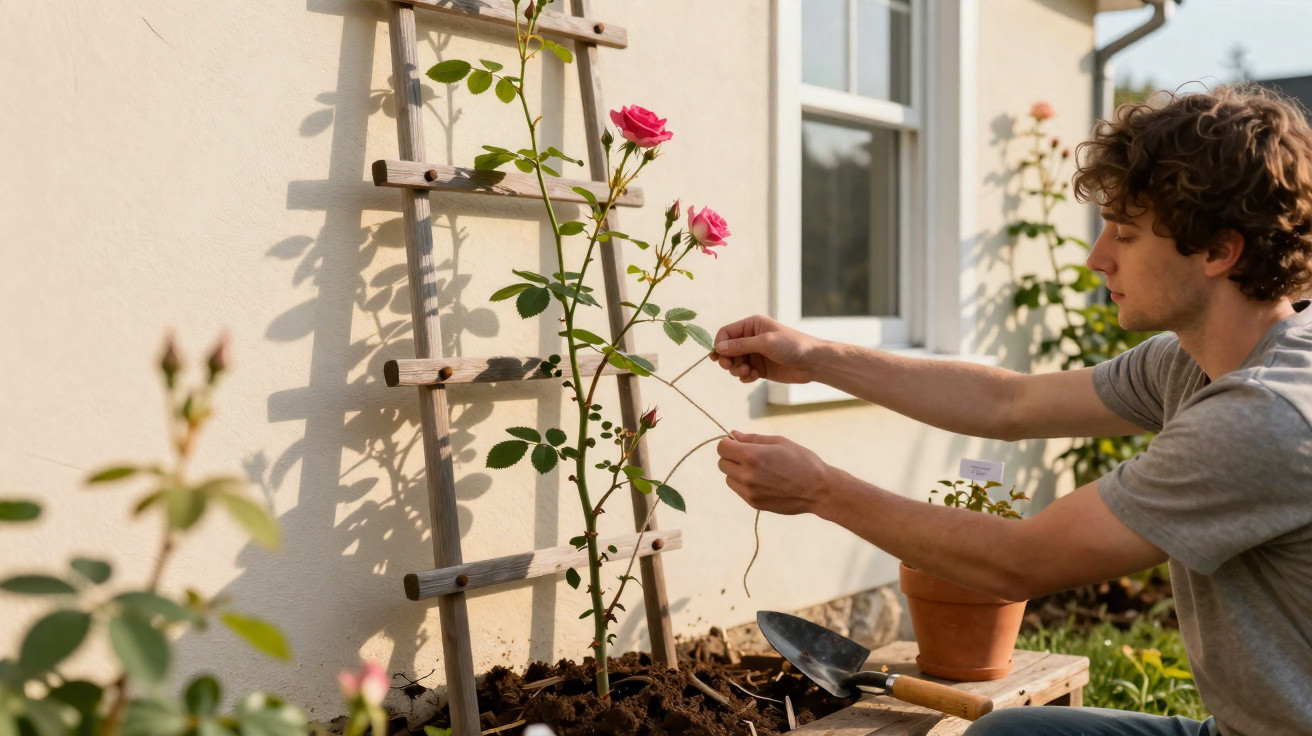
For almost any position, ‘New Dawn’ is an excellent first choice: soft pink, romantic, long-flowering and remarkably forgiving. For sunny house walls or trellises, many people choose ‘Laguna’ – vivid pink, strongly scented and with healthy foliage. Anyone who prefers a more playful look will find plenty of small, nostalgic blooms on ‘Jasmina’. The approach is simple: fit a sturdy climbing frame or tension wires, tie the main shoots in a fan shape, and that is it. Roses do not climb like ivy, so they need guidance. Once the general direction is right, though, they largely take it from there.
For smaller balconies or patios, more compact climbing roses such as ‘Climbing Bienenweide rosa’ or ‘Rosarium Uetersen’ can be grown on a narrow trellis. Yellow varieties including ‘Golden Gate’ also work well where the site is airy, as damp foliage dries more quickly. Beginners should not be swayed by glossy catalogue descriptions, but look for terms such as “healthy”, “very robust” and “ADR award”. The ADR mark indicates that a rose has been properly tested, rather than merely photographed attractively.
Planting and pruning climbing roses without the stress
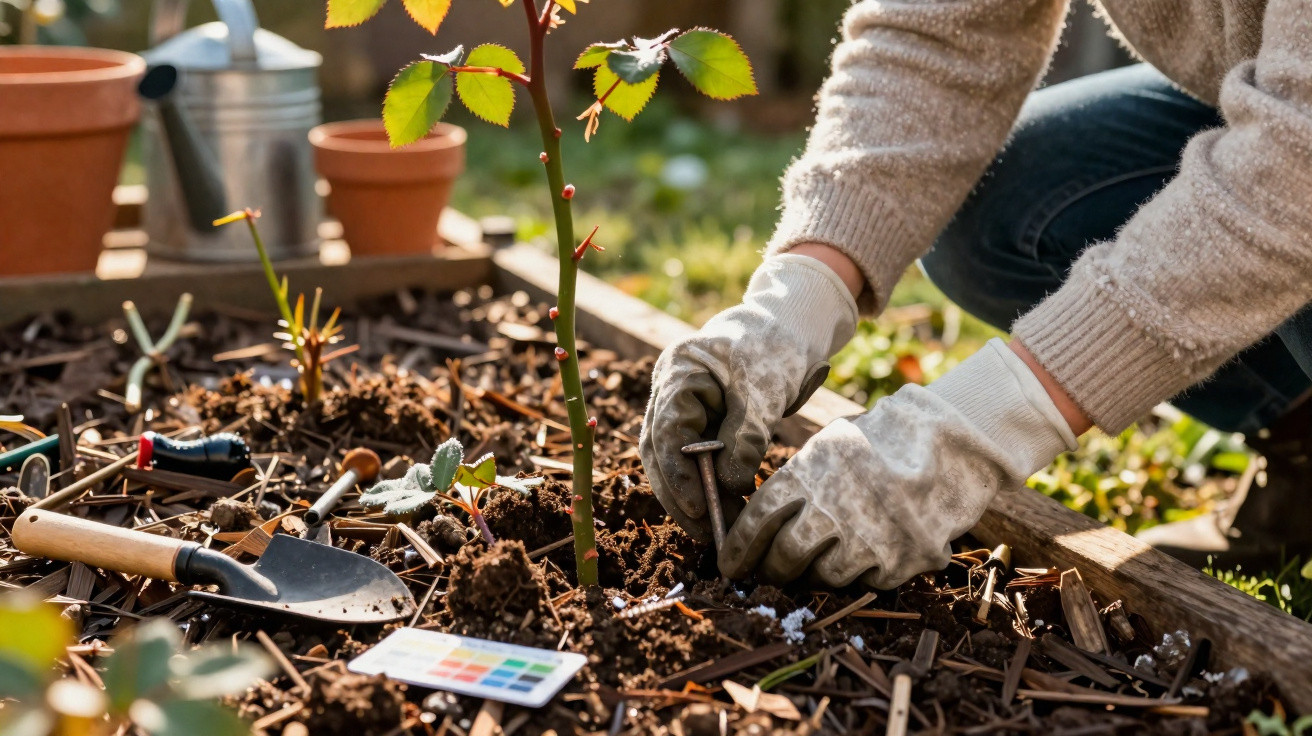
The same beginner mistakes crop up time and again. Climbing roses are planted too close to the wall, left in permanent shade or placed in a bone-dry strip beneath roof eaves. Sometimes the ground is so sealed that the roots barely stand a chance. Then people often conclude: “Roses aren’t for me.” In reality, the starting conditions were unfair. When planting new roses, it is worth digging a reasonably generous hole, mixing in compost and watering deeply once. After that, in many areas, weekly watering while the plant establishes itself is enough. No one needs to circle the rose meditatively with a watering can every evening.
Many people either prune too enthusiastically or do not dare to prune at all. The reassuring truth is that during the first year, you can let almost everything grow. From the second year onwards, remove old, unproductive flowering shoots close to ground level, then tie in young, well-branched shoots horizontally or in a fan shape. Nothing more is required. The rose does not need to look perfectly trained; it simply needs light and air.
“I always thought roses were for people with lots of time and specialist knowledge,” a young father told me recently outside his house frontage. “Then I simply planted a ‘Laguna’ and decided: either we get along, or we don’t. Three years later, the frontage looks like the cover of a gardening magazine – and I’ve genuinely done something to it no more than five times a year.”
- Choose robust varieties: ADR-awarded climbing roses such as ‘Laguna’ or ‘Jasmina’ are easier to care for than old-fashioned diva varieties.
- Assess the site realistically: at least partial sun, no completely parched ground at the base of a wall, and some air movement to help prevent fungal diseases.
- Guide roses rather than fighting them: tying shoots horizontally or in a fan shape, instead of forcing them rigidly upwards, encourages more flowers.
- Panic less about pruning: do almost nothing in the first year; in the second year, remove old shoots and shape the young ones – no art degree required.
- Allow for everyday compromises: uneven watering and the occasional forgotten feed are things sturdy climbing roses cope with surprisingly well.
When a single stem becomes a story
Anyone who has watched a feeble young plant begin beside a bare fence, then become a flowering backdrop for summer evenings a few years later, sees their outdoor space differently. A climbing rose is more than decoration. It marks life’s transitions: a first home together, a new balcony or a fresh start after moving house. It grows while you are busy with other things, and then suddenly an arch of fragrant flowers hangs above the patio door.
Interestingly, most people who describe themselves as “not naturally good at gardening” have simply failed once, too early. A shady balcony, a completely unsuitable variety or a pot without drainage holes – and the verdict is delivered. Climbing roses that beginners can manage provide a quiet counterargument. They do not react badly to every minor error, and even with mediocre care they give a great deal back. That experience – seeing something succeed despite not doing everything perfectly – often changes a person’s attitude to gardening for good.
Perhaps that is the real appeal: you are not merely planting a shrub, but making a promise to yourself. Not “from now on, I’ll garden every day”, because hardly anyone does. More like: “I’m allowing something to grow, even when my everyday life is chaotic.” A robust climbing rose that flowers year after year without constantly being the centre of attention tells that story of compromise. And perhaps that is exactly why people stop in front of one, secretly take photographs, send them to friends and say: “Look, I actually managed this.”
| Key point | Detail | Benefit for the reader |
|---|---|---|
| Robust variety choice | ADR-awarded, repeat-flowering climbing roses such as ‘New Dawn’, ‘Laguna’, ‘Jasmina’ | Reduces frustration and improves the chances that roses will thrive even with limited experience |
| Simple planting and training approach | A sufficiently large planting hole, compost, and fan-shaped tying-in on a trellis or wires | Provides clear, practical guidance without overwhelming the reader with technical language |
| A relaxed approach to care | Hardly any pruning in the first year, moderate watering, and a focus on the site rather than perfection | Takes away the fear of mistakes and shows that climbing roses work in real everyday conditions |




Comments
No comments yet. Be the first to comment!
Leave a Comment